Introduction
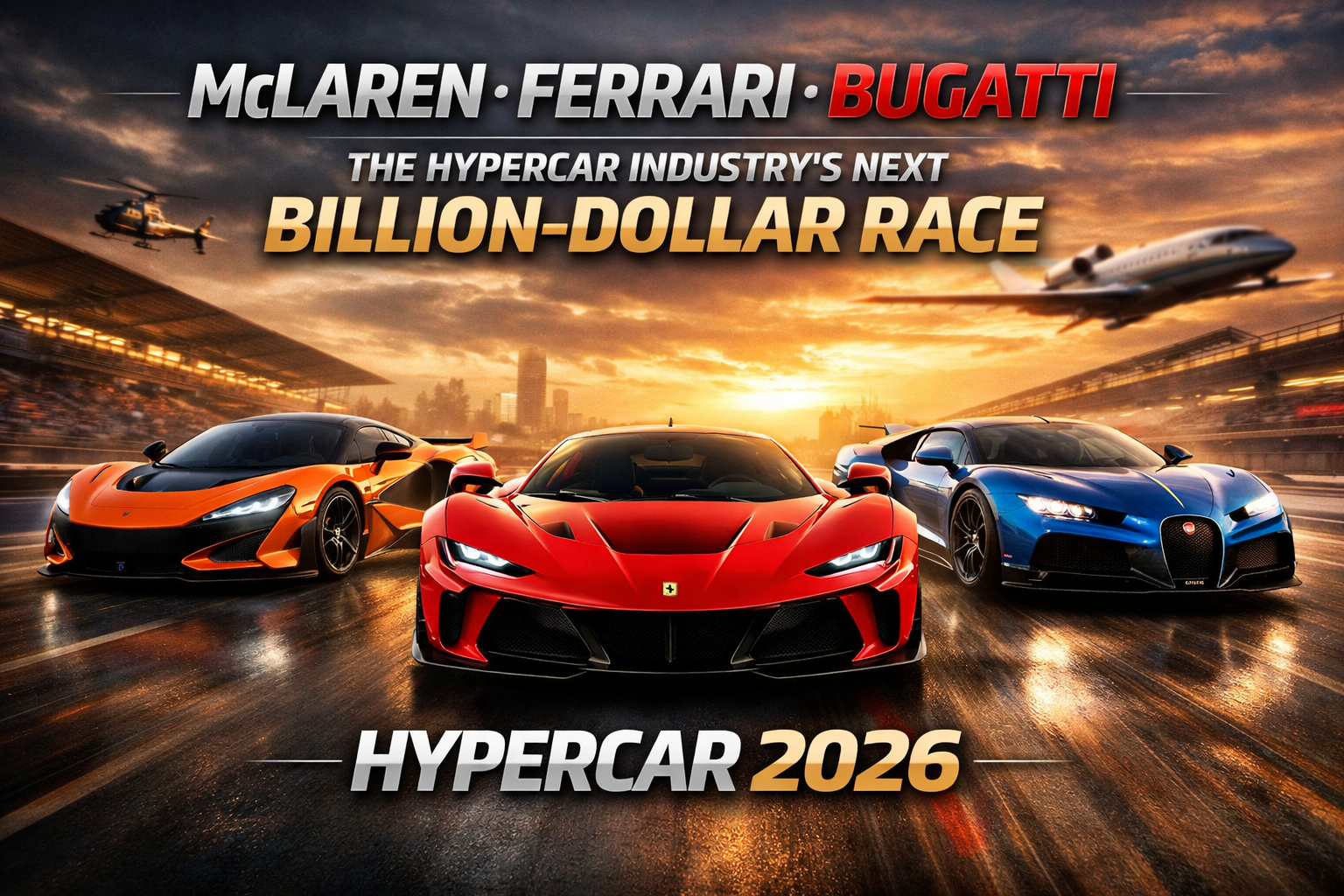
The hypercar industry has always represented the pinnacle of automotive engineering, combining extraordinary performance, cutting-edge technology, and exclusivity. While luxury vehicles and supercars continue to attract enthusiasts worldwide, hypercars occupy a unique segment where innovation meets artistry. In recent years, brands such as McLaren, Ferrari, and Bugatti have intensified competition, investing heavily in advanced powertrains, lightweight materials, and electrification technologies. This escalating rivalry is shaping what many industry experts describe as the next billion-dollar race in the automotive world.
As global demand for ultra-exclusive vehicles grows among high-net-worth individuals, these legendary manufacturers are pushing the boundaries of speed, design, and sustainability. The result is a fierce battle for technological leadership, brand prestige, and market dominance in one of the most profitable niches in the automotive sector.
Understanding the Hypercar Market
A hypercar is far more than a high-performance automobile. Unlike conventional sports cars, hypercars represent the absolute highest level of engineering and innovation available from a manufacturer. These vehicles often feature:
- Top speeds exceeding 400 km/h (248 mph)
- Advanced hybrid or electric powertrains
- Carbon-fiber construction
- Limited production numbers
- Multi-million-dollar price tags
The hypercar market has experienced remarkable growth over the past decade. Wealth creation in regions such as North America, the Middle East, China, and Southeast Asia has expanded the customer base for ultra-luxury automobiles. Buyers increasingly seek rare vehicles that offer both driving excitement and investment potential.
Industry analysts estimate that the global luxury and performance vehicle sector will continue growing significantly through the end of the decade, with hypercars representing one of the most lucrative segments.
McLaren: Innovation Through Engineering Excellence
Founded by racing legend Bruce McLaren, McLaren Automotive has established itself as a technology-driven manufacturer focused on performance and innovation.
The McLaren Philosophy
McLaren’s approach centers on lightweight construction, aerodynamic efficiency, and driver engagement. Drawing heavily from Formula 1 expertise, the company consistently introduces technologies that enhance performance while maintaining exceptional handling characteristics.
Models such as the McLaren P1 demonstrated the brand’s ability to combine hybrid technology with extraordinary performance. The P1 became one of the most influential hypercars ever produced, proving that electrification could enhance rather than compromise driving excitement.
Future Hypercar Strategy
McLaren is investing heavily in next-generation hybrid and electric technologies. The company recognizes that future regulations and customer expectations will require cleaner powertrains without sacrificing performance.
Key areas of investment include:
- Advanced battery technology
- Lightweight carbon-fiber structures
- Aerodynamic optimization
- Artificial intelligence-assisted driving systems
The upcoming generation of McLaren hypercars is expected to deliver unprecedented levels of performance while meeting increasingly stringent environmental standards.
Competitive Advantages
McLaren’s strengths include:
- Formula 1 heritage
- Lightweight engineering expertise
- Strong innovation culture
- Exceptional track-focused performance
These factors position the company as a formidable competitor in the evolving hypercar landscape.
Ferrari: Tradition Meets Technological Transformation
Ferrari remains one of the most recognizable and prestigious automotive brands in the world. For decades, the Italian manufacturer has symbolized speed, luxury, and exclusivity.
Ferrari’s Hypercar Legacy
Ferrari’s hypercar history includes iconic models such as:
- Ferrari F40
- Ferrari F50
- Ferrari Enzo
- Ferrari LaFerrari
Each generation introduced groundbreaking technologies and set new benchmarks for performance.
The LaFerrari, launched as Ferrari’s first hybrid hypercar, marked a significant shift in the company’s philosophy. It demonstrated that electrification could coexist with Ferrari’s commitment to emotional driving experiences.
Entering the Electric Era
Ferrari is now preparing for a future where hybrid and electric vehicles play a central role in its lineup. While maintaining its legendary performance credentials, the company is investing billions in research and development.
Ferrari’s future strategy focuses on:
- High-performance electrification
- Sustainable manufacturing
- Advanced connectivity
- Enhanced vehicle personalization
The company’s upcoming fully electric supercar represents a major milestone in Ferrari’s history and could redefine expectations for electric performance vehicles.
Brand Power as a Competitive Weapon
Ferrari possesses one of the strongest brand identities in the luxury sector. Limited production numbers create scarcity, while a passionate global fanbase ensures sustained demand.
This combination of exclusivity and prestige gives Ferrari a significant advantage as competition intensifies.
Bugatti: Redefining Automotive Extremes
When discussing hypercars, few names command as much respect as Bugatti. The French manufacturer has consistently pursued the limits of speed, luxury, and engineering excellence.
A Legacy of Record-Breaking Performance
Bugatti gained worldwide attention with vehicles such as:
- Bugatti Veyron
- Bugatti Chiron
- Chiron Super Sport 300+
These models shattered performance records and established Bugatti as a leader in automotive innovation.
The Chiron Super Sport 300+ became the first production-derived vehicle to exceed 300 mph, a remarkable achievement that captured global headlines.
The Rimac Partnership
One of the most significant developments in the hypercar industry occurred when Bugatti merged operations with Croatian electric vehicle innovator Rimac.
This partnership combines:
- Bugatti’s luxury heritage
- Rimac’s electric expertise
- Advanced battery technology
- Next-generation performance engineering
The collaboration positions Bugatti to remain competitive as the industry transitions toward electrification.
Future Direction
Future Bugatti hypercars are expected to feature:
- Hybrid powertrains
- Advanced electric systems
- Increased efficiency
- Unprecedented acceleration
Rather than abandoning its tradition of extraordinary performance, Bugatti aims to use electrification as a tool for achieving even greater capabilities.
The Electrification Race
Perhaps the most important battlefield in the hypercar industry is electrification.
Governments worldwide are introducing stricter emissions regulations, while consumers increasingly demand environmentally responsible luxury products. Hypercar manufacturers must balance sustainability with the extreme performance their customers expect.
Why Electrification Matters
Electric powertrains offer several advantages:
- Instant torque delivery
- Improved acceleration
- Enhanced efficiency
- Reduced emissions
These characteristics make electric technology particularly attractive for performance applications.
The Challenge
Despite the benefits, manufacturers face several obstacles:
- Battery weight
- Charging infrastructure
- Thermal management
- Maintaining emotional driving experiences
Successfully overcoming these challenges will determine which companies emerge as leaders in the next generation of hypercars.
The Billion-Dollar Technology War
Behind every new hypercar lies enormous investment.
Manufacturers are spending billions on:
- Battery development
- Artificial intelligence
- Autonomous capabilities
- Advanced materials
- Manufacturing innovation
Research and development costs continue to rise, making partnerships and strategic collaborations increasingly important.
Companies that successfully commercialize breakthrough technologies can gain substantial competitive advantages and generate significant returns on investment.
The Role of Artificial Intelligence
Artificial intelligence is becoming a crucial component of modern hypercars.
AI systems can optimize:
- Power delivery
- Suspension settings
- Aerodynamic performance
- Driver assistance functions
Future hypercars may use machine learning algorithms to adapt vehicle behavior to individual driving styles, creating highly personalized performance experiences.
As AI capabilities expand, manufacturers will continue integrating intelligent systems that enhance both safety and performance.
Exclusivity and Investment Value
Hypercars are increasingly viewed as investment assets.
Limited production runs often create strong demand in secondary markets, leading to significant appreciation in value.
Examples include:
- Ferrari LaFerrari
- McLaren P1
- Bugatti Chiron special editions
Collectors are willing to pay substantial premiums for rare vehicles with historical significance and limited availability.
Manufacturers recognize this trend and frequently produce highly exclusive variants designed specifically for affluent collectors.
Emerging Competition
While McLaren, Ferrari, and Bugatti dominate headlines, new competitors are entering the hypercar market.
Notable challengers include:
- Rimac
- Koenigsegg
- Pagani
- Aston Martin
- Lotus
These companies bring fresh ideas and innovative technologies that intensify competition across the sector.
Particularly notable is Rimac, whose expertise in electric performance vehicles has established it as a major force in the future of high-performance mobility.
Sustainability and Luxury
The future of the hypercar industry will depend on balancing sustainability with exclusivity.
Consumers increasingly expect luxury brands to demonstrate environmental responsibility. Manufacturers are responding by exploring:
- Sustainable materials
- Carbon-neutral production
- Renewable energy usage
- Battery recycling programs
These initiatives allow brands to align with global sustainability goals while preserving their commitment to exceptional performance.
Conclusion
The battle between McLaren, Ferrari, and Bugatti represents far more than a competition for horsepower or top-speed records. It is a billion-dollar race to define the future of automotive excellence.
McLaren continues to leverage its Formula 1 expertise and lightweight engineering philosophy. Ferrari combines unmatched brand prestige with ambitious electrification plans. Bugatti, strengthened by its partnership with Rimac, is positioning itself for a new era of technological innovation.
As electrification, artificial intelligence, and sustainability reshape the automotive landscape, the hypercar industry stands at a pivotal moment. The companies that successfully integrate cutting-edge technology while preserving the excitement, exclusivity, and emotional appeal that define hypercars will emerge as the winners.
For enthusiasts, collectors, and industry observers, the coming years promise an extraordinary period of innovation. The next generation of hypercars will not only be faster and more powerful but also smarter, cleaner, and more technologically advanced than ever before. In this high-stakes billion-dollar race, the finish line remains uncertain but the journey is already redefining the future of performance automotive engineering.