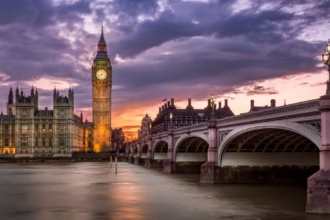

In 2026, global travel is undergoing a quiet but powerful transformation. For decades, iconic cities like Paris and London dominated travel bucket lists, symbolizing culture, romance, and prestige. Today, however, a growing number of travelers are deliberately turning away from these overcrowded hotspots in favor of lesser-known, offbeat destinations. This shift is not merely a trend it reflects a deeper change in traveller psychology, values, and expectations.
The era of overtourism has reached a tipping point. Long queues, inflated prices, environmental strain, and diluted cultural authenticity have caused travelers to rethink what they truly seek from their journeys. Increasingly, the answer lies beyond the obvious.
The Rise of Conscious Travel
Modern travelers are no longer satisfied with ticking landmarks off a list. Instead, they are seeking meaning, connection, and authenticity. This evolution is driven largely by Millennials and Gen Z, who prioritize experiences over status and storytelling over spectacle.
Over tourism has made popular cities feel crowded and commercialized. Travelers are now asking: Is the experience worth the chaos? In many cases, the answer is no. As a result, they are choosing destinations that offer depth rather than density places where culture is lived, not performed.
Offbeat destinations provide exactly that. Whether it’s a quiet mountain village in Eastern Europe, a hidden coastal town in Southeast Asia, or a culturally rich but underexplored city in Central Asia, these locations offer immersive experiences that feel personal and unfiltered.
Eastern Europe: Europe’s Quiet Renaissance
Eastern Europe has emerged as one of the biggest beneficiaries of this shift. Countries like Albania, Georgia, Slovenia, and Romania are gaining popularity for their natural beauty, affordability, and cultural richness.
Unlike Western Europe’s crowded capitals, Eastern European destinations offer a slower, more intimate travel experience. Travelers can explore medieval towns, untouched landscapes, and local traditions without battling crowds. The cost advantage is also significant—accommodation, food, and experiences often come at a fraction of the price compared to Paris or London.
But beyond affordability, what truly sets these destinations apart is authenticity. Here, travelers can engage with local communities, discover regional cuisines, and experience traditions that haven’t been commercialized for mass tourism.
Japan Beyond Tokyo: The Hidden Cultural Depth
Japan continues to be a global favourite, but the focus is shifting away from megacities like Tokyo and Osaka. Instead, travelers are exploring lesser-known regions such as rural prefectures, coastal towns, and historic villages.
This shift reflects a broader desire for cultural immersion. While Tokyo offers futuristic energy, smaller towns provide a window into Japan’s heritage traditional inns, tea ceremonies, local festivals, and centuries-old craftsmanship.
Travelers are increasingly drawn to these experiences because they offer something unique and personal. In a world saturated with social media content, originality has become a form of luxury.
The Psychology Behind Avoiding Overtourism
Avoiding crowded destinations is not just about convenience it’s about emotional well-being. Travel, at its core, is meant to inspire, relax, and rejuvenate. Overcrowded environments often do the opposite, leading to stress, fatigue, and frustration.
Offbeat travel, on the other hand, aligns with the growing demand for “slow travel.” This approach emphasizes quality over quantity, encouraging travelers to spend more time in fewer places, engage deeply with their surroundings, and move at a more relaxed pace.
This shift also reflects a broader societal trend toward mindfulness. Just as people are becoming more conscious about what they eat and consume, they are also becoming more intentional about how they travel.
Social Media’s Role in Redefining Aspirations
Ironically, social media once responsible for popularizing mainstream destinations is now fuelling the rise of offbeat travel. As iconic locations become oversaturated with identical photos, users are seeking fresh, unique content that stands out.
Hidden gems offer exactly that. A quiet lake in Slovenia or a remote village in Vietnam can generate far more engagement than a predictable shot of the Eiffel Tower. For content creators and everyday travelers alike, uniqueness has become currency.
This has led to a new form of digital influence, where lesser-known destinations gain visibility through viral content. However, this also presents a challenge: today’s hidden gem can quickly become tomorrow’s overcrowded hotspot.
Sustainability and Responsibility
Another major driver of this trend is sustainability. Overtourism places immense pressure on infrastructure, ecosystems, and local communities. From environmental degradation to rising living costs for residents, the negative impacts are becoming increasingly visible.
Travelers are becoming more aware of these issues and are actively seeking ways to minimize their footprint. Choosing offbeat destinations helps distribute tourism more evenly, reducing strain on overburdened cities while supporting emerging economies.
Governments and tourism boards are also encouraging this shift by promoting lesser-known regions and investing in sustainable tourism initiatives. This alignment between traveller intent and institutional support is accelerating the movement.
Economic Implications
The rise of offbeat destinations is reshaping the global tourism economy. Smaller towns and emerging regions are experiencing increased investment, job creation, and infrastructure development.
For local communities, this presents both opportunities and challenges. While tourism can boost income and improve quality of life, it must be managed carefully to preserve cultural integrity and avoid repeating the mistakes of overtourism.
Destinations that succeed will be those that strike a balance welcoming visitors while maintaining their unique identity.
The New Definition of Luxury
Perhaps the most significant shift is in how luxury is defined. Traditionally, luxury travel was associated with five-star hotels, fine dining, and exclusive access. In 2026, luxury is increasingly about privacy, authenticity, and uniqueness.
A secluded cabin in the mountains, a locally hosted cultural experience, or an untouched natural landscape can feel far more luxurious than a crowded landmark. This redefinition is driving demand for destinations that offer space, silence, and substance.
Challenges and Considerations
While the move toward offbeat destinations is largely positive, it is not without challenges. Infrastructure in these regions may be limited, requiring careful planning and adaptability from travelers.
There is also the risk of overexposure. As more people discover these hidden gems, they can quickly lose the very qualities that made them appealing. Responsible travel practices respecting local cultures, minimizing environmental impact, and supporting local businesses are essential to sustaining this trend.
The Future of Travel
Looking ahead, the shift toward offbeat destinations is expected to continue. Advances in technology, including AI-powered travel planning, are making it easier for travelers to discover and access lesser-known locations.
At the same time, changing values particularly among younger generations are reinforcing the importance of meaningful, sustainable, and personalized experiences.
The travel industry is responding by diversifying offerings, promoting regional tourism, and investing in infrastructure beyond traditional hotspots. This decentralization is likely to define the next decade of global travel.
Conclusion
The move away from popular cities toward offbeat destinations marks a fundamental shift in how people approach travel. It reflects a desire for authenticity, a commitment to sustainability, and a redefinition of what it means to explore the world.
In 2026, travel is no longer about following the crowd it’s about finding your own path. As overtourism continues to challenge traditional destinations, the future belongs to those places that offer something deeper, quieter, and more real.
For travelers, this is an opportunity to rediscover the essence of travel itself not as a checklist of landmarks, but as a journey of connection, discovery, and purpose.