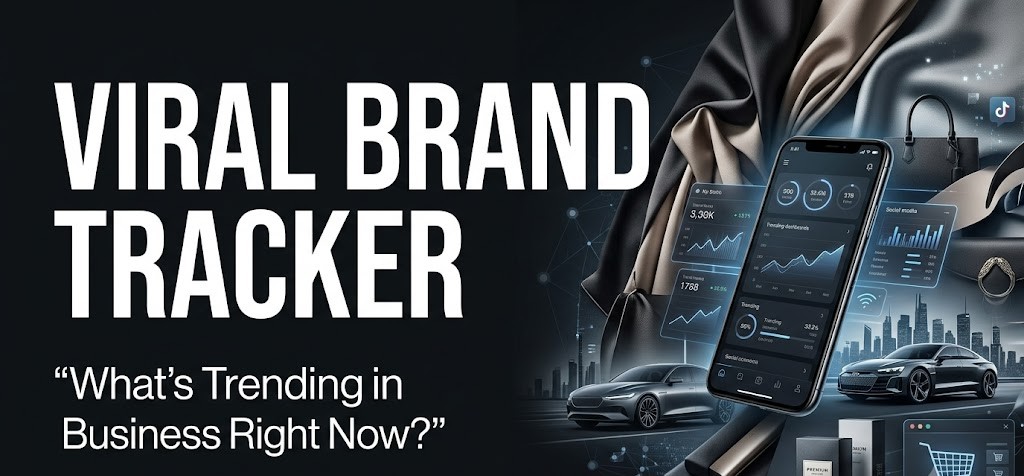
The internet has changed the way people discover brands. A luxury campaign can become a global conversation overnight, a new smartphone can dominate social feeds before it reaches stores, and a small fashion label can suddenly find itself competing for attention with some of the biggest names in the world. In this environment, knowing what is happening in business is no longer enough. Brands, marketers, creators, investors, and consumers increasingly want to know what is gaining momentum right now—and why.
That is where the idea of a Viral Brand Tracker becomes interesting.
Rather than functioning like another business news website filled with corporate announcements and predictable headlines, a Viral Brand Tracker would operate as a real-time intelligence platform for modern brand culture. Its purpose would be to identify the campaigns, products, collaborations, launches, strategies, controversies, consumer behaviours, and creative ideas that are capturing attention across the global market.
The concept is simple, but its potential is much bigger than a conventional trend website. It sits somewhere between business journalism, cultural intelligence, marketing analysis, and social media discovery. Instead of simply reporting that something happened, the platform would ask a more valuable question: Why is everyone talking about it?
From Business News to Brand Intelligence
Traditional business media has historically focused on financial performance, acquisitions, executive changes, market movements, and corporate announcements. Those subjects remain important, but the modern brand economy operates differently. A company’s cultural relevance can be just as influential as its quarterly results.
A fashion campaign can change how an entire generation perceives a brand. A clever product launch can create millions of social impressions without traditional advertising. A celebrity collaboration can transform an ordinary product into a cultural object. A restaurant concept can become a global trend through TikTok and Instagram before the business has even expanded beyond its original city.
The Viral Brand Tracker would capture this layer of business—the layer that exists between what brands do and how people react to it.
The platform could track major developments across luxury, technology, fashion, e-commerce, automotive, food, entertainment, beauty, travel, and other high-interest industries. But the emphasis would not be on producing endless updates. The goal would be to identify the developments that actually matter.
A new campaign from a global brand is not automatically interesting. The interesting story is what the campaign reveals about consumer psychology, positioning, pricing, cultural relevance, or the future direction of the category.
That difference could become the platform’s editorial identity.
Luxury: Where Exclusivity Meets Culture
Luxury would naturally become one of the strongest categories because luxury brands have mastered the art of turning products into stories.
A handbag is no longer simply a handbag. A watch is no longer simply a timepiece. The product becomes part of a larger narrative involving craftsmanship, heritage, scarcity, celebrity culture, design, status, and aspiration.
The Viral Brand Tracker could examine how houses such as Chanel, Hermès, Louis Vuitton, Dior, Rolex, Cartier, Ferrari, and other global names maintain desirability in an increasingly digital marketplace.
Instead of publishing another article about the “most expensive luxury brands,” the platform could explore questions that reveal how luxury actually works. Why does a certain campaign suddenly dominate social media? Why does a brand deliberately limit availability? Why are heritage brands collaborating with unexpected partners? What makes consumers willing to wait months—or even years—for certain products?
These stories offer more than entertainment. They provide insight into one of the world’s most sophisticated branding ecosystems.
Technology: When Innovation Becomes Culture
Technology is another category where trends can move at extraordinary speed.
Artificial intelligence, smartphones, wearable devices, electric vehicles, robotics, gaming, digital payments, consumer software, and smart home products are no longer isolated technology stories. They increasingly influence fashion, entertainment, finance, education, healthcare, travel, and everyday behaviour.
A Viral Brand Tracker could therefore look beyond product specifications and focus on the cultural and commercial impact of innovation.
When Apple introduces a new product, for example, the story is not simply about processor speed or camera improvements. It is also about how the company positions the product, how consumers respond, how competitors react, and whether the launch changes expectations within the category.
The same principle applies to companies such as Samsung, Google, Sony, Microsoft, Tesla, NVIDIA, and emerging technology brands. The platform could identify which launches are genuinely changing behaviour and which are simply receiving temporary attention.
That distinction is increasingly valuable in an internet economy where attention can be mistaken for influence.
Fashion: The Speed of the New Consumer
Fashion has always been driven by trends, but digital culture has accelerated the cycle dramatically.
A silhouette can become popular within weeks. A forgotten archive piece can suddenly become desirable because of a celebrity appearance. A small independent label can go viral without a traditional advertising campaign. Meanwhile, established fashion houses are constantly experimenting with collaborations, limited releases, digital experiences, and new creative leadership.
The Viral Brand Tracker could become a window into these shifts.
Instead of simply reporting runway shows or celebrity outfits, it could investigate why certain aesthetics are spreading, how social platforms influence purchasing behaviour, and why consumers are moving between luxury, contemporary, vintage, resale, and fast fashion.
The most valuable stories would connect the visual trend with the business strategy behind it.
That is where editorial analysis becomes more powerful than simple trend reporting.
E-Commerce: Watching the Brands That Are Winning Online
E-commerce may provide the platform with one of its most commercially valuable categories.
Thousands of online brands are competing for consumer attention, but only a small percentage manage to create strong recognition. The interesting question is what those successful companies are doing differently.
The Viral Brand Tracker could study emerging direct-to-consumer brands, product launches, pricing strategies, packaging, social commerce, influencer campaigns, customer experience, retention strategies, and digital advertising.
A small beauty company generating extraordinary engagement could become a case study. A new fashion label selling out its first collection could reveal a new approach to scarcity. A food brand growing rapidly through creator marketing could demonstrate how modern distribution is changing.
Instead of simply saying that a brand is “successful,” the platform would explain the mechanism behind that success.
For entrepreneurs and marketers, that information could be far more useful than another list of supposedly “trending products.”
Automotive: Beyond Cars
The automotive industry has become a fascinating intersection of technology, luxury, design, sustainability, and culture.
Electric vehicles have changed the competitive landscape, but the conversation extends far beyond electric versus petrol. Consumers are increasingly interested in software, autonomous driving, interior design, connectivity, performance, charging infrastructure, and the overall ownership experience.
At the premium end, brands such as Ferrari, Porsche, Bentley, Mercedes-Benz, BMW, Lamborghini, and Rolls-Royce demonstrate how automotive companies increasingly behave like luxury houses.
A Viral Brand Tracker could explore this transformation through stories about product launches, design philosophies, brand collaborations, celebrity influence, collector culture, electric mobility, and the growing importance of software.
The automobile is becoming less like a machine people simply drive and more like a technology platform people experience.
That is a significant cultural shift—and a compelling editorial story.
Food: The Most Shareable Business Category
Food may seem different from technology or luxury, but digitally it has one major advantage: people love sharing it.
A restaurant can become famous because of one dish. A beverage can turn into a social phenomenon because of its visual identity. A fast-food chain can generate enormous engagement through a limited-time collaboration. A packaged food company can build an entire community around a lifestyle rather than a product.
The platform could track these moments and examine the business strategies behind them.
Why did a particular menu item become viral? Why are brands investing so heavily in limited editions? How are restaurants using creators to build demand? Why are global food companies increasingly treating packaging as a social-media asset?
These stories would make the platform accessible even to readers who are not traditional business enthusiasts.
Entertainment: Where Attention Becomes Currency
Entertainment may ultimately connect all the categories together.
Movies, music, streaming platforms, celebrities, gaming, sports, and creator culture have an enormous influence on purchasing behaviour. A celebrity endorsement can move a fashion product. A television series can revive interest in a vintage style. A video game can create demand for merchandise. A musician can transform a relatively unknown brand into a global conversation.
The Viral Brand Tracker could examine these intersections rather than treating entertainment as a completely separate industry.
The real story is often not the celebrity or the product alone. It is the relationship between them.
In an attention economy, culture itself has become a distribution channel.
What Makes the Platform Different?
The biggest challenge would be avoiding the trap of becoming another website that publishes endless “trending now” articles.
A genuine Viral Brand Tracker needs editorial judgment.
Not everything that receives millions of views deserves coverage. Some trends disappear within days. Others reveal a deeper change in consumer behaviour. The platform should learn to distinguish between temporary virality and meaningful momentum.
One useful editorial approach would be to evaluate trends through three questions: What happened? Why did it spread? What does it mean for the industry?
That framework transforms a short news update into useful business intelligence.
The tone should also feel premium and human. Readers should feel that someone knowledgeable has selected the story because it matters—not because an algorithm noticed a spike in mentions.
Turning One Trend Into a Content Ecosystem
The strongest opportunity may exist beyond the website itself.
Every major story could become part of a larger content ecosystem. A detailed website article could become an Instagram carousel, a short-form video, a LinkedIn insight, a newsletter feature, a podcast discussion, and eventually a searchable database of brand trends.
Imagine discovering that a luxury collaboration is suddenly gaining attention. The website publishes the full analysis. Instagram explains the campaign in five slides. A short video asks why the collaboration works. A newsletter highlights the business lesson. A database records the brand, category, campaign type, engagement signals, and consumer response.
One story becomes an entire content engine.
This approach would allow the platform to build both search visibility and social relevance instead of depending entirely on one traffic source.
The Business Model Behind the Idea
A Viral Brand Tracker could eventually develop several revenue streams.
Advertising could provide the initial model, particularly for high-value categories such as technology, luxury, finance, travel, and e-commerce. Affiliate partnerships could generate revenue from products, services, travel bookings, software, and other relevant recommendations.
A premium membership could take the concept further by offering deeper brand intelligence, trend reports, industry dashboards, campaign analysis, and curated insights for marketers and entrepreneurs.
There could also be opportunities for sponsored reports, brand partnerships, research subscriptions, and B2B intelligence services.
The long-term opportunity is not simply to become another media website. It is to build a data-informed editorial brand that people visit because they want to understand where business and culture are heading.
Building a Brand People Trust
For the platform to succeed, credibility would matter as much as virality.
The internet already has enough recycled content. Readers can recognize generic AI-generated articles, exaggerated headlines, and shallow trend pieces almost immediately. A successful Viral Brand Tracker would need a distinct voice—curious, informed, analytical, and occasionally opinionated without becoming sensational.
The writing should sound like an editor who understands both business and culture.
Every article should offer something beyond information. It should provide perspective.
That could become the real competitive advantage.
The future of business content will not belong exclusively to the publications that publish first. It will increasingly belong to the brands that help audiences understand what they are seeing.
The Bigger Opportunity
The most exciting aspect of the Viral Brand Tracker concept is that it could evolve with the market.
Today, the biggest conversation might be around artificial intelligence or luxury collaborations. Tomorrow, it could be autonomous vehicles, creator-led commerce, digital fashion, new food concepts, or an entirely new consumer category that does not exist yet.
The platform does not need to predict every trend correctly. It needs to become exceptionally good at identifying signals early, explaining why they matter, and presenting them in a way people genuinely enjoy consuming.
That is the difference between a website that reports trends and a platform that understands trends.
In a world where attention moves faster than ever, businesses need more than information. They need context. Consumers need more than products. They need stories. Marketers need more than metrics. They need meaning.
A Viral Brand Tracker could sit at the intersection of all three.
And if built with strong editorial standards, international coverage, intelligent analysis, and a recognizable brand voice, it could become much more than a website about what is viral.
It could become a destination for understanding what the world will care about next.
“The future rarely arrives with an announcement. It appears first as a signal—then a trend, then a movement. The brands that learn to recognize the signal are the ones that shape what comes next.”