How Stitch Fix is turning personal styling, artificial intelligence and customer data into a new kind of fashion shopping experience
When Shopping Becomes Too Much Choice
There is a strange moment that happens to almost everyone who shops for clothes online. You open a website looking for one simple thing a pair of jeans, perhaps, or a jacket for an upcoming dinner and somehow end up scrolling through hundreds of products that all begin to look the same. There are endless filters for size, colour, price, brand, fit and trend, yet the more choices appear on the screen, the harder it becomes to decide what actually feels right. Fashion e-commerce has made shopping remarkably convenient, but convenience has not necessarily made finding clothes we genuinely love any easier. Stitch Fix has built its proposition around solving exactly this problem, moving fashion discovery away from endless browsing and towards a more personal experience in which recommendations are designed around the individual shopper.
Stitch Fix Starts With the Person, Not the Product
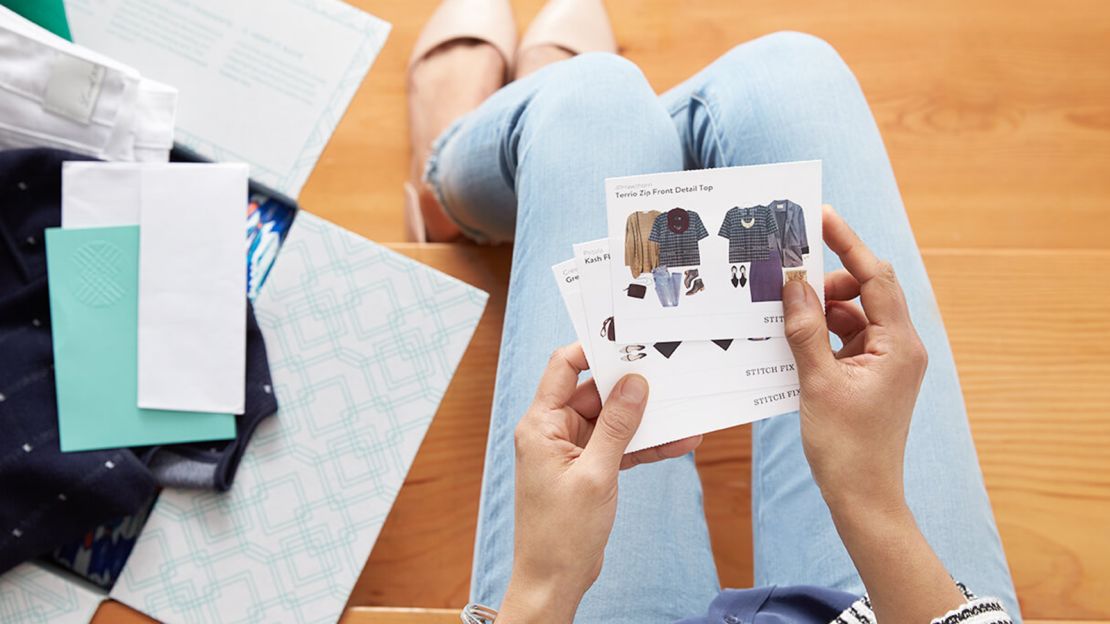
At the centre of the Stitch Fix experience is a simple idea that feels surprisingly different from traditional online fashion retail: your wardrobe should be built around you rather than forcing you to build yourself around whatever happens to be available. Instead of asking customers to begin with a catalogue, Stitch Fix starts by learning about the individual. Its Style Quiz collects information about preferences, sizing, fit, lifestyle and budget, creating a foundation for personalized recommendations. That information can then be combined with Stitch Fix’s personalization technology and the expertise of a human Stylist to curate clothing intended to work for a particular customer’s taste and everyday life.
That distinction matters because personal style is rarely as straightforward as selecting a category from a menu. Someone may describe their wardrobe as classic but still want occasional statement pieces. Another shopper might love minimalist clothing but dislike anything that feels too formal. Someone may prefer relaxed jackets but structured trousers, or love neutral colours while occasionally wanting something unexpected. These details are where conventional online shopping can struggle, because style is not simply a collection of product attributes. It is a combination of personality, lifestyle, comfort, occasion, budget and emotion. Stitch Fix’s model attempts to bring those layers together instead of treating every customer as another anonymous visitor clicking through a catalogue.
Where Human Stylists Meet Smart Technology
The human element remains one of the most distinctive parts of Stitch Fix’s approach. The company does not simply present personalization as an automated system in which an algorithm decides what someone should wear. Instead, its model combines technology with human styling expertise. Stitch Fix’s personalization systems can process large amounts of information and generate recommendations, while Stylists use those insights alongside their own judgement to select pieces for a customer. This creates an interesting partnership in which technology can help narrow the possibilities, while human expertise adds context, interpretation and creativity.
This combination becomes particularly relevant when a customer has preferences that are difficult to capture through traditional shopping filters. Imagine telling a Stylist that you need clothes for a new job, prefer neutral colours, want pieces that can transition from the office to dinner, dislike stiff fabrics and feel most comfortable in relaxed tailoring. A standard search engine might translate that into a few product categories, but a human Stylist can understand the lifestyle behind the request. Stitch Fix’s personalization technology is designed to help connect those different signals, giving the Stylist a richer picture of the customer before making a recommendation.
Your Feedback Becomes Part of Your Style Profile
One of the most interesting elements of personalized fashion is what happens after the recommendation. With Stitch Fix, the interaction does not necessarily end when a customer receives a Fix. Customers can provide feedback about individual pieces, including what they liked, what they disliked and how an item fit. That information can help inform future recommendations, creating a feedback loop between the shopper, the Stylist and the technology behind the experience.
This is important because a returned item is not necessarily useless data. If a customer says a pair of trousers was too small, that provides one type of information. If they explain that the waist was comfortable but the fit through the thighs was too tight, the feedback becomes much more meaningful. The system can potentially learn not only that the product did not work, but why it did not work. Over time, these small interactions can create a more detailed picture of an individual’s preferences and make future recommendations increasingly relevant.
The Algorithm Starts Learning What You Actually Like
Stitch Fix has also experimented with interactive ways of collecting style preferences. Its Style Shuffle experience allows customers to respond to different styles, creating additional signals about what they are drawn towards and what they would rather avoid. Rather than relying only on purchase history, these interactions can provide insight into preferences that may not yet have translated into an actual purchase.
This creates an important difference between conventional recommendation engines and a more dynamic personal styling model. Traditional e-commerce recommendations often work from what a customer has already bought or viewed. Personalized styling attempts to understand what the customer might want next. That distinction is increasingly important as fashion consumers become more comfortable discovering products through recommendation systems rather than actively searching for every item themselves.
From a Styling Box to a Personalized Digital Store
Stitch Fix’s personalization strategy is not limited to the traditional Fix experience. Its Freestyle shopping experience gives customers an opportunity to shop directly through a personalized assortment, with recommendations influenced by factors such as size, style and budget. This creates a bridge between assisted shopping and conventional e-commerce. Customers can still browse and make their own decisions, but the experience is designed to feel more relevant from the beginning.
The idea is significant because personalization does not have to mean removing choice. In fact, the most effective personalization may be about making choice easier. Instead of showing every possible product, a retailer can organize the enormous amount of available inventory around what is most likely to appeal to a particular customer. The customer still has control, but there is less irrelevant information standing between them and something they might actually want to buy.
What If One Favourite Piece Could Build the Whole Look?
Stitch Fix has also pushed personalization into outfit building by allowing customers to use an item they already love as the starting point for a new Fix. Rather than simply receiving a collection of independently selected products, the customer can begin with something they already know works for them and have the Stylist build around it.
That small change says a lot about how fashion discovery is evolving. Customers do not necessarily want a completely new wardrobe every time they shop. Often, they want help making better use of what they already own. A favourite pair of trousers might need a new jacket. A versatile dress might need different accessories. A much-loved blazer could become the foundation for several new looks. Personalization therefore becomes less about constantly selling something new and more about understanding how new purchases can fit into an existing wardrobe.
AI Is Changing the Meaning of a Personal Stylist
Artificial intelligence adds another layer to this evolution. Stitch Fix has been exploring machine learning and generative AI to help with areas such as personalization, customer feedback and outfit creation. The potential advantage is obvious: technology can process an enormous amount of product and customer information far faster than a person could manually evaluate it. AI can help identify patterns, connect preferences and surface combinations that might otherwise remain hidden within a huge inventory.
But the most interesting question is not whether AI can choose clothes. It is whether AI can understand context. Creating an outfit is easy when the goal is simply to produce something visually appealing. Creating an outfit that someone will actually wear is much harder. Would those shoes be comfortable for a full working day? Does the jacket work with pieces already hanging in the customer’s wardrobe? Is the silhouette flattering to their preferred style? Does the outfit make sense for their lifestyle rather than simply looking good on a screen?
This is where the combination of artificial intelligence and human styling becomes particularly compelling. Technology can process the information, identify patterns and generate possibilities, while a human can add judgement and a sense of real-world context. The future of personalized fashion may therefore not be about replacing the Stylist with AI, but about giving Stylists better tools to understand and serve customers.
The Bigger Retail Shift: Less Searching, Better Discovery
There is a much larger retail lesson behind Stitch Fix’s approach. For years, e-commerce has competed by offering consumers more: more brands, more collections, more products and more choice. But abundance eventually creates its own problem. When a customer has thousands of potentially suitable products available, finding the right one can become exhausting.
Personalization offers another solution. Instead of asking shoppers to search through everything, retailers can attempt to predict which products are most relevant and bring those choices closer to the customer. The value is not necessarily in having fewer products available; it is in reducing the amount of irrelevant information that shoppers have to navigate.
This trend extends far beyond fashion. Consumers already experience personalized recommendations when they stream entertainment, listen to music, book travel or discover content online. Fashion is increasingly becoming part of the same recommendation-driven ecosystem. The difference is that clothing carries a much stronger relationship with identity. What someone wears can communicate their personality, profession, mood and aspirations, making accurate personalization considerably more complicated and potentially much more valuable.
When Personalization Becomes a Relationship
The real opportunity for a fashion retailer is what happens when personalization moves beyond individual transactions. If a customer repeatedly feels that a platform understands their preferences, the relationship can become stronger than a simple buyer-and-seller interaction. A useful recommendation can create confidence. A Stylist who remembers what did not work can make the next interaction feel more thoughtful. A personalized shopping feed that consistently surfaces relevant pieces can reduce frustration.
Over time, the retailer begins to occupy a different position in the customer’s life. It is no longer simply a place to purchase clothing. It becomes part of the process through which the customer discovers, evaluates and develops their personal style.
That relationship, however, cannot remain static. Fashion preferences change. Lifestyles change. Sizes and fits change. Trends come and go. A customer who loved bright colours two years ago may now prefer understated neutrals. Someone who once needed corporate clothing may suddenly be working remotely. Good personalization therefore cannot simply remember the past; it needs to keep learning from the present.
The Future of Fashion May Be About Being Understood
Stitch Fix sits at an increasingly important intersection of fashion, technology, data science and human creativity. Its approach reflects a broader shift in consumer expectations: people are becoming less interested in navigating enormous catalogues and more interested in experiences that understand what they actually need. The appeal of personalized shopping is not simply that someone—or something—can choose clothes for you. It is that the right recommendation can remove some of the uncertainty and frustration that has traditionally come with online fashion shopping.
Perhaps that is why the idea of having your next favourite outfit chosen for you no longer sounds quite so strange. Consumers already trust algorithms to recommend what they watch, listen to and read. Fashion is now moving towards the same kind of personalized discovery, but with a crucial difference: the final product has to fit not only your preferences, but your life.
The future of fashion retail may therefore not belong exclusively to the brands with the biggest catalogues or the most products. It could belong to the platforms that become exceptionally good at understanding the individual behind the purchase. Stitch Fix is an early example of what that future can look like a fashion experience where data helps identify possibilities, AI helps make sense of complexity, human Stylists add judgement, and customer feedback continuously reshapes the experience. In a world overflowing with choice, the next big luxury may not be having access to everything. It may simply be having someone help you discover what feels unmistakably like you.
Affiliate Disclosure: This article may contain affiliate links. If you purchase a product or sign up for a service through one of these links, we may earn a commission at no additional cost to you. Our reviews and opinions are based on our editorial assessment and are not influenced solely by affiliate compensation.