
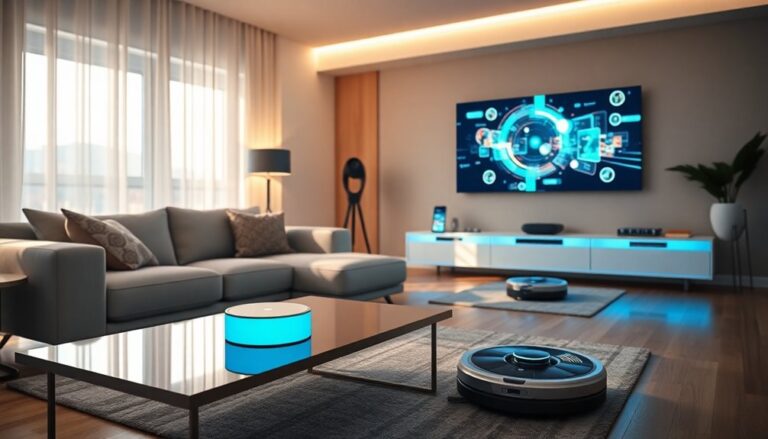
Luxury used to be easy to recognize. It lived in polished marble, designer furniture, private cars and watches that quietly announced their price without saying a word. Today, however, luxury is becoming less about what can be seen and more about what can be experienced. The most desirable homes are no longer defined only by their interiors; they are increasingly shaped by technology that makes everyday life feel effortless, private and remarkably personal.
The next generation of luxury gadgets reflects that shift. These are not simply devices designed to make life more convenient. They are products created around the idea that technology should disappear into the experience. A screen becomes an atmosphere. A speaker becomes part of the architecture. A mirror becomes a personal wellness station. A home begins to understand its occupants rather than simply responding to commands.
For affluent consumers, this represents a different kind of status. The question is no longer, “How expensive is the gadget?” Instead, it becomes, “How much better does my life feel because it exists?” From intelligent sleep systems to immersive entertainment and invisible home automation, these five categories could shape what luxury living looks like in the years ahead.
1. The Smart Sleep System That Turns Rest into a Luxury Experience
Sleep has quietly become one of the most valuable forms of luxury.
For years, luxury bedrooms were associated with oversized beds, premium mattresses, Egyptian cotton sheets and carefully designed lighting. But the emerging definition of bedroom luxury is becoming far more sophisticated. Smart sleep technology is beginning to transform the bed from a passive piece of furniture into an intelligent environment designed around the individual.
Imagine a sleep system capable of adjusting temperature throughout the night, monitoring sleeping patterns and responding to changes in the user’s environment. Instead of manually adjusting the room when it becomes too warm or too cold, the technology works in the background. The experience is deliberately subtle: you simply sleep better without having to think about why.
This is where luxury technology becomes particularly interesting. The most premium products are not necessarily the ones with the most visible features. They are the ones that remove friction from everyday life. A smart mattress, adaptive cooling system or connected sleep tracker can create an environment that feels almost tailored by a private concierge.
The appeal extends beyond comfort. In a culture increasingly obsessed with wellness, recovery and longevity, quality sleep has become a status symbol of its own. People are investing heavily in fitness trackers, recovery platforms, wellness retreats and health-focused experiences. The bedroom is naturally becoming the next frontier.
The luxury bedroom of the future may therefore look remarkably calm from the outside. There may be no obvious technology on display. Yet beneath that simplicity could be an entire ecosystem quietly monitoring, adapting and optimizing the environment.
That is perhaps the ultimate expression of modern luxury: technology that works so well that you barely notice it.
2. The Invisible Smart-Home System That Controls Everything
Luxury homes have always been built around control. Lighting, climate, security, entertainment and privacy are all carefully managed. What is changing is the way that control happens.
Instead of filling a home with visible screens and complicated switches, high-end smart-home systems are moving toward something much more intuitive. Lighting can adjust according to the time of day. Curtains can respond to sunlight. Temperature can be controlled room by room. Music can follow you through different spaces. Security systems can recognize unusual activity without demanding constant attention.
The real luxury lies in integration.
A beautifully designed home can lose some of its elegance when every wall contains another control panel, smart speaker or blinking device. The next generation of connected homes is moving in the opposite direction. Technology is being designed to become almost invisible, integrated into architecture rather than added on top of it.
Consider arriving home after a long day. The entrance lights come on at the appropriate brightness. The temperature has already been adjusted. Your preferred music begins playing softly in the living room. The blinds close as the evening begins, and the security system switches seamlessly into its nighttime mode.
You haven’t asked the house to do any of this.
That distinction matters.
Traditional smart homes are often command-based: the homeowner tells the technology what to do. Luxury smart homes are increasingly becoming context-based, where systems anticipate routines and respond accordingly.
This creates a fascinating new definition of convenience. Luxury is no longer necessarily about having more things. It is about having fewer things to manage.
3. A High-End Display That Can Transform the Entire Room
Entertainment has always been part of luxury living, but the traditional home theater is undergoing a transformation.
Large televisions once represented the ultimate entertainment upgrade. Then came ultra-high-definition displays, surround sound and dedicated cinema rooms. Now, the next step is less about owning the biggest screen and more about creating an immersive visual environment that can change with the room.
Imagine a display that appears almost invisible when it is not being used, transforming into a cinematic screen when you want to watch a film. Or picture an advanced projector that can turn an entire wall into a high-resolution visual experience without requiring a permanent television to dominate the room.
This matters because luxury interiors increasingly prioritize aesthetics.
A giant black rectangle may offer an impressive viewing experience, but it can also compete with carefully selected furniture, artwork and architectural details. New display technologies are attempting to solve that problem by making entertainment more adaptable.
The result is a living room that can change personality within seconds.
During the day, it might function as a minimalist social space. In the evening, it becomes a private cinema. During a dinner party, the display might disappear completely or transform into digital artwork. The technology becomes part of the interior rather than interrupting it.
This concept extends beyond television. Digital art displays, ambient projection systems and high-end interactive surfaces could eventually make walls more dynamic, allowing homeowners to change the atmosphere of a room without changing the physical space.
For luxury living, that flexibility could become just as important as screen size or resolution.
4. The Personal Wellness Gadget That Brings the Spa Home
Luxury is increasingly being measured in time, privacy and wellbeing. That makes personal wellness technology one of the most interesting categories to watch.
High-end consumers already spend enormous amounts on spas, retreats, fitness clubs and personalized wellness services. Technology is now attempting to bring some of that experience directly into the home.
Think beyond a conventional fitness tracker.
The next wave of luxury wellness gadgets could combine biometric monitoring, recovery technology, personalized environmental control and relaxation features into highly sophisticated home experiences. A device could help monitor recovery after exercise, while another adjusts lighting and temperature to create a calming environment. Advanced bathroom technology could turn an ordinary shower or bath into a personalized wellness ritual.
The important change is psychological as much as technological. Wellness is no longer treated simply as something that happens in a gym. It is becoming integrated into the architecture of everyday life.
The bathroom, bedroom, kitchen and living room can all become wellness environments.
A premium mirror, for example, could potentially combine lighting, fitness information, personal routines and wellness data in a single interface. Meanwhile, connected air-quality systems can monitor indoor environments, while smart lighting can support different moods throughout the day.
The luxury consumer is therefore buying something more valuable than another gadget.
They are buying control over their environment.
And that may become one of the defining characteristics of luxury in the next decade.
5. The Private AI Assistant That Knows How You Live
Perhaps the most transformative luxury gadget of all will not look particularly impressive.
It could simply be an AI assistant.
But unlike today’s basic voice assistants, future personal AI systems could become deeply integrated into the home and the owner’s lifestyle. Rather than waiting for individual commands, they could help coordinate schedules, manage connected devices, organize entertainment, assist with shopping and personalize everyday experiences.
Imagine an AI system that understands that you normally wake at seven, prefers softer lighting in the morning, likes the bedroom slightly cooler at night and usually listens to a particular type of music while preparing breakfast.
Instead of requiring you to issue a series of commands, the system could coordinate those preferences automatically.
The luxury element comes from personalization.
A private AI assistant could eventually function like a digital concierge that learns how its owner lives. It could organize travel information, prepare reminders, manage household routines and interact with other smart devices throughout the property.
Privacy, however, will become increasingly important as these systems become more powerful. The more an AI understands about someone’s routines, preferences and personal life, the more important security and data protection become.
That means the most desirable AI technology may not necessarily be the one with the largest number of features. It could be the system that offers the most sophisticated assistance while maintaining the strongest sense of privacy and control.
In that sense, AI could become the invisible layer connecting every other luxury gadget in the home.
Luxury Is Becoming Invisible
The interesting thing about all five of these technologies is that none of them needs to look traditionally luxurious.
There may be no gold finishes. No oversized logos. No obvious symbols of wealth.
Instead, luxury could increasingly be experienced through silence, personalization and effortless control.
The best smart-home system is the one you don’t have to constantly operate. The best sleep technology is the one you forget is working. The best entertainment system is the one that disappears when the movie ends. The best wellness technology is the one that makes your home feel more restorative. And the most valuable AI assistant may be the one that understands your preferences without making you feel controlled by technology.
This represents a broader shift in the luxury market.
For decades, luxury was largely about ownership. Today, it is increasingly about experience. Consumers want products that save time, improve comfort, protect privacy and create moments that feel uniquely their own.
Technology is perfectly positioned to deliver that kind of luxury because it can adapt.
A traditional luxury object remains largely the same regardless of who owns it. Intelligent technology can learn, personalize and evolve. That makes it fundamentally different from the luxury products of previous generations.
The future luxury home may therefore be less visually extravagant than today’s mansions. It could be calmer, cleaner and more minimal. Its sophistication may exist behind the walls, inside the furniture and within the invisible systems quietly running the household.
And perhaps that is the most interesting paradox of all.
The future of luxury may not be about showing people what you own.
It may be about creating a life so effortless that there is almost nothing left to show.
“The new language of luxury is not excess. It is effortless living, designed so precisely that technology disappears and the experience remains.”