
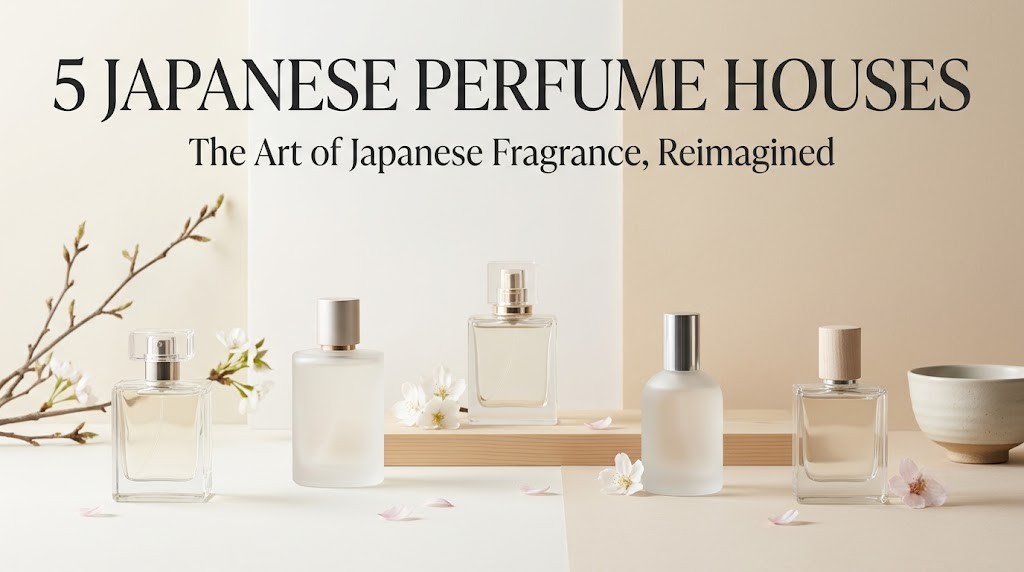
Luxury fragrance has traditionally been associated with projection: dramatic sillage, elaborate bottles, rare ingredients and compositions designed to announce themselves before the wearer even enters the room. But a quieter idea of luxury is gaining ground. Instead of asking a perfume to command attention, a growing generation of fragrance lovers is looking for something more intimate a scent that stays close to the skin, develops gradually and feels almost inseparable from the person wearing it. Japan has been cultivating this sensibility for years, and its perfume houses are now attracting international attention for precisely that reason.
Japanese perfumery approaches fragrance through restraint, atmosphere and emotional detail. Rather than relying exclusively on the conventional language of opulent florals, powerful woods or dense oriental compositions, many Japanese fragrance brands draw inspiration from everyday rituals, seasonal landscapes, familiar ingredients and fleeting memories. Tea, soap, hinoki, yuzu, skin, incense and freshly washed fabrics can become sophisticated olfactory subjects. The result is a distinctive interpretation of modern luxury: understated, personal and often deliberately difficult to describe in conventional terms. Recent international coverage has similarly highlighted Japanese fragrance for its delicate character, minimalist aesthetic and ability to remain close to the wearer rather than overpowering the surrounding space.
This does not mean Japanese perfume is simply synonymous with “light” fragrance. The more interesting story is the philosophy behind the compositions. Japanese perfume houses frequently treat scent as an extension of atmosphere and personal presence, allowing a fragrance to unfold instead of presenting its entire personality immediately. That approach makes Japanese niche perfume particularly compelling for people searching for sophisticated everyday fragrances, subtle luxury scents and compositions that feel distinctive without becoming theatrical.
Five houses, in particular, illustrate how this aesthetic is evolving.
J-Scent: Turning Japanese Memories into Wearable Fragrance
J-Scent occupies an unusual position in contemporary perfumery because its fragrances often begin with something instantly recognisable from Japanese life rather than an abstract idea of luxury. The brand, developed by Japanese fragrance company LUZ, has built a collection around cultural references, ingredients and everyday impressions, transforming subjects such as roasted green tea, ramune, yuzu, paper soap and soft skin into wearable compositions. Its catalogue has continued to expand, with newer creations joining earlier fragrances that helped establish the brand internationally.
What makes J-Scent particularly fascinating is the way it turns nostalgia into an olfactory experience. Roasted Green Tea does not simply use tea as another note in a conventional fragrance pyramid; the concept evokes the warmth and roasted character associated with the drink itself. Ramune approaches the familiar Japanese soda through a fresh, playful lens, while Yawahada meaning “soft skin” explores intimacy and the sensation of fragrance becoming part of the wearer rather than sitting obviously on top of them. International fragrance coverage has specifically pointed to J-Scent’s ability to transform Japanese traditions, nature and cultural memories into unusual perfume concepts.
That storytelling gives J-Scent an important role in the evolution of modern Japanese niche fragrance. The brand demonstrates that luxury does not necessarily need to come from exotic ingredients or extravagant presentation. It can come from the precision of an idea. A familiar memory, when interpreted with enough creativity, can become more intriguing than another predictable rose, oud or vanilla composition.
For fragrance enthusiasts searching for distinctive Japanese perfumes with cultural storytelling, J-Scent offers something particularly contemporary: scents that feel personal because their references are emotionally recognisable, yet unusual enough to create curiosity.
SHIRO: When Cleanliness Becomes a Luxury Statement
If J-Scent represents the imaginative side of Japanese perfumery, SHIRO represents its polished, effortless side. Born in Hokkaido, SHIRO has developed a broad beauty and fragrance universe built around an appreciation of natural ingredients and understated sensory experiences. Its fragrance collections include familiar names such as Savon, White Lily, White Tea and Kinmokusei, while the more conceptual SHIRO PERFUME collection gives perfumers greater freedom to explore individual creative identities.
SHIRO’s influence is particularly visible in the popularity of clean, fresh and softly elegant fragrances. Savon, for example, interprets the idea of soap and freshly cleaned skin rather than trying to create a dramatic olfactory spectacle. This concept of cleanliness may sound simple, but its simplicity is precisely what makes it powerful. In a fragrance market filled with increasingly complex compositions, there is something luxurious about smelling effortlessly fresh without seeming heavily perfumed.
The brand has also expanded beyond the idea of one universally recognisable signature. SHIRO’s Perfume collection allows different perfumers from around the world to express their own identities and creative perspectives, resulting in fragrances that can move into more abstract floral, woody and textural territory. SHIRO introduced seven additional fragrances to this collection in 2025, describing the range as a space where perfumers could express their individuality without being restricted by a single overarching theme.
This combination of accessible freshness and artistic experimentation explains why SHIRO fits so naturally into the contemporary quiet-luxury conversation. Its aesthetic is not about making fragrance look expensive. It is about making scent feel like an effortless part of daily life something you reach for because it belongs to your personal routine rather than because it needs to be noticed by everyone around you.
PARFUM SATORI: The Art of Fragrance as Quiet Presence
PARFUM SATORI takes the philosophy of subtle Japanese fragrance even further. Founded by perfumer Satori Osawa, the house is deeply connected to Japanese ideas of harmony, restraint and natural elegance. Its official philosophy describes fragrance as something that can evoke memory and emotion while quietly accompanying everyday life. The compositions are intentionally designed to blend with the skin and surroundings rather than dominate them.
The house’s approach is closely connected to the Japanese tea-garden concept of roji, the pathway leading toward a tea room. In Japanese tea culture, the journey through this garden is not merely physical; it represents a gradual transition away from everyday distractions and toward a more composed state of mind. PARFUM SATORI translates that idea into fragrance, paying close attention not only to the opening of a perfume but also to the transformation that occurs from the middle notes through the dry-down.
That emphasis on evolution is important. A perfume can be luxurious without producing an immediate impact. PARFUM SATORI treats the passage of time as part of the composition itself. The fragrance becomes something experienced gradually, almost privately, with different facets appearing as it warms against the skin.
This is where the house feels particularly relevant to the future of niche perfumery. In an era when fragrance discovery is increasingly driven by social media and instantly recognisable “beast mode” perfumes, PARFUM SATORI offers another proposition: fragrance as personal ritual. Its compositions do not necessarily ask, “How many people will notice me?” They ask a quieter question: “How does this scent make me feel as I move through my day?”
KITOWA: Japanese Woods, Incense and the Architecture of Calm
KITOWA approaches fragrance through one of Japan’s most enduring sensory traditions: aromatic woods. Established in 2018, the maison draws on Japanese woods such as hinoki, hiba and camphor, connecting contemporary perfumery with the country’s long relationship with incense, wood craftsmanship and natural materials.
There is something inherently architectural about KITOWA’s fragrance philosophy. Wood is not treated merely as a supporting base note; it becomes the foundation of the sensory experience. Hinoki can suggest the calm of a traditional bathhouse, forest air or polished timber, while hiba and camphor introduce their own distinctive aromatic character. This makes KITOWA particularly compelling for consumers who associate luxury with interiors, wellness, craftsmanship and a sense of place.
The brand also demonstrates how Japanese fragrance can occupy a sophisticated space between perfume and atmosphere. The same cultural vocabulary that informs incense, bathing rituals and traditional architecture can be translated into a contemporary fragrance wardrobe. Instead of creating an aggressive statement scent, KITOWA creates an atmosphere around the wearer.
That distinction matters. Modern luxury increasingly revolves around sensory environments the hotel lobby that smells unforgettable, the spa built around a signature aroma, the beautifully designed home where every material contributes to the mood. KITOWA’s wood-focused compositions naturally belong to this world because they communicate calm without sacrificing sophistication.
For anyone searching for Japanese woody fragrances, hinoki-inspired perfume or contemporary scents rooted in Japanese craftsmanship, KITOWA offers an especially distinctive interpretation of what luxury can smell like.
AUX PARADIS: Natural Elegance Without Excess
AUX PARADIS brings another dimension to the Japanese fragrance landscape: an emphasis on natural-feeling compositions that are designed to coexist with the wearer and the surrounding environment. The brand is recognised among Japanese fragrance houses for its relationship with natural materials and an approach that considers Japan’s climate and the experience of fragrance on Japanese skin.
Its appeal lies in the absence of unnecessary drama. AUX PARADIS reflects a broader movement toward fragrances that feel breathable, approachable and appropriate for everyday life. Rather than treating perfume as an occasional accessory reserved for evenings or formal events, the brand approaches scent as part of a daily personal ritual.
This idea may sound understated, but it reflects a significant change in how consumers increasingly understand luxury. A fragrance does not have to be rare-looking or intimidating to feel refined. It can be luxurious because it is beautifully balanced, thoughtfully made and comfortable enough to become part of someone’s identity.
That makes AUX PARADIS particularly relevant to the growing interest in skin-close fragrance and understated Japanese beauty. Its positioning reflects a broader cultural preference for products that feel considered rather than excessive a quality increasingly valued by consumers who want authenticity and craftsmanship without conspicuous branding.
Why Japanese Fragrance Feels So Relevant Now
The appeal of these Japanese perfume houses is not simply that they are different from European fragrance brands. Their significance lies in how closely their philosophies correspond with a wider shift in luxury consumption. Consumers are becoming more interested in personal expression, craftsmanship, ingredient stories and experiences that feel intimate rather than performative. The fragrance becomes less about entering a room with maximum impact and more about creating a private sensory signature.
This is particularly visible in the growing interest in skin scents, subtle perfumes and fragrances inspired by everyday rituals. Japanese houses have been exploring these ideas through their own cultural vocabulary for years. Soap, tea, wood, skin, seasonal flowers and familiar memories become sophisticated subjects because the emphasis is placed on interpretation rather than extravagance.
There is also a certain confidence in restraint. A fragrance that stays close to the skin requires the wearer to be part of the composition. It does not provide the same instant visual or olfactory announcement as an enormous projection-heavy perfume. Instead, someone has to come closer to discover it. That intimacy can make the experience feel more personal and, in its own way, more luxurious.
Japanese perfumery therefore offers an alternative definition of sophistication. It suggests that refinement can exist in the smallest details: the scent of roasted tea, the clean softness of freshly washed fabric, the warmth of skin, the aromatic character of hinoki or the gradual transformation of a perfume during the day.
The Future of Quiet Luxury May Smell Like Japan
The growing international curiosity around Japanese fragrance reflects more than a search for another niche perfume trend. It points toward a broader evolution in the language of luxury. J-Scent transforms memories into scent; SHIRO makes cleanliness and individuality feel sophisticated; PARFUM SATORI turns fragrance into an exercise in harmony and ritual; KITOWA builds contemporary perfume around Japanese woods and craftsmanship; and AUX PARADIS explores natural elegance through an understated daily sensibility. Together, they reveal how many different forms Japanese perfumery can take.
What connects them is not a single ingredient, fragrance family or aesthetic formula. It is an attitude toward scent. These houses understand that perfume can whisper instead of shout, suggest instead of explain and evoke a memory instead of simply announcing a list of notes.
Perhaps that is why Japanese fragrance feels so aligned with the next chapter of modern luxury. When conspicuous consumption becomes less interesting, discernment becomes more valuable. The most memorable fragrance may not be the one everyone smells from across the room. It may be the one someone notices only when they come closer and remembers long after the moment has passed.
Affiliate Disclosure: This article may contain affiliate links. If you purchase a product or sign up for a service through one of these links, we may earn a commission at no additional cost to you. Our reviews and opinions are based on our editorial assessment and are not influenced solely by affiliate compensation.