
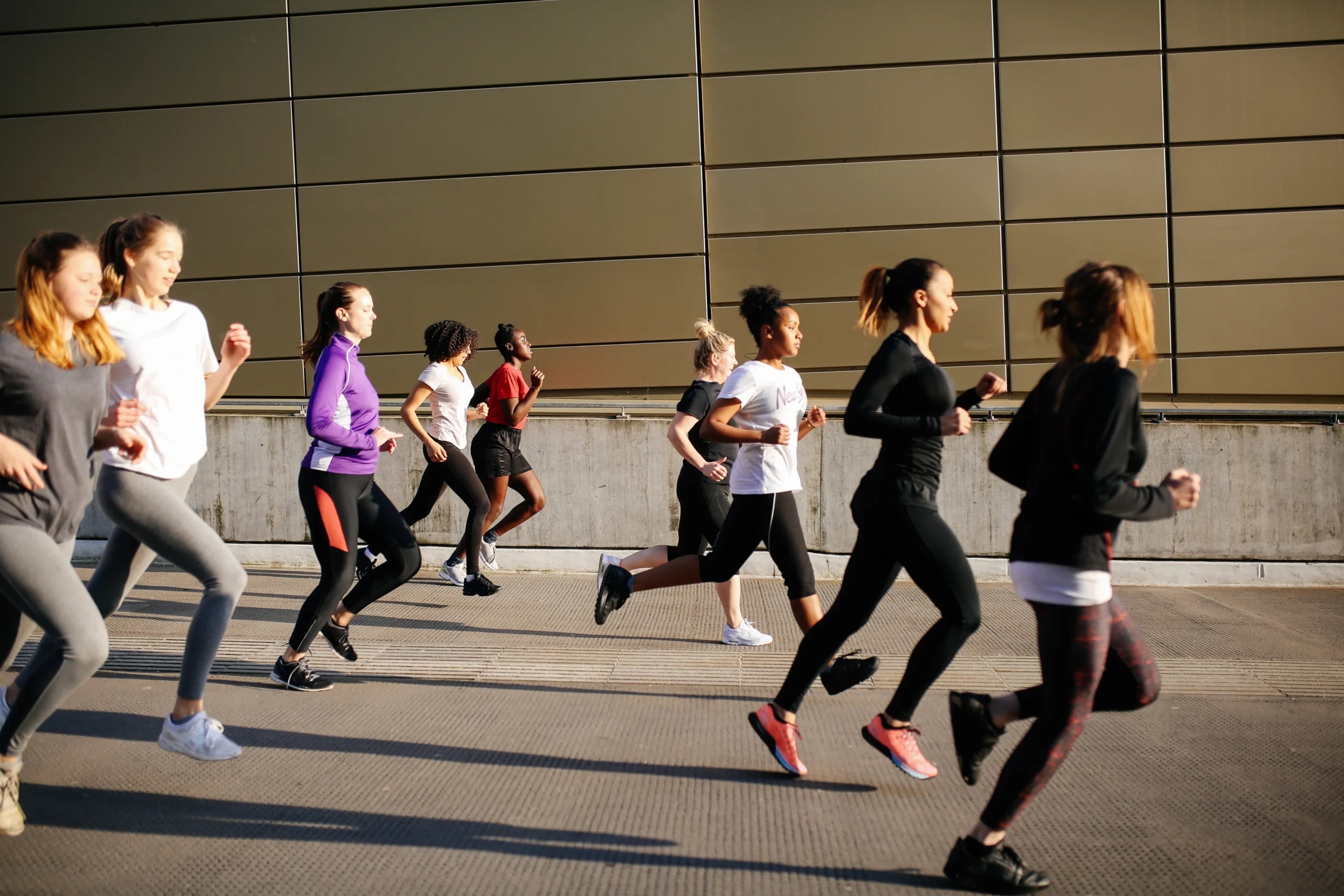
Running used to be one of the simplest forms of exercise: lace up, step outside, follow a route and come home. But across cities around the world, that idea has changed. A new generation of running clubs and urban run crews is transforming the solitary jog into something far more social, cultural and immersive. The modern running community is no longer defined only by pace, race times or athletic ability; it can be just as much about friendships, music, city exploration, creativity and having a reason to show up every week.
The growth of these communities reflects a broader shift in how people think about fitness. Running clubs are increasingly functioning as social spaces where strangers become familiar faces, newcomers find their people and regular exercise becomes part of a lifestyle rather than another item on a wellness checklist. A 2026 report on Bengaluru’s running scene, for example, describes weekend group runs as social hubs where participants build friendships and supportive networks alongside their fitness routines.
That global energy can be seen in everything from early-morning workouts on city landmarks to music-filled evening runs and community projects that connect running with social impact. Some groups are intensely urban and culture-driven, while others are designed around accessibility and giving back. What connects them is the idea that running can be about much more than the distance recorded on a watch.
Here are five global running communities that capture different sides of this evolving movement.
1. Midnight Runners: Where the Run Feels Like a Night Out
Imagine finishing a long day at work, putting on your running shoes and heading into the city not for a quiet solo jog, but to join a moving crowd accompanied by music, conversation and bursts of bodyweight exercises. That is the basic philosophy behind Midnight Runners, a global running community that has built its identity around making running feel like a social experience rather than a conventional workout.
The community began with two friends running at night with a small speaker. The idea grew quickly, eventually becoming a volunteer-led international running network. Midnight Runners now describes itself as a global community operating across cities including London, Amsterdam, Barcelona, Berlin, Hong Kong, Sydney, Tokyo, Paris and others. Its current website lists 18 cities and more than 240 crew captains, illustrating how a simple local running concept developed into an international community.
What makes the format distinctive is the way the run is structured. Its signature Bootcamp Run typically covers around 5–10 kilometres, but runners do not simply run the entire distance continuously. Sections of the route are interrupted by bodyweight exercise stops, allowing the group to regroup and giving runners an opportunity to meet people around them. Music is part of the experience too, creating an atmosphere that feels closer to a moving urban event than a traditional training session.
That approach also changes the psychology of joining a running club. You do not necessarily have to arrive as the fastest person in the group or someone preparing for a marathon. The experience is deliberately designed around participation, social connection and collective energy. For people searching for social running clubs in major cities, especially those who find traditional solo training repetitive, Midnight Runners represents a different interpretation of what a workout can look like.
Its broader appeal is perhaps best summed up by its philosophy: running is only the beginning. The community encourages people to continue socialising after the run, turning exercise into a recurring social ritual. In a world where many urban professionals struggle to make friends outside work, that combination of movement and connection can be just as important as the kilometres themselves.
2. November Project: The Early-Morning Community That Refuses to Stay Indoors
If Midnight Runners turns running into an evening social experience, November Project takes the concept in the opposite direction. Think early mornings, outdoor landmarks, group workouts and the kind of collective motivation that makes it considerably harder to hit snooze.
The movement was founded in Boston in 2011 by Brogan Graham and Bojan Mandaric, who initially created a commitment to keep exercising together during the city’s difficult winter months. What started as a personal accountability experiment evolved into a much larger open-to-the-public fitness community.
November Project is particularly interesting because it does not rely exclusively on conventional running. Its sessions can combine running, stairs, hills and bodyweight exercises, creating a group workout that feels broader than a standard road-running club. Historical descriptions of the movement have highlighted its free, public nature and its ability to bring together participants ranging from experienced athletes to people who are simply beginning their fitness journey.
The appeal of an early-morning running community is not difficult to understand. There is something powerful about starting the day surrounded by people who have voluntarily chosen to wake up, get outside and move. Instead of relying entirely on personal motivation, the group itself becomes part of the routine. Once people know that others will be waiting at a particular place and time, showing up can become a habit rather than a daily negotiation with yourself.
The name may suggest a seasonal project, but the concept became a year-round movement. Its origins also explain why community sits at the heart of the experience. The group was created around accountability before it became an international fitness phenomenon. That DNA remains important: the workout matters, but so does the shared commitment to turning up.
For anyone interested in discovering global fitness communities that combine running with outdoor group training, November Project offers an example of how consistency and community can become more motivating than competition alone.
3. Good Gym: When Every Run Has a Purpose Beyond the Run
Not every running club is built around music, nightlife or performance. GoodGym takes another route entirely by connecting physical activity with helping local communities.
The concept is straightforward but unusual: participants run or walk as part of sessions that involve completing practical tasks for community organisations and people who need support. Instead of treating exercise as an activity separated from everyday life, GoodGym combines movement with useful community work.
Its current group-run information describes sessions as free and welcoming to people across fitness levels, with walking options available and an emphasis on ensuring that people are not left behind. The organisation also offers community missions, where participants can make their own way to a task rather than joining a conventional group run.
That model changes the motivation behind running. The purpose is not simply to complete five kilometres or improve a personal record. There is another reason to get out the door: something needs to be done, and your movement helps make it happen.
This is particularly relevant to the wider evolution of fitness culture. People increasingly want their hobbies to connect with their values, communities and social lives. A running routine that also contributes to a local project can feel more meaningful than an isolated workout because the benefit extends beyond the individual.
GoodGym also demonstrates that running communities do not have to be intimidating spaces dominated by highly experienced athletes. The availability of walking options and the organisation’s explicit welcome to people of different fitness levels make the concept accessible to people who may not traditionally identify as runners.
For someone looking for community running groups with a social-impact element, this is a compelling model: the workout becomes the vehicle, while the real destination is community participation.
4. Run Dem Crew: Where Running Meets Music, Creativity and City Culture
Some running communities feel less like sports clubs and more like cultural movements. London-based Run Dem Crew is one of the clearest examples.
Founded in London by DJ, poet and youth mentor Charlie Dark, Run Dem Crew emerged with the intention of creating a running community for people who might not traditionally think of themselves as runners. Its identity has been strongly connected with music, creativity, urban culture and community rather than simply athletic performance.
That distinction matters because traditional running culture can sometimes appear highly structured: training plans, race targets, pace groups and personal bests. Run Dem Crew offers a different proposition, placing belonging and community at the centre. The crew has historically described itself as welcoming runners regardless of speed and has been involved in mentoring and community work with young people in London.
Its influence also extends beyond its own weekly runs. The crew has been associated with the broader Bridge The Gap movement, which connects urban running communities internationally through running, music, art, creativity and events. This creates an interesting global network in which running becomes a shared cultural language between different cities.
That is what makes Run Dem Crew particularly relevant to the modern running movement. It challenges the assumption that running culture has to be purely about sport. A city can become part of the experience; music can shape the atmosphere; friendships can become as important as training; and creative communities can grow around something as simple as moving through the streets together.
For people searching for urban running communities that combine fitness with music, creativity and city culture, Run Dem Crew represents a side of running that feels distinctly contemporary.
5. parkrun: The Weekend Ritual That Makes Running Feel Accessible
While some running crews are defined by their distinctive personalities and city culture, parkrun has built its appeal around simplicity. The concept is remarkably easy to understand: a free, timed 5K community event that takes place regularly and welcomes people across different ability levels.
That simplicity is precisely what gives the format its staying power. You do not need to be preparing for a marathon. You do not need to chase a particular pace. You simply arrive, participate and become part of a recurring local routine.
The broader growth of running communities shows why this model works. RunningCrews.com currently maps thousands of running crews across more than a thousand cities, reflecting the sheer scale and variety of contemporary running culture worldwide.
Parkrun’s appeal is particularly strong for people who may feel uncertain about joining a more specialised running club. A recurring 5K creates a clear entry point. Beginners can participate alongside experienced runners, while regular participants can gradually turn the event into a weekly personal ritual.
There is also something culturally interesting about the predictability of the format. In an increasingly digital world, a recurring community event gives people a physical appointment with their city. You know there will be people there, you know roughly what to expect and you can measure your own progress without making competition the entire point.
For travellers and people moving between cities, recurring community runs can also provide an unusually easy way to meet locals. Instead of experiencing a destination only through restaurants, attractions and hotels, a runner can experience it through neighbourhood routes and the people who live there.
The New Running Culture Is About More Than Pace
Taken together, these five communities reveal why running has become such a powerful lifestyle activity. Midnight Runners adds music and nightlife energy. November Project turns early mornings into collective accountability. GoodGym connects movement with community service. Run Dem Crew blends running with music, creativity and urban culture. Parkrun makes the basic group-run experience approachable and repeatable.
None of these models requires running to mean exactly the same thing to everyone. That may be the most important change happening in contemporary running culture. The sport is becoming more flexible, more social and more connected to the places where people actually live.
The rise of global running crews also reflects a desire for real-world connection. Running requires very little equipment, can happen almost anywhere and naturally creates opportunities for conversation. A person can arrive alone and leave knowing several new people. A traveller can find a community in an unfamiliar city. Someone returning to exercise can discover encouragement rather than judgment.
And perhaps that explains why the modern running club increasingly resembles a lifestyle community. The run itself may last an hour, but the relationships, routines and identity built around it can extend much further.
The next time you see a group of runners moving through a city together, it may be worth looking beyond the obvious. They might not simply be training for a race. They could be building friendships, discovering their neighbourhood, supporting a local cause, sharing music or simply finding a reason to get outside every week.
The distance is still there. The difference is that now, for millions of runners around the world, the miles are only part of the story.
Affiliate Disclosure: This article may contain affiliate links. If you purchase a product or sign up for a service through one of these links, we may earn a commission at no additional cost to you. Our reviews and opinions are based on our editorial assessment and are not influenced solely by affiliate compensation.