
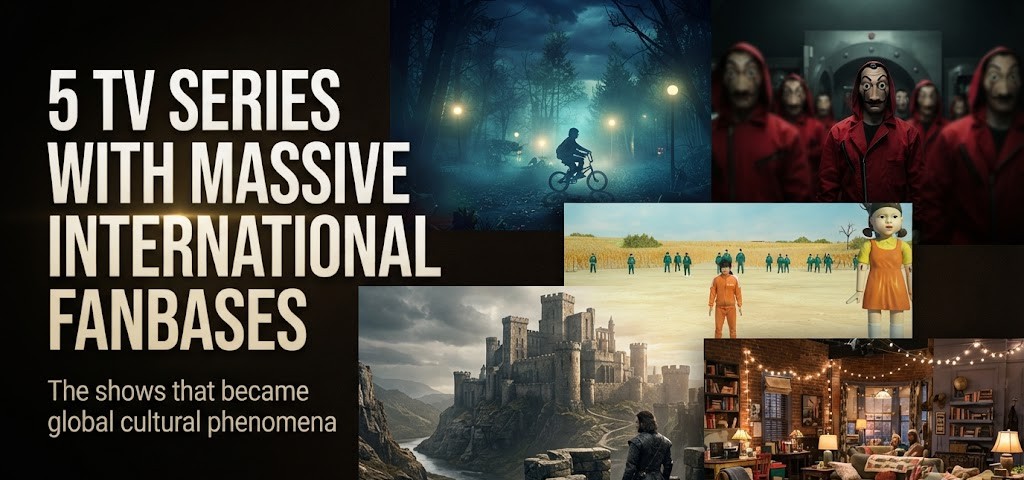
A great television series can entertain an audience for a few hours, but a truly global phenomenon can become part of everyday culture. Certain shows manage to cross borders, languages and cultural differences with remarkable ease, creating communities of viewers who may live thousands of miles apart yet share the same characters, theories, catchphrases and emotional attachments. In an increasingly fragmented entertainment landscape, where viewers have more streaming platforms and programming choices than ever before, building an international fanbase has become a remarkable achievement in itself. The biggest television successes are no longer defined only by domestic ratings; their influence can be measured through worldwide streaming audiences, social media conversations, fan communities, merchandise, memes and the way characters become recognizable far beyond their original market.
The rise of global streaming has accelerated this phenomenon dramatically. A series that might once have remained primarily popular in its country of origin can now reach viewers across continents almost simultaneously. Subtitles and dubbing have removed many of the traditional barriers to international television, while social platforms have created a second life for shows between episodes and seasons. Viewers do not simply watch anymore; they discuss plot twists, create fan theories, share edits, recreate iconic scenes and introduce the series to friends who might never have discovered it otherwise. The result is a new generation of television franchises whose cultural footprint extends well beyond the screen.
Stranger Things: The Nostalgia-Driven Series That Became a Worldwide Obsession
Few modern television shows demonstrate the global power of streaming quite like Stranger Things. Created by the Duffer Brothers, the Netflix science-fiction drama transformed a nostalgic story inspired by 1980s popular culture into an international entertainment brand. Its combination of supernatural mystery, coming-of-age storytelling, friendship and adventure gave it a broad emotional appeal, allowing audiences from very different cultural backgrounds to connect with the young characters at the heart of the story. Rather than relying solely on complex mythology, the series built its popularity around relationships viewers could immediately understand: friendship, family, loyalty, fear and the desire to protect the people who matter most.
What made Stranger Things particularly effective as a global television property was its ability to turn nostalgia into something accessible even to viewers who did not grow up during the 1980s. Its visual identity, synth-heavy atmosphere, distinctive fashion and references to classic genre entertainment created a recognizable aesthetic, while the story itself remained contemporary enough for younger audiences. Characters such as Eleven, Mike, Dustin, Lucas, Will, Max and Steve became international fan favourite’s, with their personalities and relationships generating enormous discussion across social platforms.
The show’s influence also demonstrates how television fandom increasingly exists outside the traditional viewing experience. Music associated with the series experienced renewed attention, costumes inspired by its characters became popular at events, and scenes from the show circulated extensively online. Its success illustrates an important shift in entertainment: a series does not need to be universally understood in exactly the same cultural context to become globally recognizable. Strong characters, memorable visual storytelling and an emotionally engaging narrative can provide a common language for viewers around the world.
Money Heist: How a Spanish Thriller Became a Global Cultural Phenomenon
The international journey of Money Heist, originally titled La Casa de Papel, offers another fascinating example of how streaming can completely transform the life of a television series. The Spanish crime thriller was initially produced for Spanish television, but its arrival on Netflix introduced it to a much wider international audience. What followed was a dramatic expansion of its fanbase, turning a Spanish-language series into one of the most recognizable international television titles of its generation.
Part of the show’s appeal came from its carefully constructed characters and its unusual approach to the traditional heist genre. Instead of focusing exclusively on the mechanics of a robbery, the series placed enormous emphasis on personalities, relationships, loyalty and psychological conflict. The Professor, Tokyo, Berlin, Nairobi, Rio and the other members of the group developed distinctive identities that gave viewers different characters to connect with, debate and root for. This character-driven storytelling helped the series maintain momentum even as its plot became increasingly complicated.
Its visual symbols also became remarkably powerful. The red jumpsuits and Salvador Dalí masks evolved beyond simple costumes into recognizable representations of the series itself. The show’s music became closely associated with its identity, while its imagery appeared across social media, fan events and popular culture. Importantly, the success of Money Heist challenged the assumption that English-language television automatically has the greatest potential for worldwide popularity. Its international reception demonstrated that audiences are increasingly willing to watch subtitled or dubbed content when the storytelling provides enough emotional and narrative momentum.
The phenomenon also reflects a larger transformation in the global entertainment industry. International viewers are no longer limited to programming produced specifically for their domestic markets. A compelling story can emerge from Madrid, Seoul, Copenhagen, Tokyo or anywhere else and find an audience thousands of miles away. Money Heist became an important example of this borderless television ecosystem, helping pave the way for audiences to explore more non-English-language series.
Squid Game: The Korean Series That Redefined Global Television Reach
When Squid Game arrived on Netflix, it quickly became much more than another successful streaming series. The South Korean survival drama became a worldwide cultural event, demonstrating the enormous international appetite for stories that combine social commentary with high-concept entertainment. Its premise was immediately understandable: financially desperate contestants enter a mysterious competition where familiar childhood games are transformed into life-or-death challenges. Beneath that simple setup, however, the series explored themes involving inequality, debt, desperation, social pressure and the human cost of economic insecurity.
The show’s international appeal was partly driven by its striking visual language. The bright geometric sets, distinctive costumes and contrasting colors created imagery that could be recognized instantly, even by people who had never watched an episode. The juxtaposition of innocent childhood games with an increasingly disturbing environment gave the series a visual identity that was difficult to ignore. In the social media era, this became especially powerful because individual scenes, costumes and symbols could circulate independently of the full story.
Another important factor was the universality of its emotional themes. Although the characters were Korean and the story was rooted in Korean society, the underlying questions were recognizable to audiences around the world. Financial pressure, competition, family responsibility and the fear of losing economic security are not limited to one country. This allowed international viewers to interpret the series through their own experiences while still engaging with its specifically Korean setting and storytelling style.
Squid Game also contributed to the growing global visibility of Korean entertainment. Its success arrived during a broader international expansion of Korean film, television, music and popular culture, demonstrating that non-English-language entertainment could sit at the center of mainstream global conversation. The series became an example of how cultural specificity and international accessibility can coexist rather than compete with each other.
Game of Thrones: The Fantasy Epic That Created a Worldwide Viewing Ritual
Before the streaming era fully reshaped television consumption, Game of Thrones had already demonstrated how a television series could become a global appointment-viewing phenomenon. Based on George R. R. Martin’s A Song of Ice and Fire novels, the HBO fantasy drama combined political intrigue, warfare, family conflict, mythology and large-scale world-building into a series that attracted an enormous international audience.
Its appeal was partly rooted in unpredictability. Traditional television often established clear distinctions between heroes and villains, but Game of Thrones frequently complicated those expectations. Major characters could experience dramatic transformations, alliances could collapse without warning and seemingly central figures could disappear from the story. This unpredictability generated constant discussion between episodes and seasons, creating an unusually active international fan culture.
The show’s world-building also gave audiences an enormous amount of material to analyze. Viewers debated family histories, political alliances, prophecies, symbols and hidden clues, turning each episode into the beginning of a larger conversation. Online forums, social media platforms and fan communities became extensions of the viewing experience. For many viewers, watching Game of Thrones was not a solitary activity; it became a shared global ritual.
Its production scale further strengthened its identity. Massive sets, elaborate costumes, visual effects and cinematic battle sequences helped redefine expectations for what television could look like. The distinction between premium television and blockbuster cinema became increasingly blurred, and the series became part of a broader shift toward television productions receiving enormous creative and financial investment.
Perhaps most significantly, Game of Thrones demonstrated that complex storytelling could become mainstream entertainment when supported by compelling characters and an expansive fictional world. Its international fanbase was not built around one demographic. Fantasy enthusiasts, political-drama viewers, casual television audiences and viewers attracted by its cultural conversation all found reasons to follow the story.
Friends: The Sitcom That Refused to Disappear
While many modern international television successes were accelerated by streaming, Friends achieved something different: extraordinary global longevity. Originally broadcast during the 1990s and early 2000s, the American sitcom continued finding new audiences long after its original television run ended. Its international popularity has been sustained through reruns, syndication and later streaming availability, making it one of the clearest examples of a television series developing a life far beyond its original broadcast era.
The show’s premise was deceptively simple. Six friends navigate relationships, careers, family problems and adulthood while spending much of their time together in New York City. Yet the simplicity of the setup became one of its greatest strengths. Viewers did not need extensive knowledge of American politics, history or mythology to understand the central experiences. Friendship, awkward dating situations, career uncertainty, jealousy, family dynamics and personal growth are broadly relatable subjects.
The personalities of Rachel, Ross, Monica, Chandler, Joey and Phoebe became the foundation of the show’s enduring popularity. Each character offered a distinctive comedic identity, while the chemistry between the ensemble created a sense of familiarity that encouraged viewers to return repeatedly. Over time, many fans began treating the characters almost like fictional friends of their own.
Its international legacy is particularly interesting because Friends belongs to a different era of television distribution. Its global reach was not initially powered by algorithmic recommendations or viral TikTok clips. Instead, its popularity expanded through television networks, reruns, DVDs, word of mouth and eventually digital platforms. The series therefore represents an earlier model of international television fandom one based on familiarity and repetition rather than instant global release.
Why These Shows Became More Than Just Television
Although these five series belong to very different genres, their international fanbases reveal several common characteristics about modern entertainment. None became globally recognizable simply because they belonged to a particular country or genre. Their broader appeal came from a combination of memorable characters, distinctive storytelling, strong visual identities and themes that could resonate beyond cultural boundaries.
The international television audience has also become far more adventurous. Viewers are increasingly comfortable moving between languages, countries and genres when a series offers something compelling. A Spanish crime thriller can become a global hit, a Korean survival drama can dominate international conversation, an American fantasy epic can create worldwide viewing rituals, and a sitcom from the 1990s can continue attracting younger generations decades after its debut.
Streaming platforms have undoubtedly accelerated this transformation, but technology alone does not create fandom. The most successful series give audiences something worth talking about after the screen goes dark. They create characters viewers remember, moments people want to share and stories that invite interpretation. In that sense, the strongest international fanbases are built not simply through availability, but through emotional investment.
Television has therefore evolved from a primarily national form of entertainment into an increasingly global cultural language. The next major phenomenon may come from a market audiences have not traditionally associated with mainstream television, and its success may depend less on where it was produced than on whether viewers around the world see something familiar in its characters, conflicts and aspirations. That is the real power of a global television phenomenon: it begins as someone else’s story, but eventually becomes part of everyone’s conversation.
Affiliate Disclosure: This article may contain affiliate links. If you purchase a product or sign up for a service through one of these links, we may earn a commission at no additional cost to you. Our reviews and opinions are based on our editorial assessment and are not influenced solely by affiliate compensation