Introduction
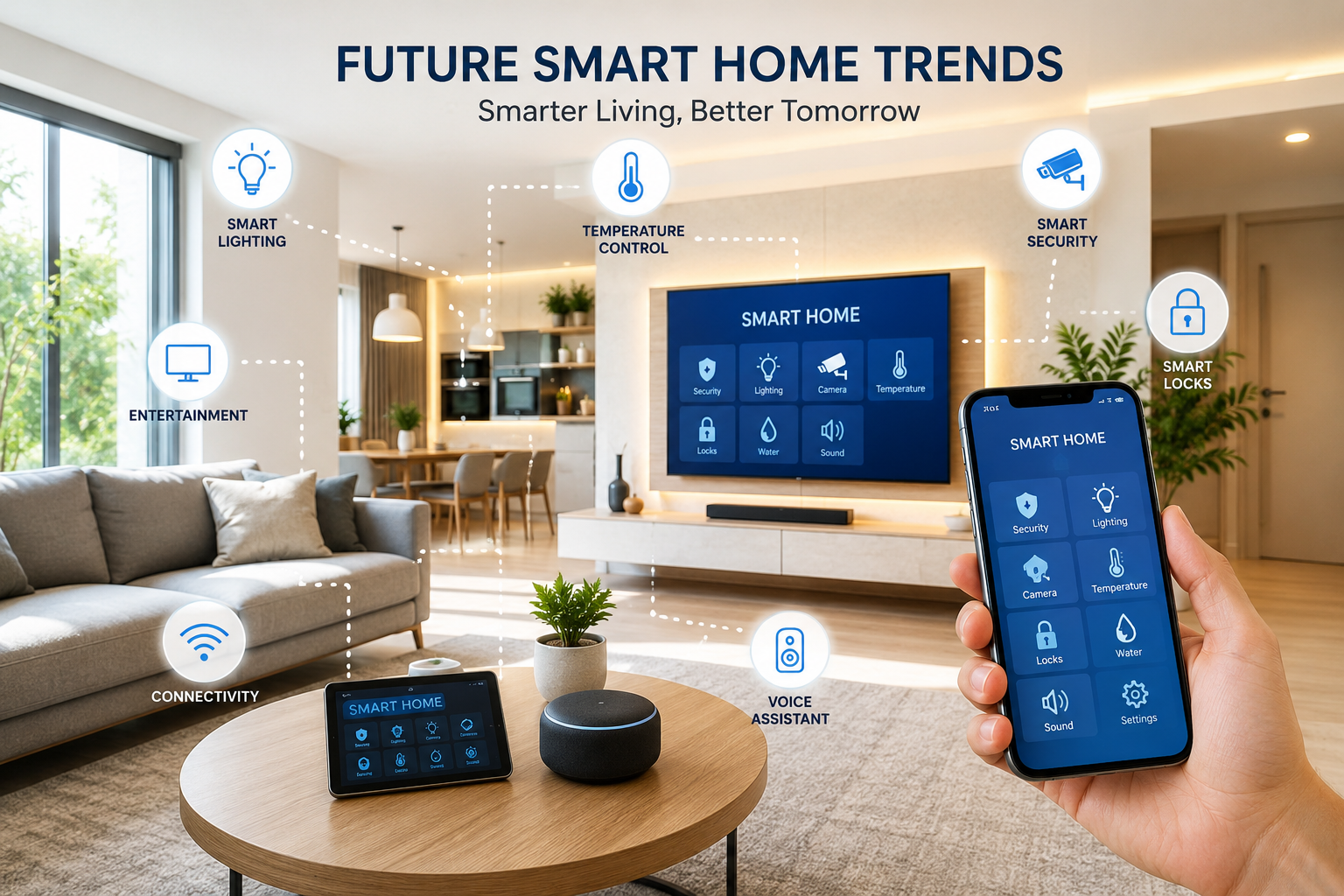
The concept of a smart home has evolved dramatically over the past decade. What once seemed like a futuristic luxury is now becoming a standard feature in modern households worldwide. From voice-controlled assistants and automated lighting systems to AI-powered security cameras and energy-efficient appliances, smart technology is transforming the way people live, work, and manage their homes.
As technology continues to advance, homeowners are witnessing the emergence of innovative smart home solutions that offer greater convenience, security, sustainability, and personalization. The future of smart homes is no longer limited to controlling devices through a smartphone app. Instead, it involves intelligent ecosystems capable of understanding user behaviour, anticipating needs, and creating seamless living experiences.
This article explores the most important smart home trends that every homeowner should know as technology shapes the homes of tomorrow.
1. Artificial Intelligence-Powered Home Automation
Artificial Intelligence (AI) is becoming the driving force behind modern smart homes. Traditional automation relied on pre-programmed schedules and manual commands. Future smart homes, however, will use AI to learn occupants’ habits and preferences automatically.
For example, AI systems can:
- Adjust room temperatures based on daily routines.
- Turn lights on and off according to occupancy patterns.
- Suggest energy-saving actions.
- Manage household devices with minimal human input.
Voice assistants such as Google Assistant, Amazon Alexa, and Apple’s Siri are already incorporating advanced AI capabilities. Future systems will become even more intuitive, allowing homes to predict needs before user’s issue commands.
AI-powered automation will enhance convenience while reducing energy consumption and operational costs.
2. Advanced Smart Security Systems
Home security remains one of the biggest reasons homeowners invest in smart technology. Future security systems will be significantly more intelligent and proactive.
Emerging trends include:
Facial Recognition Technology
Modern smart cameras can identify family members, visitors, and potential intruders. Instead of sending generic alerts, systems can provide personalized notifications.
AI-Based Threat Detection
Advanced algorithms will distinguish between normal activity and suspicious behaviour, reducing false alarms caused by pets, weather conditions, or passing vehicles.
Smart Locks and Biometric Access
Traditional keys are gradually being replaced by:
- Fingerprint authentication
- Facial recognition
- Mobile phone access
- Voice verification
These technologies offer higher levels of security and convenience.
Real-Time Monitoring
Homeowners can monitor their property remotely through smartphones, tablets, and wearable devices, ensuring peace of mind regardless of location.
3. Energy-Efficient Smart Homes
As energy costs rise and environmental concerns increase, smart homes are becoming important tools for sustainability.
Future smart homes will focus heavily on reducing energy waste through intelligent management systems.
Key innovations include:
Smart Thermostats
Devices such as Nest and Ecobee already optimize heating and cooling based on user behaviour. Future versions will integrate weather forecasts, occupancy data, and energy pricing information.
Smart Lighting
Advanced LED systems can:
- Automatically adjust brightness
- Respond to natural light levels
- Turn off when rooms are empty
Energy Monitoring Systems
Homeowners will gain detailed insights into energy consumption patterns, helping them identify inefficiencies and reduce utility bills.
Smart Appliances
Future refrigerators, washing machines, and dishwashers will operate during off-peak hours to lower energy costs while minimizing environmental impact.
4. Integration Through the Matter Standard
One major challenge facing smart homeowners today is device compatibility. Different brands often require separate apps and ecosystems.
The Matter standard is changing this landscape.
Developed by major technology companies including Apple, Google, Amazon, Samsung, and others, Matter creates a universal communication protocol that enables devices from different manufacturers to work together seamlessly.
Benefits include:
- Simplified setup processes
- Improved device compatibility
- Enhanced security standards
- Greater flexibility when purchasing new products
As Matter adoption expands, homeowners can expect more unified and reliable smart home experiences.
5. Smart Health and Wellness Technology
Health-focused smart home technology is becoming increasingly important, especially as populations age and remote healthcare expands.
Future homes will support physical and mental well-being through intelligent monitoring systems.
Examples include:
Air Quality Monitoring
Smart sensors can detect:
- Dust particles
- Carbon dioxide levels
- Volatile organic compounds (VOCs)
- Humidity fluctuations
The system can automatically activate air purifiers or ventilation systems when necessary.
Sleep Optimization
Smart beds, lighting systems, and climate controls can create ideal sleeping conditions by adjusting temperature, noise levels, and lighting automatically.
Elderly Care Solutions
Advanced sensors can monitor movement patterns, detect falls, and alert caregivers or emergency services when assistance is required.
These innovations can improve quality of life while supporting independent living.
6. Smart Kitchens Becoming More Intelligent
The kitchen is rapidly becoming one of the most technologically advanced areas of the home.
Future smart kitchens will feature appliances capable of communicating with one another and assisting users in meal preparation.
Emerging technologies include:
AI-Powered Refrigerators
Smart refrigerators can:
- Track food inventory
- Suggest recipes
- Monitor expiration dates
- Generate shopping lists automatically
Intelligent Cooking Appliances
Smart ovens and cooktops can recognize ingredients, recommend cooking settings, and monitor food preparation in real time.
Voice-Controlled Cooking
Homeowners can access recipes, timers, nutritional information, and cooking instructions through voice commands while keeping their hands free.
These innovations will make cooking more efficient and enjoyable.
7. The Rise of Smart Home Robotics
Robotics is becoming a significant part of the smart home ecosystem.
While robotic vacuum cleaners are already common, future home robots will perform a wider range of tasks.
Potential applications include:
- Floor cleaning
- Window cleaning
- Lawn maintenance
- Package delivery
- Home surveillance
- Elderly assistance
AI-powered robots will navigate homes more effectively, interact naturally with residents, and perform routine tasks independently.
As costs decrease, household robotics will become increasingly accessible to average consumers.
8. Smart Home Entertainment Evolution
Entertainment technology is also undergoing major transformation.
Future homes will offer immersive entertainment experiences through advanced audio, video, and virtual reality technologies.
AI-Personalized Content
Streaming platforms will use advanced recommendation systems to deliver highly personalized viewing experiences.
Smart Audio Systems
Multi-room audio systems will provide synchronized sound throughout the home while adapting automatically to user preferences.
Virtual Reality Integration
VR and AR technologies may become integrated into daily home entertainment, enabling interactive gaming, education, and virtual experiences.
Intelligent Displays
Future televisions and displays will automatically optimize brightness, sound quality, and content recommendations based on user behavior and environmental conditions.
9. Enhanced Privacy and Cybersecurity
As smart homes become more connected, cybersecurity will become increasingly critical.
Future homeowners must prioritize protecting personal information and connected devices from cyber threats.
Important trends include:
End-to-End Encryption
Manufacturers are implementing stronger encryption methods to secure data transmission.
Multi-Factor Authentication
Additional verification steps help prevent unauthorized access to devices and accounts.
Local Data Processing
Instead of sending all information to cloud servers, future devices will process more data locally, improving privacy and reducing security risks.
Automatic Security Updates
AI-powered systems will identify vulnerabilities and install security patches automatically.
Cybersecurity will become a core feature rather than an optional consideration.
10. Sustainable and Eco-Friendly Smart Homes
Sustainability is shaping the future of residential technology.
Homeowners increasingly seek solutions that reduce environmental impact while lowering operating costs.
Key developments include:
Solar Energy Integration
Smart energy systems can optimize solar panel performance and battery storage.
Water Conservation Technology
Smart irrigation systems monitor weather conditions and soil moisture levels to minimize water waste.
Waste Management Solutions
Future systems may automatically sort recyclable materials and monitor waste generation patterns.
Carbon Footprint Tracking
Smart home platforms will provide detailed sustainability reports, helping homeowners make environmentally responsible decisions.
These technologies support greener lifestyles while delivering financial savings.
Conclusion
The future of smart homes is defined by intelligence, connectivity, security, and sustainability. Advances in artificial intelligence, robotics, energy management, health monitoring, and cybersecurity are transforming homes into responsive environments that actively improve daily life.
As technologies such as AI-driven automation, Matter-enabled interoperability, smart health systems, and household robotics become more mainstream, homeowners can expect unprecedented levels of convenience and efficiency. At the same time, growing emphasis on privacy, security, and environmental responsibility will ensure that smart homes remain both practical and trustworthy.
For homeowners planning renovations, new construction projects, or technology upgrades, understanding these emerging trends is essential. Investing in future-ready smart home solutions today can enhance comfort, reduce costs, improve security, and increase property value for years to come.
The smart home revolution is only beginning, and the homes of the future will be more connected, intelligent, and sustainable than ever before.