Introduction: Welcome to the Era of Intelligent Living
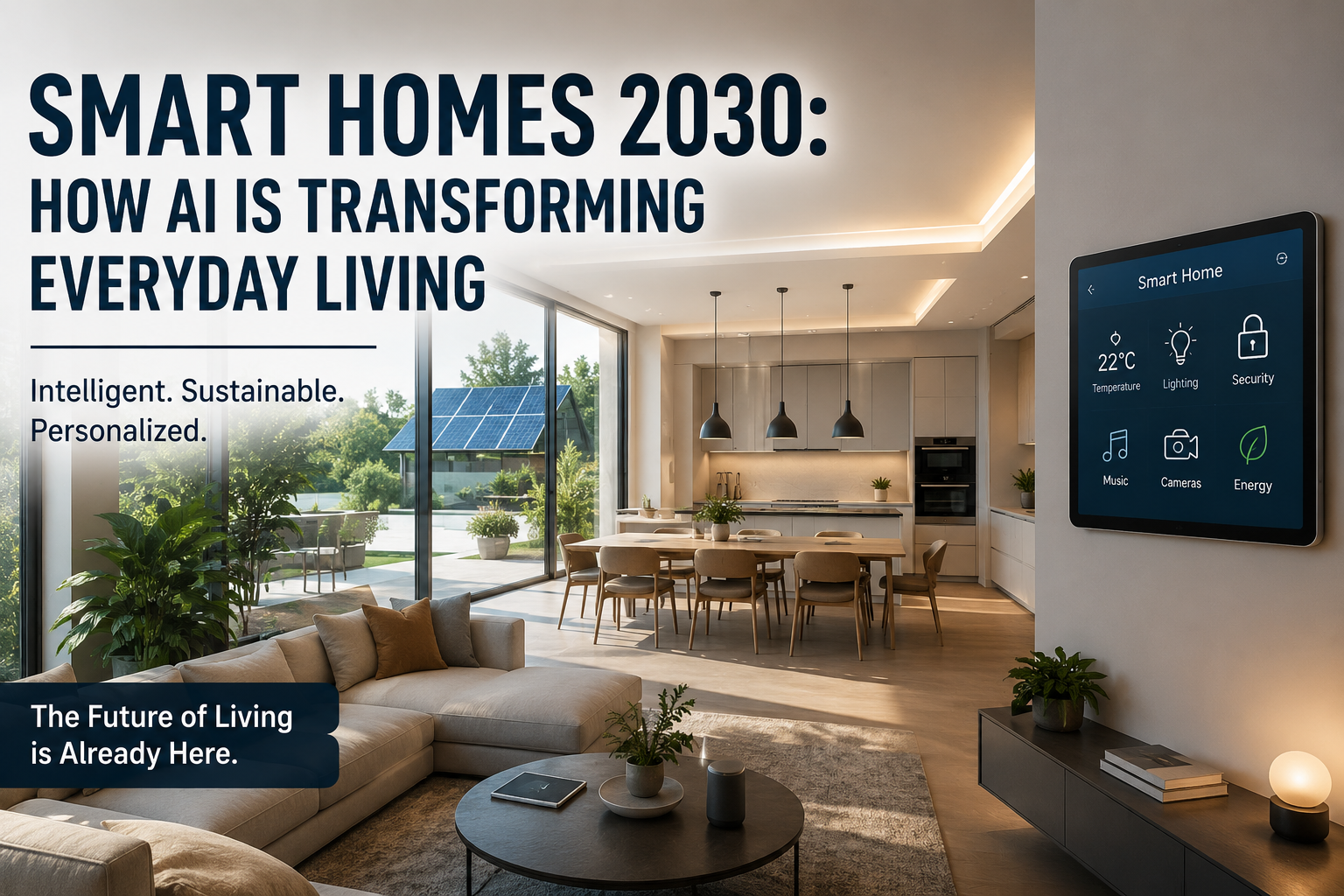
The home of the future will not simply be a place where people live it will become an intelligent environment that understands, adapts, and responds to human needs. By 2030, artificial intelligence (AI) is expected to transform homes from traditional spaces into smart ecosystems designed around comfort, efficiency, security, and personalization.
Today’s smart homes already include voice assistants, automated lighting, connected appliances, and smart security systems. However, the next generation of homes will move far beyond simple commands. AI-powered homes will learn daily routines, predict preferences, optimize energy usage, monitor health, and create personalized experiences without constant human input.
The future home will not ask, “What should I do?” Instead, it will understand what needs to happen before homeowners even realize it themselves.
The Evolution From Smart Homes to AI Homes
The first generation of smart homes focused on connectivity. Devices could connect to the internet and be controlled remotely through smartphones. Homeowners could turn lights on and off, adjust thermostats, or check security cameras from anywhere.
The next phase is intelligent automation.
AI will allow homes to analyse patterns and make decisions based on data. For example, instead of manually adjusting the temperature every evening, an AI-powered climate system will understand your schedule, recognize when you usually arrive home, and automatically create the ideal environment.
A smart home of 2030 will combine:
- Artificial intelligence
- Internet of Things (IoT)
- Robotics
- Advanced sensors
- Voice and gesture recognition
- Predictive technology
Together, these technologies will create homes that feel more like personal assistants rather than simple buildings.
AI-Powered Personalization: Homes That Understand You
One of the biggest changes in future homes will be personalization.
AI systems will learn individual habits, preferences, and lifestyles. Every person in a household may experience a different environment based on their needs.
Imagine waking up in 2030:
Your bedroom gradually increases natural lighting based on your sleep cycle. Your smart curtains open automatically. Your coffee machine prepares your preferred drink. Your home assistant provides a summary of your schedule, weather updates, and important reminders.
Your home becomes a personalized experience designed around you.
AI will analyse:
- Sleep patterns
- Temperature preferences
- Daily routines
- Entertainment choices
- Energy consumption habits
This level of personalization will redefine comfort and convenience.
Smart Kitchens: The Future of Cooking
The kitchen will become one of the most intelligent areas of future homes.
AI-powered appliances will help homeowners plan meals, reduce food waste, and improve cooking experiences.
Future refrigerators may monitor food inventory, identify expiration dates, and suggest recipes based on available ingredients. Smart ovens could automatically adjust cooking settings using AI recognition technology.
For busy professionals and families, AI kitchens could become personal nutrition assistants by recommending healthier options based on lifestyle goals.
The kitchen of 2030 will not just prepare food it will support healthier and more efficient living.
AI and Home Security: Safer Living Spaces
Security will become one of the most advanced features of AI homes.
Traditional security systems rely on cameras and alarms. Future AI security systems will actively analyse situations and identify unusual behavior.
AI-powered security may include:
- Facial recognition
- Smart entry systems
- Real-time threat detection
- Automated emergency responses
- Predictive security alerts
For example, an AI system could recognize the difference between a family member arriving home and an unfamiliar person approaching the property.
Instead of reacting after an incident occurs, future security systems will focus on prevention.
Energy Efficiency: Building Sustainable Homes
Climate change and rising energy costs are making sustainability a priority for homeowners worldwide.
AI will play a major role in creating energy-efficient homes.
Smart energy systems will monitor electricity usage and automatically optimize consumption. Homes may adjust heating, cooling, and lighting based on occupancy and weather conditions.
Future AI homes may:
- Reduce unnecessary energy use
- Manage solar power systems
- Optimize battery storage
- Control smart appliances
- Lower carbon footprints
The result will be homes that are not only smarter but also more environmentally responsible.
AI Assistants: The New Household Managers
Voice assistants today can answer questions, play music, and control devices. By 2030, AI assistants will become much more advanced.
They will act as complete household managers.
A future AI assistant could:
- Schedule appointments
- Manage shopping lists
- Control home systems
- Monitor maintenance needs
- Coordinate family routines
Instead of interacting through simple commands, homeowners may communicate naturally with AI systems that understand context and emotions.
The relationship between humans and technology will become more conversational and seamless.
Smart Furniture and Adaptive Spaces
Future homes will also see the rise of intelligent furniture and flexible living spaces.
Furniture may adapt according to different needs. A living room could transform into a workspace during the day and an entertainment area at night.
Examples include:
- AI-adjustable desks
- Smart beds monitoring sleep quality
- Adaptive lighting systems
- Automated storage solutions
As urban homes become smaller, intelligent design will help people maximize their living spaces.
Health and Wellness: Homes That Care for You
One of the most meaningful developments in AI homes will be health monitoring.
Future homes may include sensors that track environmental conditions and personal wellness indicators.
AI systems could monitor:
- Air quality
- Sleep patterns
- Activity levels
- Indoor pollution
- Stress-related signals
Homes may automatically improve the environment by adjusting air purification, lighting, and temperature.
This shift represents a move from homes that simply provide shelter to homes that actively support well-being.
The Role of Robotics in Future Homes
Robots will become an important part of smart living.
While robotic assistants are still developing, the future could bring machines capable of handling everyday household tasks.
Possible applications include:
- Cleaning assistance
- Home maintenance
- Elderly support
- Delivery management
- Personal assistance
Robotics combined with AI will make homes more independent and efficient.
Challenges of AI-Powered Homes
Although AI homes offer many benefits, they also raise important questions.
Privacy Concerns
AI homes collect large amounts of personal data. Protecting this information will become essential.
Homeowners will need transparency about:
- What data is collected
- How it is stored
- Who can access it
Technology Dependence
As homes become more automated, people may become increasingly dependent on technology. Reliable systems and human control options will remain important.
Cost and Accessibility
Advanced AI home technology may initially be expensive. Over time, as technology becomes more common, it is expected to become more accessible.
The Future of Luxury Living
Luxury in 2030 will not only mean expensive materials or large spaces. The new definition of luxury will be intelligence, personalization, and convenience.
A truly premium home will be one that understands its residents and creates experiences effortlessly.
The luxury home of the future may offer:
- Personalized environments
- Automated wellness experiences
- Sustainable energy management
- Advanced security
- Invisible technology integration
The most valuable feature of a home will be how intelligently it serves the people inside it.
Conclusion: The Home of Tomorrow Is Already Beginning
Smart homes are evolving into intelligent living environments where technology works quietly in the background.
By 2030, AI will change the way people interact with their homes, making everyday life more comfortable, sustainable, secure, and personalized.
The future home will not simply respond to commands it will understand lifestyles, anticipate needs, and create experiences designed around human behavior.
The era of AI-powered living is not just about smarter devices. It is about creating homes that truly understand the people who live in them.