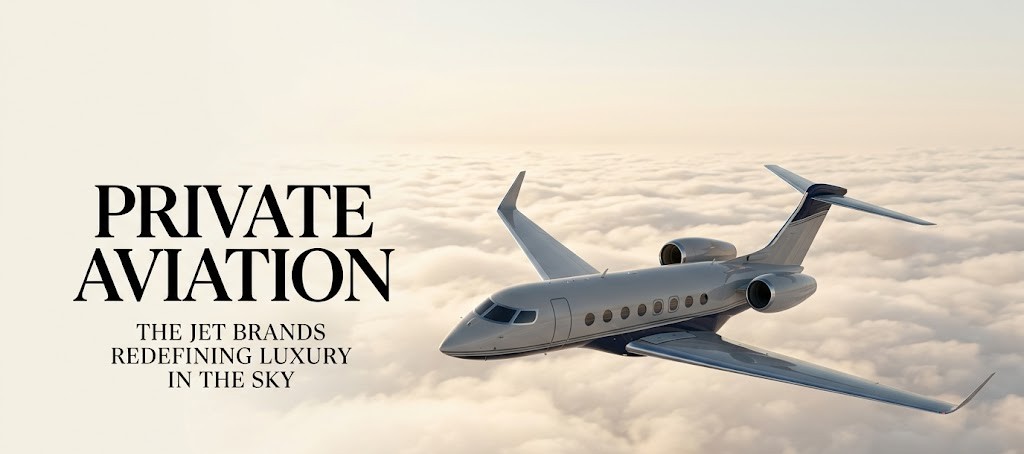
Private aviation has long represented a rare combination of exclusivity, convenience and personal freedom. But today, the private jet experience is evolving beyond the traditional idea of simply flying in a more comfortable cabin. For high-net-worth travelers, executives and global business leaders, the aircraft itself has become an important part of the journey reflecting preferences around design, range, technology, privacy and the way people want to spend their time in the air.
The modern private jet is increasingly designed as a sophisticated extension of a luxury lifestyle. Spacious cabins, carefully considered interiors, advanced connectivity and long-range capabilities allow passengers to work, relax, dine and even sleep while crossing continents. At the same time, manufacturers are developing distinct identities that appeal to different interpretations of luxury.
Among the names defining this market are Gulfstream, Bombardier, Dassault Falcon, Embraer and Cessna Citation. Each approaches private aviation from a slightly different perspective, creating an interesting spectrum of aircraft for travelers who value the ability to move through the world on their own terms.
Gulfstream: Long-Range Luxury With a Signature Identity
Gulfstream has built a particularly recognizable position in the private aviation industry, combining long-range capability with an emphasis on cabin comfort and refined design. Its aircraft are often associated with intercontinental travel, allowing passengers to connect major global destinations without relying on conventional airline schedules.
What distinguishes the Gulfstream experience is the attention given to the cabin environment. Large windows, carefully designed seating areas and sophisticated interior configurations create a sense of openness that can make long flights feel considerably less restrictive. For travelers spending many hours onboard, details such as lighting, cabin atmosphere, connectivity and seating flexibility become just as important as the aircraft’s performance.
The Gulfstream philosophy also places considerable emphasis on the relationship between technology and comfort. Modern aircraft are designed to provide passengers with a seamless environment where business and leisure can coexist. A traveler might spend part of a flight conducting meetings, move into a private relaxation space later, and arrive at the destination ready to continue the day.
This combination has helped Gulfstream become one of the most recognizable names in business aviation. Its appeal is not simply about traveling farther; it is about making the journey itself feel like a continuation of a premium lifestyle.
Bombardier: Space, Range and Contemporary Cabin Design
Bombardier approaches the private aviation market with a strong focus on cabin space, long-distance capability and sophisticated onboard experiences. Its Global family has become particularly associated with travelers who expect their aircraft to function as a highly capable private environment rather than simply a means of transportation.
The sense of space is an important part of the Bombardier proposition. Larger cabins can be divided into distinct zones, allowing passengers to create separate areas for conversation, dining, work and relaxation. For people spending extended periods onboard, this separation can make the cabin feel closer to a private residence or executive suite than a conventional aircraft.
Bombardier’s approach also reflects how expectations around private aviation have changed. Luxury travelers increasingly want technology to disappear into the background rather than dominate the cabin. Connectivity, entertainment and control systems are expected to work naturally, allowing passengers to focus on what they actually want to do during the flight.
For business travelers, that can mean turning the aircraft into a productive mobile office. For families or leisure travelers, the same cabin can become a private social space. The flexibility of the environment is therefore central to the experience.
Bombardier’s Global aircraft demonstrate how modern private aviation is increasingly about creating usable space in the sky not simply adding luxurious materials to a smaller version of an airliner.
Dassault Falcon: French Design Meets Aviation Engineering
Dassault Falcon brings a distinctly European character to the private aviation landscape. With roots in French aerospace engineering and a reputation for sophisticated aircraft design, Falcon jets offer a different interpretation of luxury from the more overtly corporate image sometimes associated with business aviation.
French design has traditionally placed importance on proportion, detail and understated sophistication, and those principles can be seen in the way Falcon aircraft approach cabin environments. The emphasis is often less about making luxury immediately obvious and more about creating an atmosphere that feels carefully composed.
Dassault’s aviation heritage is another important part of its identity. The company is part of a broader aerospace tradition that includes advanced engineering and high-performance aircraft, giving the Falcon range a strong technical foundation.
For private travelers, this combination of engineering and design can be particularly appealing. The aircraft is not merely presented as a luxury product; it is positioned as a highly capable aviation platform with a sophisticated passenger environment.
The Falcon name consequently occupies an interesting space within private aviation. It appeals to travelers who may appreciate luxury but prefer a more restrained and design-conscious expression of it.
Embraer: A Modern Interpretation of Private Travel
Embraer has developed a strong presence in business aviation by bringing a modern, flexible approach to private aircraft. The company’s business jets, including the Praetor family, reflect a growing demand for aircraft that combine efficient operation with contemporary cabin experiences.
One of Embraer’s notable strengths is its ability to create cabins that feel modern without becoming unnecessarily complicated. The design philosophy focuses on making the available space useful, comfortable and adaptable to different passenger requirements.
That matters because today’s private aviation customer is not necessarily looking for the same thing as the traditional executive traveler. Some passengers want an aircraft primarily for business travel, while others use private aviation for family trips, leisure journeys or a combination of both.
Embraer’s approach fits naturally into this changing market. Its aircraft can offer a premium environment while maintaining a sense of practicality. Rather than treating luxury as purely decorative, the experience can be built around functionality — comfortable seating, thoughtful layouts, connectivity and spaces that support different stages of a journey.
This modern interpretation gives Embraer a distinctive identity among established private jet manufacturers. It demonstrates that luxury aviation does not always need to be defined by size alone. Thoughtful design and intelligent use of space can be equally important.
Cessna Citation: Business Aviation With a Luxury Edge
Cessna Citation represents one of the most established names in business aviation. The Citation family covers a broad range of aircraft, giving travelers and operators different options depending on their requirements for passenger capacity, range and operational flexibility.
The brand’s identity has traditionally been closely connected to business travel. Citation aircraft are designed for travelers who value the ability to reach destinations efficiently while maintaining a private and comfortable environment.
That business-focused heritage does not mean the experience has to feel purely functional. Modern Citation aircraft incorporate refined interiors, contemporary technology and comfortable passenger environments, allowing the aircraft to serve both professional and personal travel needs.
For entrepreneurs and corporate travelers, this balance can be particularly relevant. Private aviation often has a practical purpose: reducing travel time, accessing airports closer to final destinations and creating a more flexible schedule. A comfortable cabin then becomes an important extension of that convenience.
Cessna’s position in the market demonstrates that private aviation is not exclusively about ultra-long-range travel or enormous cabins. There is also considerable value in versatility, accessibility and the ability to match an aircraft with the specific requirements of a journey.
Luxury Is Becoming More Personal
The evolution of private aviation reflects a broader change in how luxury itself is understood. A generation ago, luxury might have been communicated primarily through size, exclusivity and visible opulence. Today, the definition is often more personal.
For one traveler, luxury may mean flying nonstop across continents while remaining productive. For another, it may mean having a quiet cabin where they can disconnect completely. Someone else may prioritize interior design, while a family could care more about cabin flexibility and space.
This is why the differences between manufacturers matter. Gulfstream’s emphasis on long-range travel, Bombardier’s spacious Global cabins, Dassault Falcon’s European design philosophy, Embraer’s contemporary approach and Cessna Citation’s business-oriented versatility represent different interpretations of the same fundamental desire: greater control over the travel experience.
Private aviation is therefore becoming less about simply owning or chartering an aircraft and more about selecting an environment that fits an individual’s lifestyle.
The Cabin Is Becoming the Destination
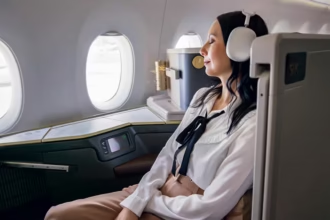
One of the most interesting developments in private aviation is the increasing importance of what happens inside the aircraft. When flight times can extend across many hours, the cabin becomes a significant part of the overall experience.
Modern private jets are designed around this reality. Instead of treating the cabin as a place where passengers wait until arrival, manufacturers increasingly view it as a space where people can work, rest, socialize and recharge.
Interior design plays a major role. Materials, lighting, seating arrangements, storage and technology all contribute to how passengers experience the aircraft. The best-designed cabins are not necessarily those with the most decoration. They are the ones where every element feels purposeful.
This shift also explains why private aviation increasingly overlaps with the worlds of luxury hospitality, automotive design and high-end residential interiors. Travelers are bringing expectations from luxury hotels, premium homes and high-end vehicles into the aircraft cabin, and manufacturers are responding accordingly.
Technology Without the Distraction
Technology has become another defining element of modern private aviation, but the most sophisticated systems are often those passengers barely notice.
High-speed connectivity can allow executives to remain connected with global teams while traveling between continents. Advanced cockpit systems support flight crews, while cabin technologies give passengers greater control over entertainment, lighting and environmental settings.
The objective is increasingly seamless integration. Technology should make the journey easier rather than constantly reminding passengers that they are surrounded by complex systems.
This is particularly important for long-range private aviation. When an aircraft becomes a temporary office, dining room, bedroom and lounge, technology needs to support each of those functions without compromising the sense of calm that defines the luxury experience.
A New Era of Personalized Flight
The private aviation industry is entering an era where personalization is becoming just as important as performance. Aircraft manufacturers are competing not only through range and speed but also through the environments they create for passengers.
Gulfstream, Bombardier, Dassault Falcon, Embraer and Cessna Citation each bring their own design philosophies, engineering priorities and market identities to this evolving landscape. None represents a single definition of luxury. Instead, they illustrate how diverse the modern private aviation customer has become.
The future of luxury travel may therefore be less about asking which aircraft is the most impressive and more about asking which aircraft experience feels right for a particular traveller. Long-range capability, cabin size, interior design, technology, flexibility and operational requirements can all shape that decision.
Ultimately, private aviation is about more than moving from one destination to another. It is about reclaiming time, creating a private environment above the clouds and transforming the journey into an experience in its own right.
And that may be the most interesting evolution of all: the private jet is no longer simply part of the journey — for many travelers, it has become one of the destinations.
Affiliate Disclosure: This article may contain affiliate links. If you purchase a product or sign up for a service through one of these links, we may earn a commission at no additional cost to you. Our reviews and opinions are based on our editorial assessment and are not influenced solely by affiliate compensation.