From private First-Class suites and thoughtfully designed Business Class cabins to personalised hospitality and refined dining, Etihad Airways is redefining what premium air travel can feel like.
The Art of Making Every Journey Feel Exceptional
For some travellers, flying is simply a way to reach a destination. For others, the experience begins long before the aircraft leaves the runway. The atmosphere of the cabin, the quality of the service, the comfort of the seat and even the smallest details of the journey can influence how a flight feels. This is where Etihad Airways has established its identity, positioning itself as an airline that combines contemporary luxury, thoughtful hospitality and sophisticated design to create a more elevated travel experience.
Based in Abu Dhabi, Etihad Airways has developed a distinctive approach to premium air travel, drawing inspiration from the region’s traditions of hospitality while embracing modern international luxury. Rather than relying on a single impressive feature, the airline’s appeal comes from the way different elements work together. Carefully designed cabins, attentive service, premium dining and an emphasis on personal space contribute to an environment intended to feel calmer, more comfortable and more considered than an ordinary journey. For travellers who value the experience as much as the destination, these details can make a meaningful difference.
The airline’s approach also reflects a broader transformation taking place across the luxury travel industry. Today’s premium travellers are increasingly interested in experiences that feel personal rather than simply expensive. They want privacy without isolation, convenience without unnecessary complexity and comfort that extends beyond the physical seat. Etihad’s premium offering responds to these expectations by treating the flight as an important part of the travel experience rather than a gap between departure and arrival.
A Brand Built Around Contemporary Arabian Hospitality
Hospitality has always played an important role in the cultural identity of the United Arab Emirates, where welcoming guests and making them feel comfortable are deeply rooted traditions. Etihad Airways brings elements of this philosophy into the aircraft cabin, combining the warmth associated with Arabian hospitality with the precision and consistency expected from a global premium airline. The result is a service philosophy that aims to feel polished without becoming impersonal.
This balance matters because genuine luxury is rarely defined by appearance alone. An elegant cabin can create a strong first impression, but the way passengers are welcomed, the attentiveness of the crew and the ease with which their needs are addressed often determine how they remember the journey. A well-timed offer of assistance, a comfortable environment for resting and a service style that respects personal preferences can make premium travel feel more natural and less transactional.
Etihad’s identity is also closely connected to Abu Dhabi, a destination that has invested heavily in architecture, culture, hospitality and international tourism. The airline serves as an extension of that wider identity, introducing travellers to the emirate while connecting it with major destinations across the world. Its visual language and premium onboard environment help communicate a contemporary interpretation of regional luxury, one that combines cultural character with an international outlook.
For travellers choosing an airline for a long-haul journey, this combination can be particularly appealing. The experience is not just about access to a comfortable seat or an impressive cabin; it is about creating an atmosphere in which the hours spent travelling feel more manageable, enjoyable and thoughtfully organised.
First Class: A Private Retreat Above the Clouds
At the highest end of commercial aviation, privacy has become one of the most valuable expressions of luxury. Etihad Airways has explored this idea through its First Class products, which are designed to provide an elevated level of personal space, comfort and exclusivity on selected aircraft. Rather than treating First Class as simply a larger seat at the front of the plane, the concept centres on creating a more individual environment within the aircraft cabin.
Depending on the aircraft and configuration, First Class passengers may enjoy spacious private suites, carefully arranged seating, premium bedding and refined finishes that give the cabin a more residential atmosphere. The emphasis is on allowing passengers to use their space according to their own priorities. Some may want to enjoy a meal in comfort, while others may prefer to work quietly, read or rest during an overnight flight.
Etihad’s highly distinctive The Residence product, available on selected Airbus A380 aircraft, takes this concept even further. Designed as an ultra-premium private space, The Residence features a separate living area, a private bedroom and an en-suite shower room. It is a rare example of how commercial aviation can borrow elements of luxury hospitality to create an experience that feels closer to a private suite than a conventional aircraft seat.
The significance of such a product extends beyond its exclusivity. It demonstrates how luxury airlines are exploring different ways to use limited cabin space, placing greater emphasis on privacy, personal comfort and the feeling of having a dedicated environment. For travellers who prioritise discretion and an exceptional level of personal space, these features can become a defining part of the journey.
However, the exact First Class experience depends on the aircraft operating a particular flight. Not every Etihad aircraft offers the same suite design or configuration, making it important for travellers to check the specific product available on their route before booking.
Business Class That Makes Long-Haul Travel Feel Different
Luxury air travel is not limited to First Class. For many international travellers, Business Class offers the most practical balance between premium comfort, productivity and convenience. Etihad Airways has developed its Business Class experience around the needs of passengers who want to arrive feeling rested, work effectively in the air or enjoy a more comfortable journey without choosing the highest-priced cabin.
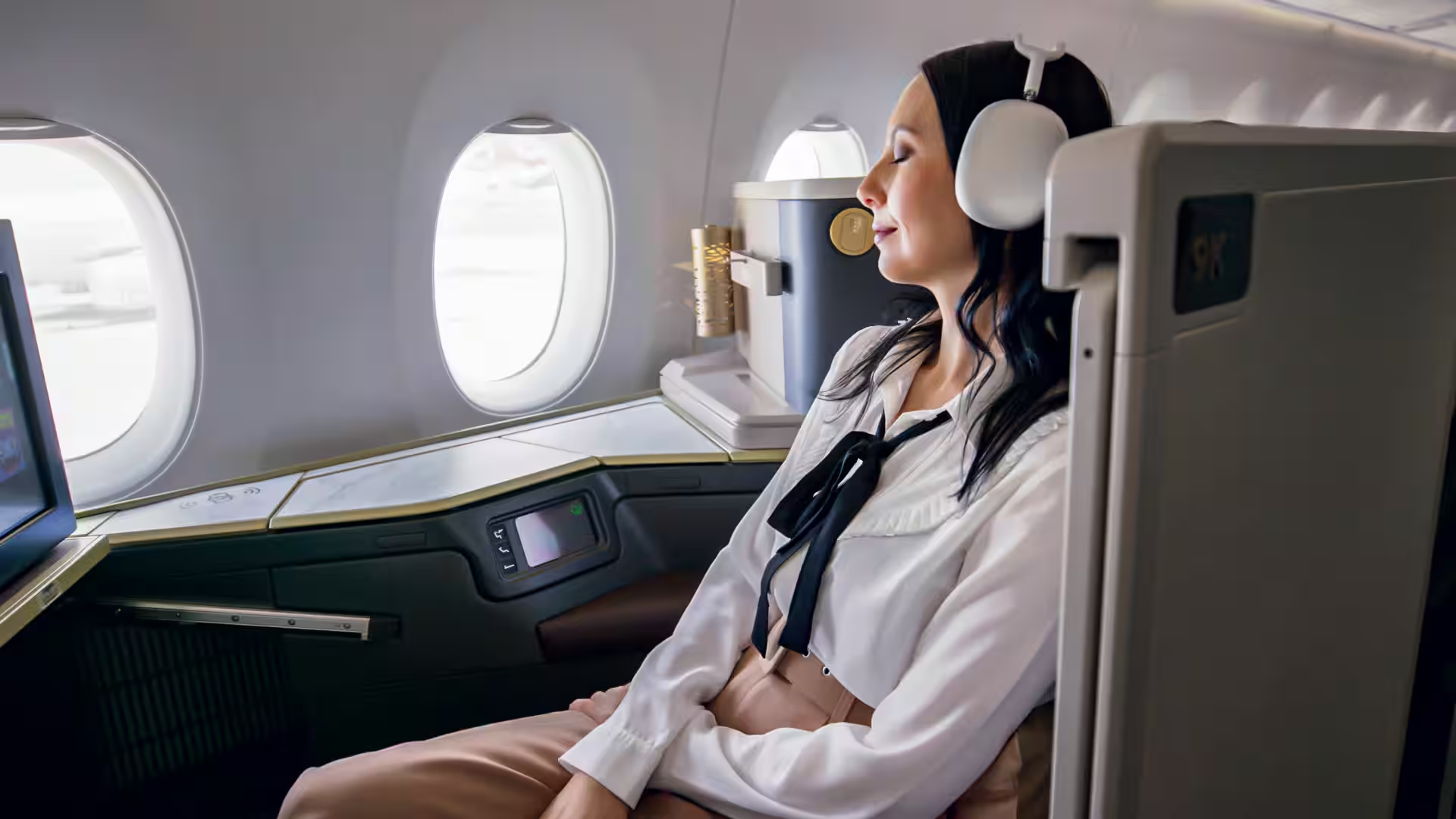
On aircraft equipped with lie-flat Business Class seating, passengers can transform their seats into beds, creating a more suitable environment for sleeping on long-haul routes. This can be especially valuable on overnight flights, where the quality of rest may influence how a traveller feels after landing. Privacy features, storage space, adjustable lighting and access to personal entertainment further contribute to the overall experience, although the precise layout varies across aircraft.
Cabin design plays an important role here. A well-planned Business Class seat must accommodate several needs at once: comfortable sleeping, dining, working and moving around without feeling unnecessarily restricted. Etihad’s premium cabin layouts seek to balance these practical requirements with an elegant appearance, using clean lines, contemporary materials and carefully arranged personal spaces.
For business travellers, the advantages extend beyond physical comfort. A quieter personal environment can make it easier to prepare for a meeting, review documents or simply disconnect from the demands of a busy schedule. Leisure travellers can enjoy similar benefits, particularly when beginning a long holiday or returning home after several days of exploring a destination.
Etihad’s Business Class proposition therefore reflects a broader shift in premium travel. The goal is not merely to make a flight feel more expensive, but to make the time spent onboard more useful, restful and enjoyable. For passengers comparing the best Business Class airlines for international travel, that combination of comfort and functionality can be just as important as the visual appeal of the cabin.
Cabin Design Where Every Detail Has a Purpose
One of the most noticeable aspects of premium aviation is the way an aircraft cabin can influence a passenger’s mood. Lighting, colour, materials, seat placement and the use of available space all contribute to the atmosphere. Etihad Airways approaches cabin design with an emphasis on contemporary sophistication, creating interiors intended to feel modern, welcoming and visually coherent.
The airline’s cabin aesthetics combine understated luxury with distinctive design elements rather than relying exclusively on extravagant decoration. Soft finishes, carefully selected textures and thoughtfully arranged seating can help create an environment that feels more refined. These details may appear subtle when considered individually, but together they influence how passengers perceive comfort and quality throughout a long journey.
Lighting is particularly important. Bright, direct illumination may be useful when reading or working, while softer lighting can help create a more relaxing atmosphere during rest periods. On long-haul flights, changes in cabin lighting can also support the transition between daytime activity and overnight sleep. When integrated with the wider cabin design, lighting becomes a functional feature rather than a purely decorative one.
Personal space is equally significant. Premium travellers increasingly expect convenient access to essential items, intuitive seat controls and layouts that provide a greater sense of separation from neighbouring passengers. The challenge for an airline is to deliver these benefits within the physical limitations of an aircraft, where every design decision must accommodate safety requirements, passenger movement and operational efficiency.
Etihad’s approach reflects this balance between aesthetics and usability. The most successful cabin features are those that improve the journey without constantly demanding attention. A seat that is easy to adjust, a practical storage compartment or a thoughtfully positioned reading light can become more valuable over several hours than a decorative feature that offers little everyday benefit.
Dining That Brings Restaurant-Inspired Comfort to the Sky
Food has become an important part of the premium airline experience, particularly on long-haul routes where passengers spend several hours onboard. Etihad Airways places emphasis on premium dining, with menus and service arrangements that vary according to cabin, route and aircraft. The objective is to make onboard meals feel like a considered part of the journey rather than a routine interruption.
In premium cabins, dining may include a selection of appetisers, main courses, desserts and beverages, with options shaped by the route and the service available on the aircraft. The presentation, pacing and flexibility of the meal can contribute to the overall impression of quality. For passengers travelling overnight, the ability to choose when to eat or rest, where the applicable service permits, can also make the journey feel more personalised.
A premium meal in the air involves more than selecting appealing ingredients. Food must be prepared and served within the constraints of aviation, where altitude, cabin pressure and the limitations of reheating can affect flavour and texture. Designing a satisfying menu under these conditions requires a different approach from that of a restaurant kitchen. Consistency, presentation and practical service timing all become essential.
Etihad’s dining experience forms part of a larger hospitality philosophy in which comfort is created through a collection of connected details. A well-presented meal, attentive service and an environment that allows passengers to enjoy their food at a comfortable pace can turn an ordinary part of flying into something more memorable.
For travellers researching premium airline dining experiences, it is worth remembering that menus and service styles differ by route and cabin. Special meals may also need to be requested in advance, depending on the passenger’s requirements and the airline’s applicable arrangements.
Entertainment, Connectivity and the Freedom to Travel Your Way
Modern luxury is also about having control over how time is spent. Some passengers want to watch films throughout a long flight, others prefer listening to music, catching up on work or enjoying a few uninterrupted hours of rest. Etihad’s inflight entertainment and connectivity options are intended to support different travel styles, with availability depending on the aircraft and service configuration.
Personal entertainment systems can make long journeys feel shorter by offering access to films, television programmes, music and other content. For families, a varied entertainment selection can help keep younger travellers occupied. For solo passengers, it provides an opportunity to relax with familiar favourites or discover something new without relying entirely on personal devices.
Connectivity is another important consideration for travellers who want to remain in touch with colleagues, friends or family. Wi-Fi availability, pricing, performance and eligibility can vary, so passengers should check the latest arrangements for their specific flight rather than assume that the same service is available across the entire fleet.
The larger point is that premium travel increasingly depends on flexibility. Passengers want the freedom to decide whether their time in the air should be productive, entertaining or restorative. By combining personal entertainment with cabin comfort and service, an airline can help create an experience that adapts to individual needs instead of expecting every traveller to follow the same routine.
The Human Touch Behind the Premium Experience
Even the most sophisticated aircraft cannot deliver a five-star experience on design alone. Service remains one of the most important elements of premium hospitality because it determines how passengers interact with the airline throughout the journey. A comfortable seat may be impressive, but attentive and professional cabin crew can make the experience feel genuinely welcoming.
The strongest service experiences often depend on a balance between anticipation and discretion. Passengers appreciate assistance when they need it, but they may not want constant interruptions while working, dining or sleeping. Understanding this distinction is central to creating a more personalised atmosphere. It allows hospitality to feel natural rather than rehearsed, while giving travellers the freedom to enjoy their own space.
Consistency also matters. Premium passengers expect clear communication, professional conduct and a dependable standard of service across the different stages of their journey. While the experience can vary according to operational circumstances, the aim is to make passengers feel that their comfort and time are being taken seriously.
This human element is particularly important because luxury is ultimately subjective. One traveller may value a quiet cabin and uninterrupted sleep above everything else, while another may appreciate conversation, dining and attentive assistance. A successful premium airline experience must accommodate these different expectations without losing its overall identity.
For Etihad Airways, the relationship between service and design is therefore fundamental. The cabin creates the setting, the amenities provide practical benefits and the crew bring the experience to life. When these elements work together, premium travel can feel less like a collection of paid upgrades and more like a carefully coordinated hospitality experience.
Abu Dhabi: A Gateway That Extends the Journey
Etihad’s identity cannot be separated from its home in Abu Dhabi. As the capital of the United Arab Emirates, the city has developed an international profile through its cultural institutions, architectural landmarks, hospitality sector and growing appeal as a travel destination. For passengers connecting through Abu Dhabi, the airport experience and onward connections form part of the wider impression of the airline.
A well-planned hub can make international travel more convenient by connecting passengers between destinations across different regions. Clear airport navigation, suitable connection times, available lounges and helpful passenger services can all influence how comfortable a transfer feels. These practical details may not attract the same attention as a private suite or a premium meal, but they can be just as important when a traveller is navigating a long itinerary.
For some passengers, Abu Dhabi is more than a connecting point. It can be an opportunity to explore the UAE, experience regional culture or extend a holiday with a city stay. The possibility of combining an international journey with a visit to the airline’s home city adds another dimension to the travel experience.
The quality of a connection will depend on the itinerary, terminal arrangements, immigration requirements and the services available at the time of travel. Nevertheless, the relationship between Etihad and Abu Dhabi helps give the airline a clear sense of place, connecting its onboard hospitality with the wider experience of travelling through the region.
Is Etihad Airways Worth It for Luxury Travellers?
Whether Etihad Airways is worth the premium depends on what a passenger values most. Travellers who prioritise personal space, comfortable seating, premium dining and a more considered service experience may find its higher cabin classes appealing, particularly on long-haul routes. First Class and The Residence offer a particularly distinctive proposition on eligible aircraft, while Business Class can provide a meaningful improvement in comfort for passengers who need to sleep or work during the flight.
However, the value of a premium ticket should be assessed against the complete itinerary rather than the airline’s reputation alone. Aircraft type, seat configuration, flight duration, departure time, connection arrangements and ticket conditions can all influence the experience. Two flights marketed under the same cabin name may offer different layouts or amenities, making it sensible to review the precise details before booking.
Travellers should also consider which benefits matter most to them. A passenger who sleeps easily on a standard seat may place less value on a lie-flat bed than someone travelling overnight across several time zones. Similarly, a person who rarely uses inflight entertainment may care more about seat privacy, while a frequent business traveller may prioritise reliable connectivity and a comfortable workspace.
The most useful comparison is therefore not simply between ticket prices, but between the benefits each fare delivers. Etihad’s premium cabins can be especially attractive when the additional comfort directly supports the purpose of the journey, whether that means arriving rested for an important meeting or beginning a holiday in a more relaxed state.
The Future of Luxury Flying Is About More Than Status
The meaning of luxury in aviation continues to evolve. In the past, premium air travel was often associated primarily with exclusivity, prestigious surroundings and visible displays of wealth. Today, many travellers place equal importance on privacy, personalisation, convenience and the ability to use their time in the way they choose.
Etihad Airways reflects this shift through its combination of premium cabin products, contemporary interiors and hospitality-led service. Its First Class suites demonstrate the appeal of private space, Business Class addresses the practical demands of long-haul travel, and its dining and entertainment offerings contribute to a more complete onboard experience. Together, these elements show how an airline can differentiate itself through both the physical environment and the way passengers are treated.
Yet the most compelling luxury experiences are rarely defined by one headline feature. They emerge when individual details support one another: a comfortable bed, a thoughtfully arranged cabin, a satisfying meal, professional service and a journey that feels well organised from beginning to end. These are the moments that can transform a long flight from something passengers simply endure into an experience they genuinely appreciate.
Etihad Airways’ five-star appeal lies in this broader ambition. By combining the character of Arabian hospitality with the expectations of modern international travellers, the airline seeks to make flying feel more personal, comfortable and sophisticated. For passengers who believe the journey should be part of the destination, that philosophy offers a compelling reason to look beyond the ticket and consider what the experience itself can deliver.