
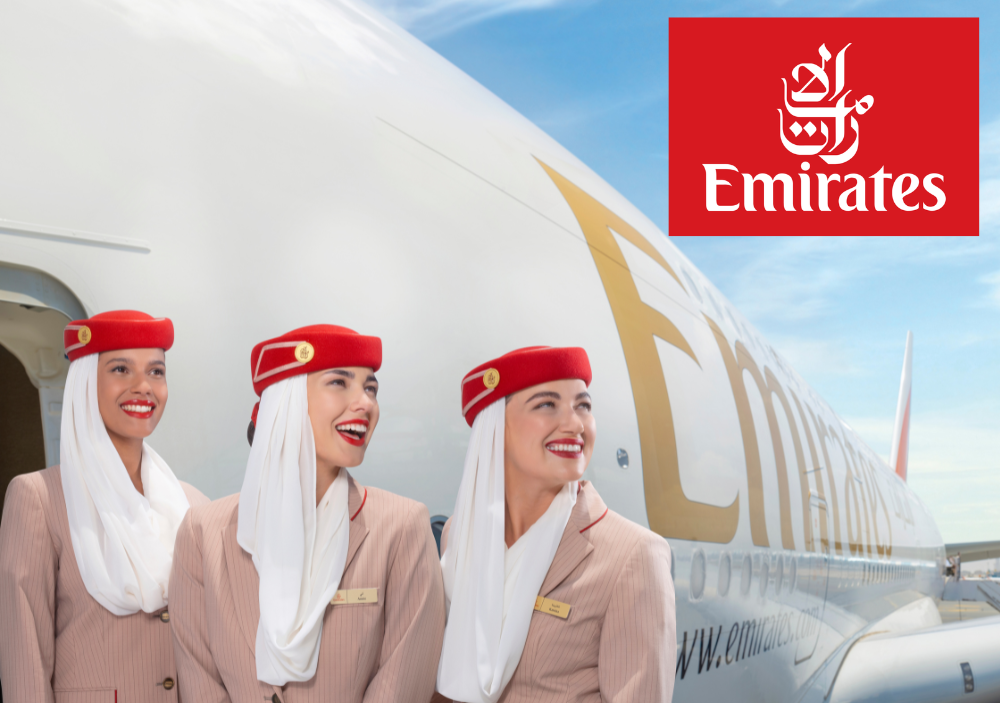
Air travel has changed dramatically over the years. What was once considered a luxury experience has become an everyday part of life for millions of people, with travellers increasingly comparing ticket prices, flight schedules, baggage allowances, and convenience before booking their next journey. Yet, even in a highly competitive aviation industry, some airlines manage to offer something that goes beyond simply getting passengers from one destination to another. Emirates is one such name. Known for its distinctive red-and-gold branding, international network, premium cabins, and reputation for hospitality, the airline has built an identity that makes flying feel like a carefully designed experience rather than just another journey in the sky. But what exactly makes flying with Emirates feel so different?
The answer lies in the combination of several elements: the atmosphere onboard, attention to passenger comfort, entertainment options, dining experiences, cabin design, and the way the brand presents international travel as something worth enjoying. Emirates has positioned itself as an airline for people who appreciate the experience as much as the destination. While the level of luxury varies significantly between Economy, Premium Economy, Business Class, and First Class, the airline’s overall identity is built around making long-haul travel feel more comfortable, connected, and memorable.
More Than a Flight: The Emirates Experience Begins Before Take-Off
For many travellers, the airline experience starts long before they settle into their seats. Booking a ticket, checking in, navigating the airport, boarding the aircraft, and finding a comfortable place to relax all influence how a journey feels. Emirates has developed a recognisable travel experience around its Dubai hub, connecting passengers to destinations across Europe, Asia, Africa, the Americas, and beyond. Its extensive international network makes it a popular option for travellers planning long-distance journeys, whether they are travelling for business, taking a family holiday, or exploring a destination they have always wanted to visit.
Dubai International Airport plays an important role in this experience. As a major global aviation hub, it allows passengers to connect between continents through a single airport, making Emirates particularly relevant for international itineraries. For travellers flying between countries that do not have convenient direct connections, this network can make planning a journey easier. The airline’s brand identity also creates a sense of continuity across different stages of the trip, from airport lounges and boarding areas to the distinctive interiors of its aircraft. Although airport conditions, connection times, and service experiences can vary, Emirates has built its reputation around making international travel feel organised and globally connected.
Cabin Design That Makes a Difference on Long-Haul Flights
Spending several hours inside an aircraft can be exhausting, which is why cabin design matters more than many travellers realise. Seat comfort, lighting, personal space, storage, and the overall atmosphere can influence whether a long journey feels manageable or tiring. Emirates operates different aircraft types and cabin configurations, so the exact experience depends on the route, aircraft, and ticket class. Nevertheless, its premium cabins have become an important part of its public image, particularly on selected Airbus A380 and Boeing 777 aircraft.
Business Class is designed for passengers who value additional space, privacy, and the ability to rest during long journeys. Depending on the aircraft, passengers may find lie-flat seats, upgraded dining, enhanced personal storage, and access to premium airport services. First Class takes the concept further on selected aircraft, offering a more private environment and a range of exclusive amenities. Some Airbus A380 First Class cabins feature private suites and access to an onboard shower spa, while the A380 also has an upper-deck lounge for eligible premium-cabin passengers. These features are not available on every aircraft, but they help explain why certain Emirates flights have become associated with a more distinctive style of luxury travel.
Even in Economy Class, the overall cabin experience involves more than the seat alone. Personal entertainment screens, meal service, and access to onboard information can make a long flight more engaging. However, comfort should always be considered in context: seat dimensions, legroom, cabin layout, and available amenities vary by aircraft. For travellers comparing international airlines, checking the precise aircraft and seating configuration before booking is often more useful than relying on a brand’s reputation alone.
ICE Inflight Entertainment: Turning Hours in the Air into Personal Time
One of Emirates’ most recognisable features is its ICE inflight entertainment system, which stands for Information, Communication, and Entertainment. On equipped aircraft, the system gives passengers access to a broad selection of films, television programmes, music, and other entertainment. For anyone facing a long-haul flight, this can make a substantial difference. Instead of watching the clock or struggling to find ways to pass the time, passengers can create their own entertainment routine throughout the journey.
Imagine boarding a flight for a journey that lasts ten hours or longer. You might begin with a newly released film, switch to a television series after the meal service, listen to a playlist while relaxing, and finish with a documentary about your next destination. For families, the availability of children’s entertainment can help keep younger passengers occupied, while frequent flyers may appreciate having enough variety to make repeated journeys feel less monotonous. The available selection changes over time and can differ by flight, but the central appeal remains the same: passengers can personalise how they spend their time in the air.
Inflight entertainment may not seem as impressive as a private suite or premium dining, yet it is one of the features that can affect a much larger proportion of travellers. It is relevant to Economy passengers as well as those travelling in premium cabins. In an age when people expect easy access to digital content almost everywhere, an extensive entertainment system helps an airline meet modern expectations while making the journey itself feel less like waiting and more like personal leisure time.
Dining at 40,000 Feet: Why Food Is Part of the Journey
Airline meals have long been a subject of debate among travellers. Some passengers view them as a practical necessity, while others see dining as an important part of the overall flying experience. Emirates has invested in making onboard dining a recognisable element of its service, with menus influenced by international tastes and, in premium cabins, a more elaborate presentation. Depending on the route and cabin, passengers may receive multiple courses, a selection of beverages, and dishes designed to reflect different culinary traditions.
The appeal of airline dining is not simply about offering food in the sky. It is about recognising that passengers travel with different preferences, expectations, and dietary needs. Emirates provides special meals that can be requested for eligible flights, subject to its rules and advance-notice requirements. This can be helpful for travellers with religious, vegetarian, vegan, or other dietary preferences, although passengers should check the airline’s current meal options and booking deadlines rather than assume every request will be available on every route.
In premium cabins, dining may feel closer to a restaurant-style experience, with more choice and presentation tailored to the class of travel. Economy dining is generally more practical, but it remains part of the complete journey. The menu and service style depend on the destination, aircraft, cabin, and duration of the flight. For international travellers, the opportunity to experience different flavours while travelling between countries can also add a small cultural dimension to the journey. It is one of the ways an airline can make the hours onboard feel more considered, rather than treating food as an afterthought.
Hospitality That Shapes the Passenger Experience
Luxury is often associated with expensive materials, spacious suites, and exclusive facilities, but genuine hospitality is also about how people feel during an experience. The way passengers are welcomed, how clearly information is communicated, and how cabin crew respond to requests can influence the entire journey. Emirates places considerable emphasis on its international cabin crew and multicultural service identity, reflecting the diverse range of passengers who travel through its global network.
For someone taking a long-haul flight for the first time, small details can matter. Clear communication, assistance when locating a seat, help understanding onboard services, and attentive responses to reasonable requests can make the environment feel more welcoming. Business travellers may appreciate an efficient service that allows them to rest or work, while families may value practical assistance throughout the flight. These interactions are not always dramatic or immediately noticeable, but they contribute to the way passengers remember an airline.
Of course, service quality is never identical on every flight. Crew members, flight conditions, passenger volumes, and unexpected operational challenges can influence individual experiences. No airline can guarantee a perfect journey every time. What matters is the overall service philosophy and the consistency with which it is delivered. Emirates has made hospitality a central part of its brand identity, presenting the journey as an experience in which passenger comfort and service are important alongside operational performance.
Dubai: The Global Hub Behind the Emirates Advantage
One of the strongest reasons travellers choose Emirates is its connection network through Dubai. The city occupies a strategic position between several major travel markets, making it a useful transfer point for journeys between Europe, Asia, Africa, Australia, and the Middle East. Instead of treating Dubai merely as a stopover, many travellers use it as part of a broader holiday, combining an international connection with a few days exploring the city.
This network is especially useful for people travelling long distances, including passengers flying from India to destinations in Europe or North America, as well as those travelling between different regions of Asia and Africa. Depending on the itinerary, an Emirates connection may offer convenient scheduling, access to multiple destinations, and the possibility of choosing a stopover rather than completing the journey in one continuous trip. The best option still depends on the total travel time, layover duration, fare, baggage arrangements, and whether a direct flight is available.
Dubai itself adds another dimension to the airline’s identity. The city is associated with modern architecture, shopping, hospitality, international dining, and large-scale attractions, all of which contribute to the aspirational image surrounding the brand. For some passengers, the Emirates experience is therefore connected to a destination as well as an airline. A journey can become an opportunity to explore somewhere new, whether through a planned stopover or a longer visit before continuing to the final destination.
Premium Economy, Business Class, and First Class: Different Ways to Travel
Another reason Emirates attracts attention is the range of cabin experiences available across its fleet. However, understanding these differences is essential because the airline’s most publicised luxury features are not offered to every passenger. Economy Class remains the practical choice for travellers who want international connectivity and onboard essentials without paying for premium services. Premium Economy, available on selected aircraft and routes, aims to bridge the gap by offering a more spacious and refined experience than standard Economy.
Business Class is designed for travellers who place a higher value on privacy, comfort, and rest. Its benefits can be particularly noticeable on overnight journeys, where the ability to recline or sleep in a lie-flat seat may make arriving at the destination more manageable. First Class occupies the most exclusive end of the experience on aircraft equipped with these facilities, with private spaces and additional amenities that make the journey itself a central part of the appeal.
The important point is that upgrading is not automatically worthwhile for everyone. A shorter flight, a limited travel budget, or a daytime itinerary may make Economy the more sensible choice. For an overnight journey before an important meeting, however, the added comfort of Business Class may be valuable. Travellers should compare the actual services available on their specific flight, including seat type, lounge access, baggage allowance, and upgrade cost. Emirates’ premium image becomes more meaningful when passengers understand exactly which benefits their ticket includes.
Technology and Innovation Behind the Brand
Modern aviation depends on technology in ways that passengers do not always see. Aircraft engineering, navigation systems, maintenance procedures, digital booking platforms, and operational planning all contribute to the reliability and efficiency of a flight. For passengers, the most visible aspects may include online check-in, digital boarding passes, seat selection, flight notifications, and access to booking information through the airline’s digital channels.
These tools help travellers manage their journeys with greater convenience, particularly when they have connecting flights or are travelling internationally for the first time. Being able to check flight details, review an itinerary, or access relevant travel information without repeatedly visiting a service desk can reduce unnecessary stress. Digital services are not unique to Emirates, and their availability may depend on the booking and route, but they are an important part of the modern airline experience.
The aircraft themselves also contribute to the passenger experience. Emirates operates wide-body aircraft designed for long-distance travel, including the Airbus A380 and Boeing 777 families. Their cabin layouts and onboard features differ, and the airline continues to make decisions about fleet renewal, cabin upgrades, and passenger services as aviation technology evolves. The result is an experience shaped not only by what passengers can see, but also by the systems and planning required to move people safely and efficiently across long distances.
Is Flying with Emirates Worth the Price?
For many travellers, the most important question is whether Emirates offers enough value to justify its ticket price. The answer depends on the journey, the cabin, the fare conditions, and what each passenger considers important. A traveller who values a large entertainment selection, international connections, and a well-developed onboard service may find the experience worth paying for. Someone whose priority is simply reaching a nearby destination at the lowest possible cost may be better served by a cheaper airline or a direct flight.
It is also worth remembering that an airline’s reputation does not eliminate the practical details of booking. Fare classes can differ in their flexibility, cancellation conditions, seat-selection costs, and baggage allowances. Connection times matter, too, particularly for travellers with children, older family members, or tight schedules. Comparing the full cost of the journey rather than the headline ticket price can provide a clearer picture of value.
For premium-cabin passengers, the calculation may include lounge access, additional baggage, a more comfortable seat, priority services, and the ability to rest more effectively during a long flight. For Economy passengers, the value may come from the route network, schedule, and onboard essentials. There is no single answer that applies to everyone. The best airline is the one that meets a traveller’s needs at a price that makes sense for their particular journey.
The Real Difference Is in How the Journey Feels
Ultimately, flying with Emirates feels different because the airline has built its identity around the idea that travel should be more than transportation. Its global network, Dubai hub, inflight entertainment, dining options, cabin variety, and premium facilities combine to create a recognisable experience for international passengers. Some features are subtle, such as the convenience of finding something enjoyable to watch on a long flight. Others are more visible, such as a private First Class suite or the onboard lounge on selected Airbus A380 services. Together, they contribute to the airline’s reputation for offering a distinctive style of travel.
That does not mean every Emirates flight will feel luxurious or that it will always be the best choice for every budget. The experience depends on the cabin, aircraft, route, and individual expectations. Yet the airline’s appeal lies in how many aspects of a journey it brings together, from connecting distant destinations to helping passengers spend their time onboard more comfortably. It has created a brand that people often associate with international discovery, elevated service, and the excitement of travelling somewhere new.
For travellers who see flying as part of the adventure rather than simply a means of getting from one place to another, Emirates offers a compelling proposition. The difference is not defined by one feature alone. It comes from the way connectivity, comfort, entertainment, hospitality, and brand identity work together to shape the journey. And when those details come together, the hours spent in the air can become a meaningful part of the travel experience itself.