
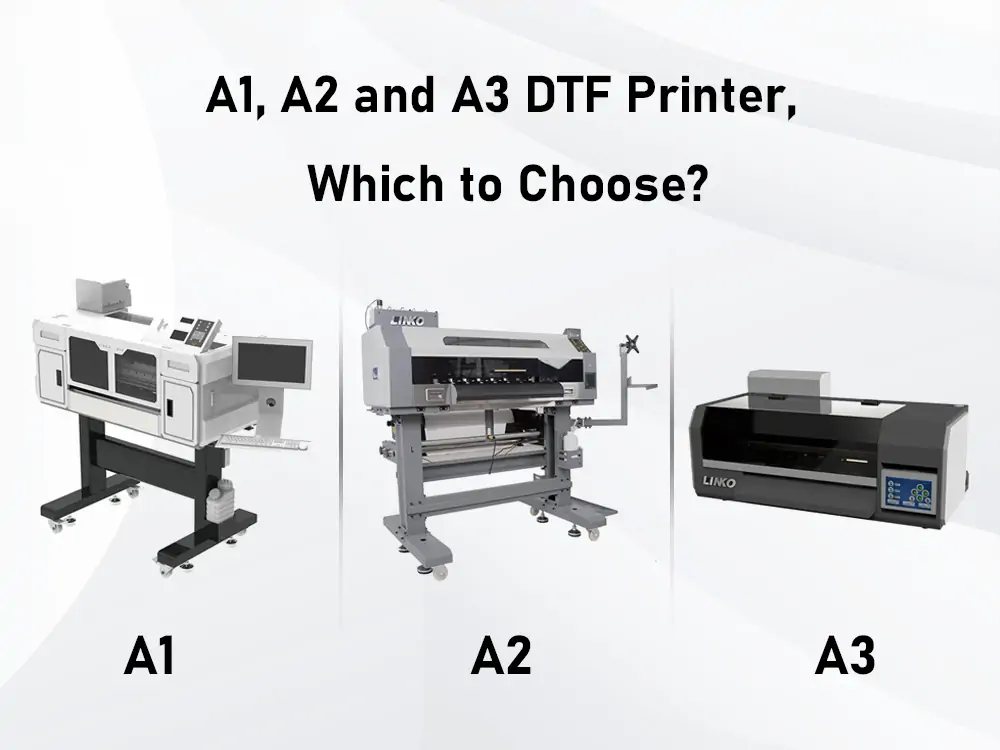
Printing technology has evolved significantly over the years, moving far beyond traditional paper documents and photographs. Today, printers play an important role in everything from office productivity and commercial advertising to custom apparel, personalised gifts, product packaging, and small-business manufacturing. Whether someone wants to print high-quality photographs, produce branded merchandise, customise T-shirts, or start a home-based printing business, there are several printing technologies available to suit different needs and budgets.
However, choosing the right printer is not always straightforward. Each printing method works differently, uses specific materials, and delivers different results. An inkjet printer that performs well for photographs, for example, may not be the most practical choice for printing hundreds of documents every day. Similarly, a DTF printer designed for garment decoration serves a different purpose from a traditional laser printer used in an office.
Understanding these differences can help buyers make more informed decisions, avoid unnecessary expenses, and select equipment that supports their long-term goals. Brands such as HTVRONT have also become relevant to the growing customisation market by offering printing equipment, heat presses, and related materials for people interested in creating personalised products.
This guide explores the different types of printers, explains how each technology works, and highlights the factors worth considering before purchasing a printer for personal, professional, or commercial use.
1. Inkjet Printers: A Versatile Choice for Everyday Printing
Inkjet printers are among the most widely used printing devices for homes, small businesses, and creative workspaces. They operate by spraying tiny droplets of liquid ink onto paper or another compatible surface to produce text, graphics, and photographs.
One of the biggest advantages of inkjet printing is its versatility. Depending on the model, an inkjet printer can produce everyday documents, colourful presentations, product photographs, marketing materials, and creative projects. Photo-oriented models are particularly popular among photographers and designers who need detailed images and smooth colour transitions.
Inkjet printers are available in cartridge-based and refillable ink-tank configurations. Cartridge printers can be convenient for occasional use, while ink-tank systems may offer a lower cost per page for people who print frequently. The right option depends on print volume, ink requirements, and the overall cost of ownership.
Advantages of inkjet printers
Inkjet printers generally have a relatively accessible starting price and can deliver excellent colour output. They are available in compact designs, making them suitable for desks, home offices, classrooms, and small workspaces. Many multifunction models also include scanning and copying features.
Limitations to consider
Ink costs can become significant with frequent printing, particularly on cartridge-based models. Some prints may also require additional drying time, and certain ink formulations can be less resistant to moisture or fading than specialised alternatives.
Best suited for: Home users, students, photographers, freelancers, and small businesses that need flexible colour printing.
2. Laser Printers: Efficient Printing for Offices and Businesses
Laser printers are designed to deliver fast, consistent output, making them a popular choice for offices and organisations that produce large volumes of documents.
Unlike inkjet printers, laser printers use toner powder rather than liquid ink. A laser or similar imaging system creates an electrostatic pattern on a photosensitive component, toner adheres to the appropriate areas, and the image is transferred onto paper. Heat and pressure then fuse the toner to the page.
This process allows many laser printers to produce crisp text at high speeds. Monochrome models are particularly useful for invoices, reports, contracts, business correspondence, and other documents where sharp black text matters more than photographic colour.
Colour laser printers are also available for presentations, brochures, charts, and business materials.
Advantages of laser printers
Laser printers often offer high printing speeds, dependable text quality, and economical output at higher volumes. Toner cartridges can also remain usable for longer periods than some liquid-ink systems, which may make laser printing attractive in workplaces with intermittent printing requirements.
Limitations to consider
The initial purchase price can be higher than that of basic inkjet printers, especially for colour models. Toner-based printing may also be less suitable than specialised photo printers when highly detailed photographic reproduction is the primary objective.
Best suited for: Offices, educational institutions, administrative teams, and businesses that regularly print documents in large quantities.
3. DTF Printers: A Growing Technology for Custom Apparel
Direct-to-Film, commonly known as DTF printing, has become an important option in the custom apparel and personalised merchandise industry. It allows businesses and creators to produce colourful garment designs without relying exclusively on traditional screen printing or cutting individual pieces of heat-transfer vinyl.
DTF printing involves printing a design onto a specialised transfer film using compatible inks. White ink is generally used alongside colour inks to create an opaque base, particularly when the design will be applied to dark fabrics. An adhesive powder is then applied to the printed design and processed according to the system’s requirements.
The prepared transfer is subsequently applied to a garment using a suitable heat press. Once transferred correctly, the design becomes part of the decorated surface.
This method can be useful for creating detailed illustrations, multicolour logos, photographs, typography, and intricate artwork that would be more complicated to reproduce using conventional cut vinyl.
Why DTF printing is popular
One of the main attractions of DTF technology is its flexibility across a range of compatible fabrics. Depending on the ink, film, adhesive, garment composition, and transfer process, DTF designs can be applied to cotton, polyester, and various fabric blends.
Unlike sublimation printing, which generally works best on polyester or specially coated substrates, DTF printing can support a wider range of garment materials. This makes it appealing to businesses that want to offer different clothing styles without investing in multiple decoration methods.
DTF printing is also useful for small production runs. A creator can produce a personalised T-shirt, a limited-edition design, or a small batch of branded merchandise without necessarily setting up the same production process used for large-scale screen printing.
Common applications of DTF printers
DTF technology is frequently used for:
- Custom T-shirts, sweatshirts, and hoodies.
- Branded uniforms and promotional apparel.
- Personalised gifts and event merchandise.
- Team clothing and club merchandise.
- Small fashion labels and print-on-demand businesses.
- Detailed multicolour graphics and illustrations.
Advantages of DTF printing
DTF printing supports complex artwork, allows designs to be prepared before they are applied to garments, and can be practical for businesses offering personalised orders. The ability to produce transfers in advance may also help streamline production when multiple garment orders need to be fulfilled.
Limitations to consider
DTF printing requires more than simply purchasing a printer. Buyers need to account for compatible inks, transfer film, adhesive powder, curing equipment or an appropriate curing arrangement, and a heat press. Software, maintenance, ventilation, and proper handling of consumables also matter.
White-ink systems can require regular maintenance to reduce the risk of settling or clogging. The exact maintenance routine depends on the equipment, so buyers should understand the manufacturer’s instructions before investing.
Print quality and wash durability also depend on correct curing, transfer temperature, pressure, timing, garment compatibility, and aftercare. No printer can guarantee a durable result if the transfer process is poorly controlled.
Is a DTF printer worth buying?
A DTF printer can be worth considering for entrepreneurs, garment decorators, craft enthusiasts, and established apparel businesses that want to expand their product range. Before making a purchase, it is important to compare the machine’s print width, speed, maintenance requirements, software compatibility, consumable costs, and available support.
For beginners, the best choice is not necessarily the machine with the highest advertised speed. A system that matches the expected order volume and offers accessible guidance can be more useful over the long term.
4. Sublimation Printers: Ideal for Personalised Gifts and Polyester Products
Sublimation printing is another widely used technology in the personalised merchandise industry. It uses specialised sublimation ink and transfer paper to create designs that can be transferred to compatible substrates through heat.
During the process, the ink changes from a solid state into a gas under suitable conditions and bonds with the polymer in a compatible material. Because the colour becomes integrated into the substrate rather than sitting as a conventional surface layer, sublimation can produce smooth, detailed designs without the raised feel associated with some transfer methods.
Sublimation is particularly effective on white or light-coloured polyester fabrics and products with suitable polymer coatings.
What can you make with sublimation printing?
Common applications include personalised mugs, photo panels, promotional gifts, polyester sportswear, cushions, keychains, coasters, and coated phone cases.
The range of products depends on the printer, ink, transfer process, and coating of the blank item.
Advantages of sublimation printers
Sublimation printing can deliver vibrant colours, detailed graphics, and a smooth finish. It is particularly attractive to small businesses that specialise in personalised gifts or promotional products.
The process can also be efficient for producing repeat designs across compatible products.
Limitations to consider
Traditional sublimation is generally unsuitable for directly decorating ordinary cotton garments. It works best with polyester or specially coated items, and white ink is not typically used in standard sublimation systems. As a result, printing on dark substrates presents limitations because the process cannot directly reproduce white areas in the same way as a white-ink printing method.
Best suited for: Personalised gift businesses, promotional merchandise sellers, sportswear creators, and craft entrepreneurs working with compatible materials.
5. UV Printers: Printing on a Wide Range of Rigid Surfaces
UV printing uses specially formulated inks that are cured by ultraviolet light during the printing process. This curing method allows the ink to solidify quickly, making UV technology useful for printing graphics directly onto many compatible materials.
Depending on the machine and its ink system, UV printing can be used on products such as acrylic, wood, glass, metal, plastic, promotional items, and certain coated surfaces.
Some UV printers can also print raised textures or layered effects, creating opportunities for premium signage and personalised products.
Advantages of UV printing
UV printers offer flexibility for businesses that want to decorate objects beyond paper and fabric. They can be useful for producing branded merchandise, display products, signage, custom packaging elements, and decorative items.
Because the ink cures rapidly, production can be efficient for suitable jobs. Certain systems also support white ink, allowing designs to be printed on darker or transparent substrates when the equipment and material are compatible.
Limitations to consider
UV printers can require a substantial initial investment, especially in professional configurations. Not every surface is suitable for direct printing, and adhesion, surface preparation, durability, and finishing requirements vary by material.
Buyers should also consider ventilation, protective equipment, and the manufacturer’s safety guidance when handling UV inks and operating curing systems.
Best suited for: Signage businesses, promotional product manufacturers, product customisation studios, and commercial print shops.
6. Wide-Format Printers: For Posters, Banners, and Large Graphics
Wide-format printers are designed to produce graphics larger than the standard page sizes supported by conventional office printers. They are used by advertising agencies, architects, photographers, engineering teams, and businesses that require oversized visual materials.
These printers may use inkjet, solvent, eco-solvent, aqueous pigment, latex, or other printing technologies, depending on the intended application.
Common uses include exhibition graphics, retail displays, architectural plans, photographic prints, posters, banners, and vehicle graphics.
Advantages of wide-format printing
Wide-format printers allow businesses to produce large graphics with detailed images and strong visual impact. Depending on the machine and media, they can accommodate different paper types, canvas, films, banner materials, and specialty substrates.
Limitations to consider
Equipment size, ink consumption, media costs, and maintenance can make wide-format printing expensive. Businesses must also ensure that the printer’s supported materials and ink chemistry match the intended application.
Best suited for: Advertising agencies, design studios, commercial print shops, architects, and large-format graphics providers.
7. 3D Printers: Turning Digital Designs into Physical Objects
Although they differ from conventional printers, 3D printers are an important part of modern digital manufacturing. Instead of placing ink onto a flat surface, they create three-dimensional objects by building material layer by layer.
Different 3D printing technologies use different materials and processes. Fused deposition modelling, commonly called FDM, melts and extrudes a thermoplastic filament. Resin-based systems use light to solidify liquid photopolymer. Industrial technologies may use powdered materials or other specialised manufacturing methods.
Common applications of 3D printing
3D printers are used for prototypes, engineering components, educational models, figurines, product housings, architectural models, and certain customised tools or replacement parts.
Advantages of 3D printers
They can make it easier to test product designs, create complex shapes, and produce customised objects without the tooling required by some traditional manufacturing methods.
Limitations to consider
Print speed, material strength, surface finish, and dimensional accuracy depend on the printer and printing process. Some parts also require support removal, sanding, curing, or other post-processing.
Best suited for: Designers, engineers, educational institutions, product developers, and hobbyists interested in physical prototyping.
8. Thermal Printers: Practical Solutions for Labels and Receipts
Thermal printers are commonly used in retail, logistics, hospitality, and warehouse operations. Rather than relying on conventional liquid ink or toner, these machines use heat to create text and graphics.
Direct thermal printers work with specially coated paper that darkens when heated. Thermal transfer printers use a heated printhead to transfer ink from a ribbon onto a label or other compatible material.
Where are thermal printers used?
Typical applications include shipping labels, barcode labels, retail receipts, inventory tags, product identification labels, and order management.
Advantages of thermal printing
Thermal printers can be compact, quick, and convenient for repetitive printing tasks. Many models have a relatively simple workflow and are designed for specific operational needs.
Limitations to consider
Direct thermal prints may fade when exposed to heat, sunlight, or other environmental conditions. Thermal transfer printing can provide greater durability for certain applications, but it requires compatible ribbons and labels.
Best suited for: E-commerce sellers, retailers, warehouses, restaurants, and logistics companies.
9. Dot Matrix Printers: A Traditional Option for Multi-Part Documents
Dot matrix printers are older impact-printing devices that create characters by striking an inked ribbon against paper through a matrix of small pins.
Although they have largely been replaced by inkjet and laser printers in everyday office environments, dot matrix models continue to serve certain specialised business applications.
They are particularly useful where continuous paper or multi-part forms are required, such as certain invoices, transaction records, and industrial documents.
Advantages of dot matrix printers
Their ability to print through multiple layers of paper can be valuable in environments where duplicate or triplicate forms are necessary. Some models are also designed for demanding operational settings.
Limitations to consider
Dot matrix printers are generally noisier than modern alternatives and produce lower-quality graphics. Their printing speed and output quality may also be less attractive for contemporary office needs.
Best suited for: Specific industrial, financial, logistics, and administrative environments that rely on continuous forms or multi-part documents.
10. Screen Printing: A Traditional Method for High-Volume Apparel
Screen printing is not a digital printer technology in the same sense as inkjet or DTF, but it remains an important garment-decoration method.
The process involves pushing ink through a prepared mesh screen onto a substrate. Separate screens are generally needed for different colours, and the setup process can take time.
Screen printing is especially useful when producing large quantities of garments featuring the same design.
Advantages of screen printing
Once the setup is complete, screen printing can be highly efficient for bulk orders. It can produce bold colours and durable results when the right inks, fabrics, and curing procedures are used.
Limitations to consider
Initial setup can be labour-intensive, particularly for multicolour designs. Small, highly personalised orders may be less economical because each design change can introduce additional preparation work.
Best suited for: Apparel manufacturers, event merchandise suppliers, sportswear businesses, and companies producing large batches of branded clothing.
11. Heat-Transfer Vinyl and Printable Heat-Transfer Systems
Heat-transfer vinyl, often abbreviated as HTV, is a popular option for customising clothing, bags, uniforms, and accessories. Unlike DTF printing, conventional HTV workflows do not necessarily involve printing a full-colour design onto transfer film.
Instead, a cutting machine cuts shapes, letters, or graphics from coloured vinyl. The unwanted material is removed, and the remaining design is applied to a compatible surface using heat and pressure.
Printable heat-transfer materials offer another option. Depending on the product, a compatible printer can print the design onto the transfer material before it is applied to fabric.
Why heat-transfer methods remain popular
These methods can be useful for names, numbers, logos, simple illustrations, and personalised clothing. They are particularly attractive to crafters and small businesses that want to make custom products without operating a large commercial printing facility.
HTV can also complement DTF printing. A business might use cut vinyl for simple lettering and DTF transfers for detailed, multicolour artwork.
However, buyers should understand that standard HTV, printable transfer paper, sublimation, and DTF film are different materials. They are not interchangeable, and each requires the appropriate workflow.
HTVRONT: A Brand Worth Considering for Printing and Customisation
When exploring printing equipment for personalised apparel and creative projects, it is worth considering not only the printer itself but also the ecosystem of tools and materials needed to complete the job.
HTVRONT is an established name in the DIY crafting and heat-transfer market, with a product range that includes heat presses, heat-transfer vinyl, sublimation-related materials, accessories, and DTF printing equipment. Its official store also lists DTF printers such as the D1 and D2 models, along with related supplies including transfer film, DTF ink, adhesive powder, and cleaning products.
This makes HTVRONT a relevant brand to investigate for people looking to build a custom-apparel workflow or expand an existing crafting setup.
HTVRONT and DTF printing
For buyers specifically interested in direct-to-film printing, HTVRONT offers DTF printer options designed for producing transfer artwork for garment decoration. Its product range includes equipment and consumables intended to work together as part of the DTF process.
A key advantage of considering a brand with related equipment and materials is the opportunity to explore a more integrated workflow. Instead of focusing exclusively on the printer, buyers can evaluate the supporting products needed for printing, curing, and transferring designs.
Nevertheless, compatibility should always be checked before purchasing. Buyers should confirm the supported film width, ink specifications, software requirements, production capacity, curing setup, and availability of replacement consumables for their intended use.
Heat presses and supporting equipment
A printer is only one part of a garment-decoration setup. Once a DTF transfer has been prepared, it needs to be applied to the garment using a suitable heat press and the correct processing settings.
HTVRONT also offers heat presses for crafting and product customisation, which may be useful for creators looking to build a coordinated workspace. Its wider range of heat-transfer materials and accessories can also be relevant to people producing custom T-shirts, personalised gifts, and other decorated products.
The most suitable combination depends on the type of products being made, the volume of orders, and the materials involved. A small home-based business may have different requirements from a commercial apparel operation handling hundreds of garments each day.
What should buyers check before purchasing from HTVRONT?
Before committing to a printer or heat press, buyers should review the product specifications and support arrangements carefully.
Important factors include:
- Printing capability: Confirm the supported print dimensions, resolution, colour configuration, and intended applications.
- Production requirements: Compare the machine’s real-world output capacity with your expected order volume.
- Consumable costs: Include ink, film, adhesive powder, cleaning materials, and other recurring expenses in the budget.
- Maintenance: Understand how printheads, ink systems, and other components need to be maintained.
- Heat-transfer equipment: Check whether the recommended curing and pressing equipment is included or needs to be purchased separately.
- Training and support: Review the available setup instructions, troubleshooting resources, warranty conditions, and after-sales support.
- Regional availability: Confirm shipping options, local service arrangements, taxes, and the availability of compatible supplies in your country.
HTVRONT is worth considering for buyers interested in printing and personalisation, particularly those exploring DTF printing, heat presses, and related crafting materials. As with any equipment purchase, however, the best decision comes from matching the product’s capabilities and total ownership cost to the actual needs of the business.
For current models, specifications, and product availability, buyers can explore the official website.
How to Choose the Right Printer for Your Needs
With so many printing technologies available, the best choice depends on what you intend to produce and how frequently you plan to print.
Identify your primary application
Start by defining the main purpose of the printer. If you need documents for an office, a laser printer may be appropriate. If you print photographs, an inkjet printer designed for photo output may be a better fit. If your objective is to customise T-shirts, DTF printing or heat-transfer methods may be more relevant.
For mugs and compatible coated gifts, sublimation printing may be worth investigating. If you need to print on rigid promotional products, a UV printer could be a more suitable option.
Compare the total cost of ownership
The purchase price is only one part of the investment. Consider the cost of inks, toner, transfer films, paper, replacement parts, maintenance, electricity, and any additional equipment.
For garment printing, the cost of a complete setup may include a printer, curing equipment, heat press, consumables, and design software. A seemingly inexpensive machine may become costly if its ongoing requirements do not match your budget.
Consider print volume and production speed
A printer designed for occasional personal use may not be appropriate for a business handling daily orders. Think about the number of prints you expect to produce, the time required for each job, and whether you will need to scale up in the future.
For DTF printing, also consider the time needed for powder application, curing, transfer, and finishing. The printer’s advertised speed does not necessarily represent the complete production cycle.
Evaluate quality and material compatibility
Resolution alone does not determine the final quality of a printed product. Colour accuracy, ink formulation, media quality, software settings, and the characteristics of the substrate all influence the result.
For apparel, test the printing and transfer process on the fabrics you intend to sell. For product printing, check whether the ink adheres properly to the target surface and whether the finished design meets your durability expectations.
Check support, maintenance, and availability
Printing equipment often requires regular maintenance, and some systems have more demanding care requirements than others. Before purchasing, review the manufacturer’s support resources, warranty terms, replacement-part availability, and instructions for resolving common problems.
These considerations are especially important for businesses where equipment downtime can delay customer orders.
The Future of Printing Technology
Printing technology continues to evolve as businesses demand greater flexibility, faster production, and more personalised products. Digital printing has made short production runs more accessible, while DTF printing has expanded the options available to garment decorators and small apparel businesses.
Sublimation remains valuable for compatible polyester and coated products, while UV printing supports the customisation of a broad range of rigid materials. Inkjet and laser printers continue to serve everyday document and image-printing needs, and 3D printing is expanding the possibilities for prototyping and specialised manufacturing.
Another important development is the growing emphasis on integrated workflows. Buyers increasingly need more than a standalone printer: they may also require design software, compatible materials, finishing equipment, training, and reliable technical support.
For small businesses, this creates opportunities to start with a focused product range and expand as demand grows. A creator might begin with custom T-shirts, then introduce personalised bags, promotional merchandise, or other products once the necessary equipment and production skills are in place.
Final Thoughts
Choosing the right printer starts with understanding the differences between printing technologies and the jobs they are designed to perform. Inkjet printers offer versatility for everyday colour printing, laser printers are well suited to document-heavy environments, sublimation systems work particularly well with compatible coated products, and UV printers support specialised applications on rigid surfaces.
For personalised apparel, DTF printing has become an attractive option because it can reproduce detailed, colourful artwork across a variety of compatible fabrics. Heat-transfer vinyl and screen printing remain useful alternatives, depending on the complexity of the design and the size of the production run.
For buyers exploring the customisation market, HTVRONT is a notable brand to consider, particularly for DTF printers, heat presses, heat-transfer vinyl, and related supplies. Its product range may be relevant to hobbyists, home-based entrepreneurs, and small businesses building a garment-decoration workflow.
Ultimately, the best printer is not necessarily the most expensive or feature-rich model. It is the one that delivers the required quality, works with your chosen materials, fits your production needs, and offers a sustainable balance between purchase price and ongoing operating costs. Taking the time to compare these factors can help buyers make a more confident investment and build a printing setup that supports their creative or commercial goals.