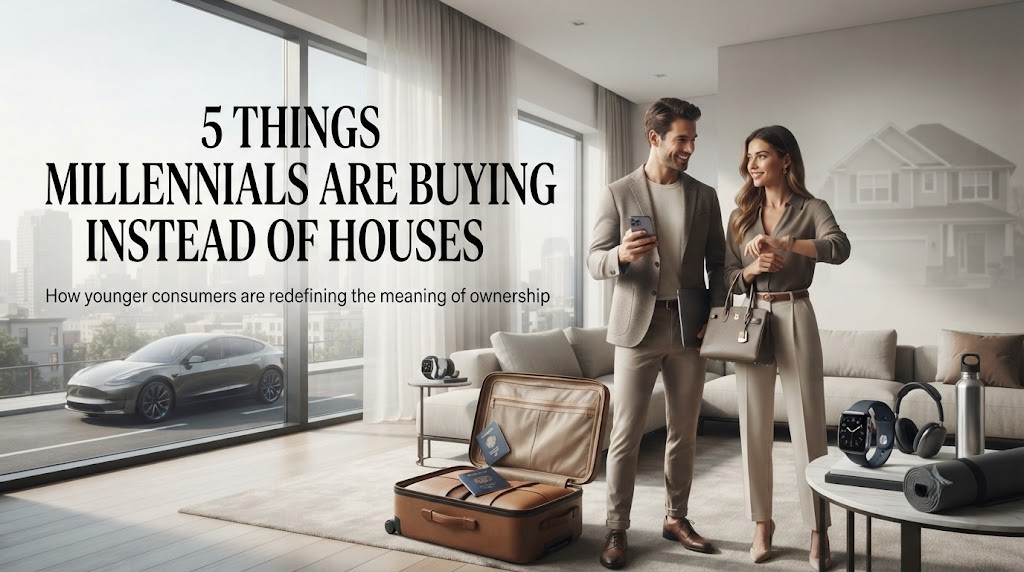
For decades, buying a house was treated as one of the clearest milestones of adulthood. Finish college, get a stable job, save for a down payment, buy a home, and slowly build wealth. For many millennials, however, that formula no longer fits the reality of modern life.
The generation that came of age during the aftermath of the financial crisis is entering its prime earning and spending years in a very different economic environment. Home prices have climbed dramatically in many markets, mortgage costs can be substantial, and younger professionals are often more willing to spend money on flexibility, experiences, technology, and financial freedom.
That does not mean millennials have abandoned the idea of homeownership altogether. Instead, their spending habits suggest something more interesting: when a traditional house feels financially or practically out of reach, many are redirecting their money toward things that fit the way they actually live.
From upgraded apartments to international travel and premium technology, here are five categories increasingly competing with the traditional dream of owning a house.
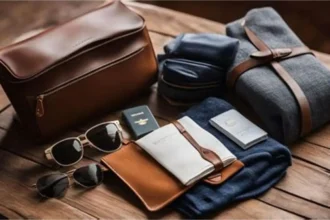
1. Travel Has Become the New Status Symbol
A house can provide stability, but travel provides something many millennials value just as much: experiences.
Instead of putting every spare dollar toward a down payment, some younger consumers are spending heavily on international trips, boutique hotels, destination experiences, concerts, food tours, wellness retreats, and extended stays abroad.
The change is partly cultural. Social media has transformed travel from an occasional holiday into a visible part of lifestyle identity. A week in Japan, a Mediterranean cruise, a road trip through Italy, or a month working remotely from Portugal can become just as much a personal milestone as moving into a new house.
Consider a young professional living in a major city. Rather than committing to a large mortgage that ties them to one location for decades, they may choose to rent a stylish apartment and use the difference for two or three international trips every year.
The appeal is not simply about luxury. Travel offers flexibility. A person can spend one summer exploring Europe, another visiting Southeast Asia, and later decide to relocate for a job without having to worry about selling a property.
For a generation that increasingly values experiences over traditional markers of success, a passport full of stamps can sometimes feel more rewarding than another bedroom.
2. High-End Technology Is Taking a Bigger Slice of the Budget
Technology has quietly become one of the biggest lifestyle categories for younger consumers.
A decade ago, spending several thousand dollars on personal technology might have seemed excessive. Today, a premium smartphone, laptop, gaming setup, smart television, wireless audio system, smartwatch, camera, and home automation equipment can easily turn a relatively ordinary apartment into a highly personalized living environment.
The modern consumer may not own the apartment, but they can certainly customize it.
Think about a remote worker with a premium MacBook, ultrawide monitor, ergonomic chair, noise-cancelling headphones, smart lighting, high-speed internet, and a sophisticated coffee machine. Their living space becomes part office, part entertainment studio, and part personal retreat.
Gaming is another major example. A serious gaming setup can include a high-end PC or console, OLED display, premium chair, mechanical keyboard, specialist headphones, and accessories. For some consumers, that setup represents a major lifestyle investment.
Smart-home technology also changes the equation. Devices such as connected lighting, security cameras, smart thermostats, automated blinds, and voice-controlled systems allow renters to personalize their environment without buying the building itself.
The broader shift is important: ownership is increasingly being replaced by customization. People may not own the walls, but they want greater control over what happens inside them.
3. Cars and Mobility Are Becoming Lifestyle Purchases
For previous generations, a car was often treated primarily as transportation. For many millennials, it has evolved into something closer to a lifestyle product.
A premium SUV, electric vehicle, performance car, or adventure-focused vehicle can represent freedom, convenience, design, and personal identity.
Someone who decides not to purchase a house might still spend significantly on a vehicle that supports the lifestyle they want.
Imagine a couple living in a city apartment. They may not need a garage, garden, or large suburban house, but they could choose to lease an electric SUV, buy a performance-oriented vehicle, or invest in a camper van for weekend travel.
Electric vehicles have made this particularly interesting. The appeal is not only about getting from one place to another. Buyers are also attracted by technology, software features, minimalist interiors, charging ecosystems, and the overall experience of owning something that feels technologically advanced.
For outdoor enthusiasts, the spending can go even further. Roof tents, bicycles, paddleboards, camping equipment, rooftop storage systems, and travel accessories can turn a vehicle into a mobile base for weekend adventures.
In other words, instead of spending everything on a permanent property, some consumers are investing in mobility itself.
4. Wellness Has Become a Serious Consumer Category
One of the biggest changes in millennial spending is the growing willingness to spend money on feeling better.
Wellness was once associated primarily with gyms and occasional spa visits. Today, it covers an enormous ecosystem of products and services: boutique fitness studios, running clubs, Pilates, meditation apps, wearable technology, skincare, nutrition products, recovery equipment, wellness retreats, and home fitness systems.
The modern consumer may spend hundreds of dollars on running shoes, fitness memberships, smartwatches, skincare products, supplements, massage sessions, or specialized workout equipment.
Luxury wellness has also expanded beyond traditional spas. Hotels and resorts increasingly market experiences around sleep, nutrition, fitness, mindfulness, recovery, and digital detox.
At home, consumers can create their own wellness environments. A relatively small apartment can contain a yoga corner, adjustable lighting, air purifier, exercise equipment, massage device, premium skincare collection, and a carefully designed sleeping environment.
There is an interesting psychological difference here.
A house is often purchased with the idea that its value will grow over time. Wellness spending is different. Its perceived return is immediate and personal: better sleep, more energy, improved fitness, relaxation, or simply the feeling of taking care of yourself.
That makes wellness particularly attractive to consumers who prioritize quality of life today rather than waiting for a distant financial milestone.
5. Fashion, Jewellery and Premium Experiences Are Replacing Traditional Luxury
Luxury consumption has also changed. Instead of treating luxury as something that comes after buying a home, younger consumers can view fashion, watches, jewellery, beauty, restaurants, hotels, and premium experiences as accessible forms of personal achievement.
A person may not be ready to spend hundreds of thousands on a property, but they might save for a Rolex, Cartier bracelet, designer handbag, high-end camera, or a memorable stay at a luxury hotel.
The appeal is partly emotional. Luxury products can function as personal rewards. They are tangible reminders of career progress, important birthdays, relationships, or major life achievements.
Take someone who receives their first significant promotion. Instead of immediately putting every extra dollar toward a future home, they might purchase a designer watch they’ve wanted for years or take their partner on a luxury vacation.
This doesn’t necessarily mean millennials are spending recklessly. In many cases, they are simply redefining what “worth it” means.
The luxury market itself has adapted to this behavior. Brands increasingly sell not just products but experiences, communities, storytelling, limited editions, personalization, and cultural relevance.
The result is a generation that can participate in luxury without necessarily following the traditional path of property ownership first.
Why the House Doesn’t Feel Like the Only Dream Anymore
The bigger story isn’t that millennials don’t want houses.
Many still do.
The difference is that a house now competes with an enormous number of alternative ways to spend money and build a satisfying lifestyle. A mortgage can offer long-term stability, but it can also limit mobility. Renting can feel less permanent, but it can provide flexibility.
For someone whose career depends on changing cities, working remotely, or pursuing opportunities internationally, that flexibility can have significant value.
There is also the issue of timing. Millennials entered adulthood during periods of economic uncertainty, and many have watched housing become increasingly expensive relative to income in major cities. That experience has naturally influenced how they think about financial commitments.
A 29-year-old designer in New York, for example, may prefer renting a well-located apartment close to restaurants, cultural events, and work rather than moving farther away simply to afford a property.
Meanwhile, a 32-year-old remote worker might choose to rent in different countries for portions of the year while investing elsewhere.
Neither lifestyle automatically replaces homeownership. They simply demonstrate that the definition of a successful adult life has become less standardized.
From Ownership to Access
Perhaps the most important shift is the movement from ownership toward access.
Previous generations often measured financial progress through the things they owned: a house, a car, furniture, appliances and other physical assets.
Younger consumers are more comfortable paying for access. They subscribe to streaming platforms rather than buying DVDs. They use cloud storage rather than maintaining physical servers. They rent clothes, cars, apartments and vacation homes. They subscribe to fitness platforms rather than buying every piece of equipment themselves.
This mindset naturally influences housing.
If consumers are already comfortable with flexible access in other areas of life, renting a home may not feel like a failure. It can simply be another subscription-like expense that provides convenience without a long-term commitment.
The irony is that millennials may be spending more money than previous generations on certain lifestyle categories while simultaneously avoiding one of the largest traditional purchases.
The New Definition of “Making It”
The traditional picture of success was relatively straightforward: career, marriage, house, children, retirement.
Today, there is no single universal sequence.
For some millennials, success means owning a home. For others, it means having the freedom to work from anywhere, travel internationally several times a year, build a business, maintain financial flexibility, or spend money on hobbies and experiences that genuinely matter to them.
A young entrepreneur might choose a modest rental while putting money into their company. A travel enthusiast might prioritize experiences over property. A technology professional might invest heavily in equipment that supports remote work. Someone else may put their money into investments and continue renting.
The important point is that the modern version of the American—or global—dream is becoming more personalized.
The house hasn’t disappeared from the dream. It simply isn’t the only dream anymore.
As housing costs, work patterns, consumer technology and lifestyle priorities continue to evolve, the question millennials are asking is increasingly not “What should I own by 30?” but “What kind of life do I actually want to build?”
And sometimes, that answer doesn’t come with a front door, a mortgage, or a white picket fence.
“The new measure of success isn’t simply what you own, but how freely you can live the life you value.”