Travel is no longer only about seeing famous landmarks, collecting passport stamps, or checking another destination off a bucket list. Increasingly, people are choosing trips around how they want to feel when they return home. The modern wellness traveller may be looking for better sleep, a quieter mind, healthier routines, physical recovery, or simply a few days away from the constant noise of everyday life.
This shift has transformed wellness travel into a much broader category. It now stretches from traditional thermal baths and meditation retreats to sleep-focused hotels, forest escapes, longevity programmes and movement-led holidays. What makes these experiences particularly appealing is that they combine travel with something personal: the feeling that the trip has actually changed your routine, rather than simply giving you photographs to remember it by.
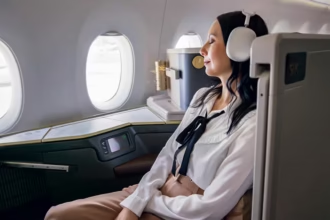
1. Sleep Retreats That Treat Rest Like a Luxury
For many travellers, sleep has become one of the most valuable things a holiday can offer. After months of late-night screen time, demanding work schedules and constant notifications, the idea of travelling somewhere specifically designed for better sleep has a quiet luxury of its own.
Sleep-focused retreats are built around creating the conditions for genuine rest. Guests may find rooms designed to reduce light and noise carefully controlled temperatures, calming interiors and bedding selected for comfort. Some properties go further by offering sleep consultations, relaxation treatments, evening breathing sessions and personalised routines.
The experience is less about sleeping for twelve hours and more about understanding what prevents quality sleep in the first place. A guest might spend the morning walking outdoors, enjoy a technology-free afternoon, have a massage before dinner and follow a deliberately slow evening routine.
Hotels and resorts in destinations such as the Swiss Alps, the Mediterranean and parts of Scandinavia have increasingly embraced this idea. Instead of filling an itinerary with activities, the destination itself becomes part of the recovery process.
There is also something attractive about returning from a holiday with a better bedtime routine. A spa treatment disappears after a few days, but learning how to create a calmer evening can potentially remain useful long after the suitcase is unpacked.
2. Forest Bathing and Nature-Based Escapes
Not every wellness experience requires an expensive resort. Sometimes the most powerful setting is simply a forest.
Forest bathing, inspired by the Japanese practice of shinrin-yoku, has become increasingly associated with slow travel and nature-based wellness. The idea is deliberately simple: spend unhurried time among trees, paying attention to the surroundings instead of rushing through them.
A forest wellness trip might include guided walks, breathing exercises, outdoor meditation, natural hot springs or quiet periods without digital distractions. The emphasis is not on covering kilometres or reaching a viewpoint. It is about slowing the pace enough to notice the environment.
Destinations such as Japan’s wooded regions, Finland’s forests, British Columbia and parts of the European Alps offer natural settings for this style of travel. In these places, wellness can feel less manufactured because the landscape itself does much of the work.
The appeal is particularly strong for travellers who find conventional retreats too structured. There is no need for a packed timetable of classes. A morning walk through misty woodland, followed by a warm drink beside a lake, can become the entire point of the day.
This is also where wellness and sustainable travel increasingly overlap. Nature-based experiences encourage visitors to appreciate landscapes rather than simply consume them as tourist attractions.
3. Thermal Bathing and Mineral Spa Journeys
Few wellness traditions have travelled through history as successfully as bathing. From ancient Roman baths to Japanese onsens and European thermal towns, warm water has long been connected with relaxation and social life.
Today, thermal travel is enjoying a new wave of popularity because it offers something wonderfully uncomplicated: slow down, enter warm water, and stay there for a while.
Budapest remains famous for its historic thermal baths, while Iceland has turned geothermal bathing into one of its signature travel experiences. Japan offers a completely different interpretation through its onsen culture, where bathing can become part of a wider stay in a traditional ryokan or mountain town.
Modern thermal destinations are also becoming increasingly sophisticated. Visitors can find hot and cold pools, saunas, steam rooms, hydrotherapy circuits and treatments arranged around the natural properties of the location.
The best thermal experiences do not necessarily feel like luxury shopping malls with pools attached. They have a strong sense of place. A geothermal lagoon surrounded by volcanic scenery creates a completely different memory from an indoor spa in a city centre.
For travellers, that combination of landscape and ritual is part of the attraction. You are not simply booking a treatment; you are travelling somewhere where bathing itself is part of the culture.
4. Longevity Retreats Focused on the Future
Wellness travel is also becoming more interested in longevity. Instead of simply asking, “How can I relax this week?”, travellers are increasingly interested in questions such as, “How can I build healthier habits for the next decade?”
Longevity retreats approach wellness from a broader perspective. Depending on the property, programmes may combine movement, nutrition, sleep education, stress management and health assessments. Some high-end destinations also offer consultations and technology-supported measurements designed to give guests a more personalised understanding of their lifestyle.
Switzerland, Spain, Portugal and several Middle Eastern destinations have become associated with sophisticated health and longevity resorts. These experiences can be considerably more structured than a traditional spa holiday.
A typical day might begin with movement or exercise, followed by a nutritious breakfast, a consultation or wellness session, time outdoors and an evening designed around recovery. The purpose is not necessarily to make the guest feel pampered every minute. It is to create an environment where healthy behaviour becomes easier to practise.
This category also reflects a larger cultural change. Wellness is gradually moving away from the idea that health is something we think about only when something feels wrong. Instead, prevention, energy, mobility and healthy ageing are becoming part of the luxury travel conversation.
Of course, travellers should distinguish between evidence-based health services and exaggerated promises about extending lifespan. The most credible experiences tend to focus on practical habits rather than miracle solutions.
5. Digital Detox Trips for a Quieter Mind
Perhaps one of the most modern wellness experiences is also one of the simplest: travelling somewhere where your phone does not dominate the day.
Digital detox holidays are designed around reducing the constant presence of technology. Some properties encourage guests to put their devices away during certain hours, while others are located in remote environments where connectivity is naturally limited.
The experience can feel surprisingly unusual at first. Without the reflex of checking messages over breakfast or scrolling before bed, travellers suddenly have empty spaces in their day. Those spaces can be filled with reading, hiking, swimming, conversation, journaling or simply doing nothing.
Remote cabins in Norway, mountain lodges in Canada, countryside retreats in France and secluded island properties can all provide the setting. The destination matters less than the sense of distance from ordinary digital life.
For many travellers, the real luxury is not a faster Wi-Fi connection but the ability to forget about Wi-Fi altogether.
A successful digital detox does not necessarily mean abandoning technology completely. Travellers still need maps, bookings, emergency communication and sometimes work access. The idea is to make technology a tool rather than the background soundtrack of every waking moment.
Wellness Travel Is Becoming More Personal
The biggest change in wellness tourism is perhaps that there is no longer one definition of a wellness holiday.
For one traveller, wellness means a week of yoga beside the ocean. For another, it means skiing in the morning and spending the afternoon in a thermal pool. Someone else may want a sleep retreat, while another person may prefer a remote cabin with no itinerary at all.
This personalisation is changing how hotels and destinations design experiences. Instead of simply adding a spa to a property, many are building entire stays around specific needs such as sleep, recovery, movement, nutrition or mental decompression.
The result is a more mature version of wellness travel. It is less about collecting spa treatments and more about creating an environment that supports a particular state of mind.
The New Luxury Is Coming Home Feeling Different
Luxury travel has traditionally been associated with private villas, Michelin-starred restaurants, designer interiors and first-class service. Those things still matter, but wellness is introducing another definition of luxury: time.
Time to sleep properly. Time to eat without rushing. Time to walk without checking the clock. Time to sit somewhere beautiful without feeling that you should be doing something else.
That may explain why wellness experiences continue to evolve beyond traditional spas. Travellers are not necessarily looking for another beautiful hotel room. They are looking for a reason to slow down, reset and return to ordinary life with something more valuable than souvenirs.
The next generation of wellness travel may therefore be less about escaping life and more about learning how to live it differently.
“The best journeys do more than take us somewhere new; they give us a new way to return to ourselves.”