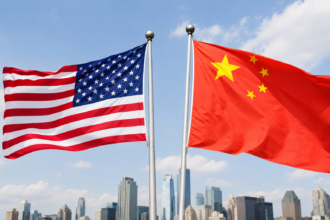
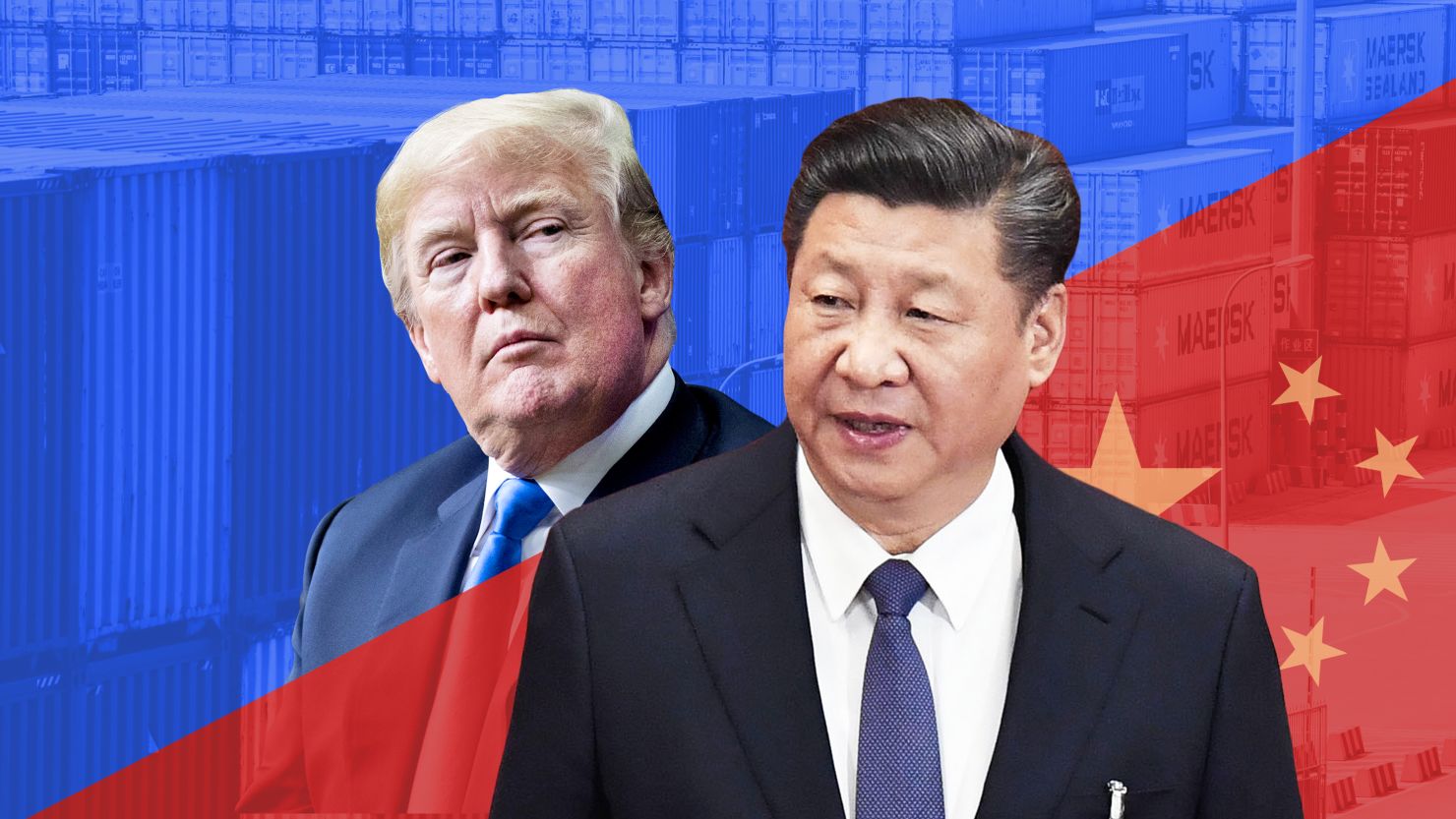
The relationship between the United States and China has evolved into one of the most significant geopolitical rivalries of the 21st century. What began as a trade dispute over tariffs and market access has transformed into a broader competition involving artificial intelligence, semiconductor technology, cybersecurity, digital infrastructure, and global influence. Today, the US–China Trade & Tech War is not just about economics it is about who will lead the future world order.
At the center of this conflict are AI chips, advanced semiconductors, export controls, supply-chain dominance, data security concerns, and competing visions for technological leadership. Governments, multinational corporations, investors, and consumers around the world are all feeling the effects of this growing rivalry.
The trade and tech war is reshaping industries, changing diplomatic alliances, and forcing countries to rethink their dependence on global supply chains. From TikTok regulations to restrictions on advanced chip exports, every move in this geopolitical chess game has global consequences.
The Origins of the Trade War
The tensions between the United States and China intensified during the late 2010s when the US accused China of unfair trade practices, intellectual property theft, forced technology transfers, and currency manipulation. The US government argued that Chinese companies benefited from state subsidies and unfair competitive advantages that harmed American businesses.
In response, the United States imposed tariffs on hundreds of billions of dollars worth of Chinese goods. China retaliated with tariffs on American exports, leading to a prolonged trade conflict that disrupted global markets.
Initially, the dispute focused on manufacturing and trade imbalances. However, policymakers soon realized that technology especially advanced computing and artificial intelligence would define future economic and military power.
This realization transformed the conflict from a traditional trade dispute into a strategic technological rivalry.
Why Technology Became the Real Battlefield
Technology is now viewed as the foundation of national power. Countries leading in AI, semiconductors, quantum computing, robotics, and cybersecurity are expected to dominate the global economy in the coming decades.
The United States fears losing its technological leadership to China, while China aims to reduce dependence on Western technologies and become self-sufficient in critical industries.
China’s “Made in China 2025” initiative accelerated these concerns. The strategy focused on developing domestic capabilities in advanced manufacturing, AI, aerospace, biotechnology, and semiconductor production.
For Washington, this raised alarms about economic competitiveness and national security.
As a result, the trade war evolved into a tech war.
The Semiconductor Battle
Semiconductors are at the center of the US–China rivalry. Often called the “brains” of modern electronics, chips power everything from smartphones and electric vehicles to military systems and AI models.
Advanced AI systems require extremely powerful chips, particularly graphics processing units (GPUs) and high-performance semiconductors. These chips are essential for training large AI models and operating advanced data centers.
The United States introduced export restrictions designed to limit China’s access to cutting-edge semiconductor technologies. American companies were restricted from selling advanced AI chips to Chinese firms without government approval.
Washington also pressured allies such as Japan and the Netherlands to limit exports of chip-making equipment to China.
This move targeted China’s ability to manufacture next-generation semiconductors independently.
Taiwan’s Critical Role
One of the most important aspects of the tech war is Taiwan’s semiconductor industry. Taiwan is home to Taiwan Semiconductor Manufacturing Company, the world’s leading advanced chip manufacturer.
TSMC produces the most sophisticated chips used by companies such as Apple, NVIDIA, and AMD.
Because Taiwan dominates global chip manufacturing, any geopolitical instability in the region could severely disrupt the world economy.
The United States views Taiwan as strategically important not only for political reasons but also because of its critical role in semiconductor supply chains.
Meanwhile, China considers Taiwan part of its territory, increasing tensions in the Indo-Pacific region.
This has turned semiconductors into both an economic and geopolitical issue.
AI Chips and the New Arms Race
Artificial intelligence has become a major area of competition between the US and China. AI is expected to influence industries ranging from healthcare and finance to military systems and national surveillance.
The development of AI depends heavily on high-performance chips capable of processing massive amounts of data.
American companies such as NVIDIA dominate the global AI chip market. These chips are essential for training advanced AI models used by tech giants worldwide.
To maintain technological leadership, the US government-imposed restrictions on exports of advanced AI chips to Chinese companies.
The concern is that China could use advanced AI technologies for military modernization, cyber warfare, and strategic surveillance systems.
In response, Chinese firms are investing heavily in domestic chip development to reduce reliance on foreign suppliers.
This competition has triggered what many analysts describe as a new technological arms race.
TikTok, Data Security, and Digital Sovereignty
The tech war is not limited to hardware. Software platforms and social media apps have also become politically sensitive.
TikTok became a major source of controversy due to concerns about data privacy and national security. US lawmakers argued that user data collected by TikTok could potentially be accessed by Chinese authorities because of China’s national security laws.
This led to calls for restrictions, forced divestments, and potential bans on the platform in several countries.
The TikTok controversy reflects a broader issue known as “digital sovereignty,” where governments seek greater control over data, online platforms, and digital infrastructure.
Countries are increasingly viewing technology platforms not only as businesses but also as strategic national assets.
As a result, global internet governance is becoming more fragmented.
Supply Chain Rivalry and Economic Decoupling
The COVID-19 pandemic exposed vulnerabilities in global supply chains, particularly dependence on Chinese manufacturing.
Many governments realized that relying heavily on one country for critical goods including semiconductors, pharmaceuticals, batteries, and rare earth materials could create national security risks.
The United States responded by promoting “friend-shoring” and “reshoring” strategies aimed at moving manufacturing closer to allies or back home.
Major companies are diversifying supply chains into countries such as Vietnam, Mexico, and Indonesia.
At the same time, China is attempting to strengthen domestic production and reduce reliance on Western technologies.
This process is often called “economic decoupling,” although complete separation remains unlikely because the two economies remain deeply interconnected.
Still, businesses worldwide are adapting to a future where geopolitical risks increasingly influence economic
The Impact on Global Markets
The US–China rivalry has created uncertainty in financial markets and international trade.
Technology companies face rising compliance costs, export restrictions, and geopolitical risks. Investors are closely watching developments involving tariffs, sanctions, and chip regulations.
Global manufacturers are also experiencing higher production costs as companies relocate factories and diversify suppliers.
Meanwhile, countries caught between the US and China are trying to balance economic partnerships with strategic alliances.
Many developing nations are benefiting from supply-chain diversification as companies seek alternatives to China.
However, the fragmentation of global trade networks could also reduce efficiency and increase inflationary pressures worldwide.
The era of hyper-globalization is gradually shifting toward a more politically divided global economy.
Europe and the Global Response
European countries are facing increasing pressure to navigate the US–China rivalry carefully.
The European Union wants to maintain economic relations with China while also aligning with Western security interests.
Europe is investing heavily in domestic semiconductor production and digital infrastructure to reduce dependence on foreign technologies.
Countries like Japan and South Korea are also strengthening partnerships with the United States in areas such as chip manufacturing and cybersecurity.
Meanwhile, China continues expanding its global influence through infrastructure investments, trade agreements, and technology partnerships under initiatives like the Belt and Road Initiative.
This competition is creating a more multipolar technological landscape.
The Future of the Tech War
The US–China tech rivalry is unlikely to end anytime soon. In fact, it may intensify as artificial intelligence, quantum computing, biotechnology, and advanced manufacturing become even more important.
Several future scenarios are possible:
1. Partial Technological Separation
The world could split into competing technological ecosystems led by the US and China, with different standards, platforms, and supply chains.
2. Increased Global Alliances
Countries may form stronger regional partnerships to secure technology access and reduce strategic vulnerabilities.
3. AI Dominance Competition
Artificial intelligence leadership could become the defining factor in future economic and military power.
4. Greater Government Intervention
Governments may continue increasing regulations on technology companies, data security, and foreign investments.
5. Rising Geopolitical Risks
Tensions surrounding Taiwan, cybersecurity, and economic sanctions could further destabilize global markets.
Conclusion
The US–China Trade & Tech War is far more than a dispute over tariffs or market access. It is a battle over technological supremacy, economic leadership, national security, and the future structure of the global economy.
Semiconductors, AI chips, digital platforms, and supply chains have become the strategic resources of the modern era. Nations are now competing not only for economic growth but also for control over the technologies that will shape the future.
For businesses, governments, and individuals, understanding this rivalry is essential because its consequences are already affecting industries, jobs, investments, and international relations across the globe. The world is entering an era where technology and geopolitics are deeply interconnected. The outcome of the US–China tech war may ultimately determine which countries lead the next generation of innovation and global influence