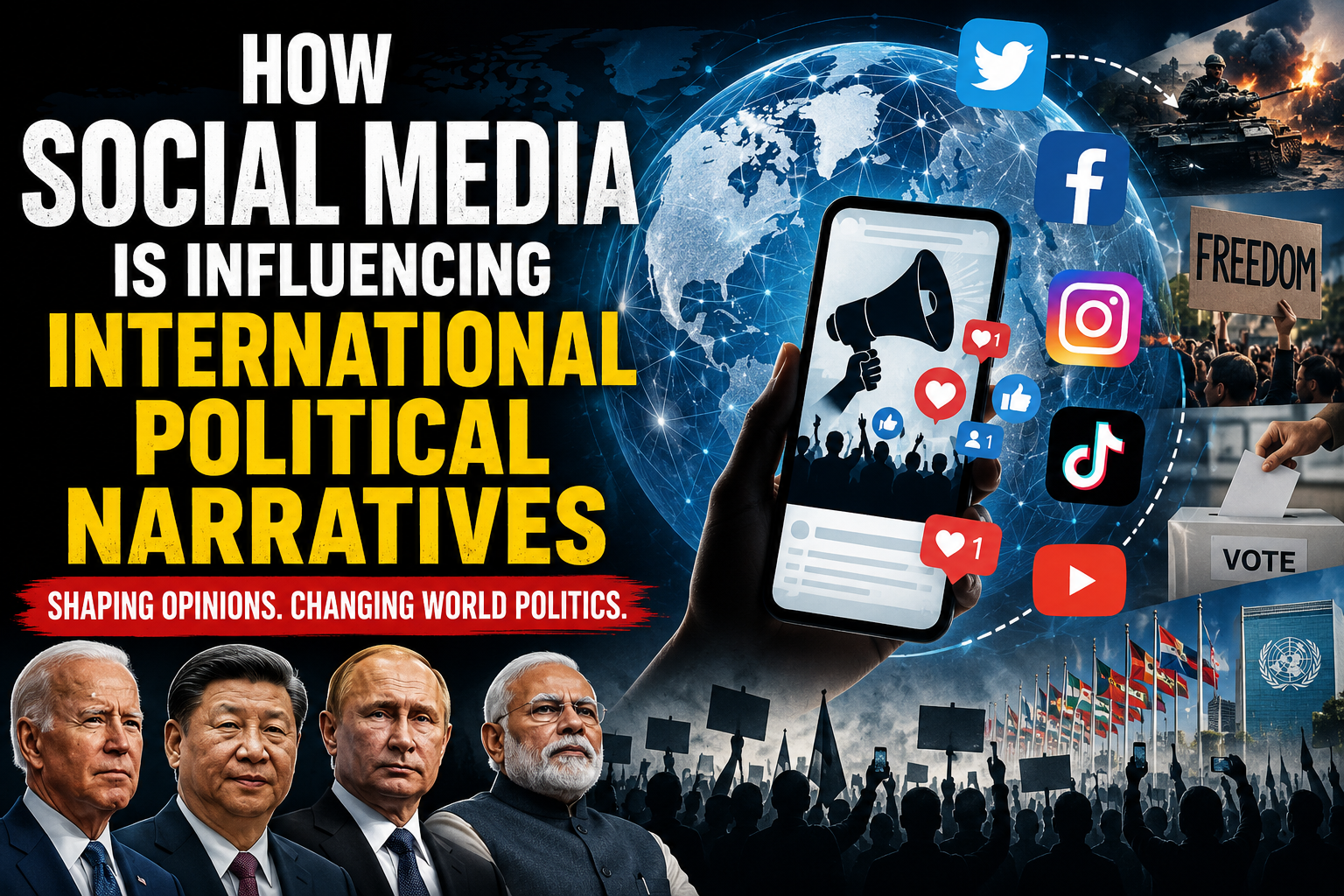
In the twenty-first century, social media has transformed from a platform for personal communication into one of the most powerful tools shaping international politics. Platforms such as X (formerly Twitter), Facebook, Instagram, TikTok, YouTube, and Telegram are no longer just spaces for entertainment or networking. They have become digital battlegrounds where governments, political leaders, activists, journalists, and ordinary citizens compete to influence public opinion and control political narratives across borders.
Traditional media once dominated the flow of political information. Television channels, newspapers, and radio networks decided which stories would reach the public and how those stories would be framed. Today, social media has disrupted that structure completely. Information now moves instantly, often without verification, and can reach millions within minutes. A single viral post can influence elections, shape diplomatic relations, fuel protests, damage reputations, or even escalate international tensions.
From the Russia–Ukraine war and the Israel–Palestine conflict to U.S.–China tensions and global climate activism, social media has become central to how international political events are understood by the world. While these platforms provide opportunities for democratic participation and global awareness, they also create challenges including misinformation, propaganda, polarization, cyber manipulation, and digital warfare.
The influence of social media on international political narratives is profound, complex, and continuously evolving. Understanding this transformation is essential for governments, media organizations, policymakers, and citizens alike.
The Evolution of Political Communication
From Traditional Media to Digital Influence
Before the rise of social media, political narratives were primarily shaped by established institutions. Governments communicated through official statements, press conferences, and traditional news outlets. International events were interpreted through journalists and editorial teams that acted as gatekeepers of information.
Social media removed many of these barriers. Political leaders now communicate directly with citizens without relying on television interviews or newspaper coverage. Former U.S. President Donald Trump demonstrated this shift clearly by using Twitter as a direct political weapon. His posts often influenced stock markets, diplomatic relations, and international headlines within minutes.
Similarly, leaders across the world including Narendra Modi, Volodymyr Zelenskyy, Emmanuel Macron, and others use social media to build personal political brands and shape global perceptions. Political communication has become faster, more emotional, and more personalized than ever before.
Real-Time Political Narratives
One of social media’s greatest powers is speed. International crises are now experienced in real time. Videos from war zones, protest movements, or diplomatic events can spread globally before official media reports are published.
During major global conflicts, millions of users follow updates directly from journalists, civilians, soldiers, and political figures. This instant access changes how international narratives develop. Governments no longer have full control over information flows because citizens themselves contribute to global storytelling.
Social Media as a Tool of Political Influence
Governments and Digital Diplomacy
Modern diplomacy increasingly operates online. Governments use social media to influence foreign populations, strengthen alliances, and defend national interests. This practice is often called “digital diplomacy.”
Foreign ministries, embassies, and political leaders maintain active online presences to shape international perceptions. Nations use social media campaigns to improve their global image, attract investment, promote tourism, and communicate policy positions.
For example, during international crises, governments frequently release official statements on social platforms before traditional press briefings. Social media has become an essential component of international communication strategy.
Political Propaganda in the Digital Age
While social media supports transparency and communication, it also enables large-scale propaganda operations. Governments and political groups use coordinated digital campaigns to influence public opinion domestically and internationally.
State-sponsored accounts, bots, troll farms, and fake profiles are commonly used to amplify political messages. These operations can spread misleading information, attack opponents, or manipulate public debates.
Russia has frequently faced accusations of using digital influence campaigns to shape political narratives in Europe and the United States. Similarly, concerns about information manipulation have emerged regarding China, Iran, North Korea, and other states.
Digital propaganda is particularly dangerous because it often appears organic. Users may unknowingly interact with manipulated content designed to create confusion, fear, or division.
The Role of Social Media During International Conflicts
Russia–Ukraine War and Information Warfare
The Russia–Ukraine conflict is one of the clearest examples of social media’s influence on international political narratives. Both sides have used digital platforms aggressively to shape global opinion.
Ukraine successfully used social media to gain international sympathy and support. President Volodymyr Zelenskyy’s video messages became globally influential, portraying Ukraine as resilient and democratic. These messages helped mobilize financial aid, military support, and public solidarity from Western nations.
At the same time, Russia used state media networks and online campaigns to promote its own narrative regarding NATO expansion, security concerns, and regional politics.
The conflict demonstrated that modern wars are fought not only on battlefields but also on smartphones and social platforms. Public perception has become a strategic weapon.
Israel–Palestine Conflict and Viral Narratives
Social media also plays a major role in shaping narratives surrounding the Israel–Palestine conflict. Graphic images, emotional videos, and personal testimonies spread rapidly online, influencing international public opinion.
Unlike traditional media coverage, social media allows individuals directly affected by conflict to share their experiences instantly. This creates emotional engagement and increases global awareness. However, it also intensifies polarization because users often consume content aligned with their existing beliefs.
The rapid spread of unverified content during conflicts can inflame tensions, spread misinformation, and complicate diplomatic efforts.
The Rise of Citizen Journalism
Ordinary Individuals as Global Reporters
Social media has empowered ordinary citizens to become political storytellers. A smartphone and internet connection are often enough to document protests, government actions, or humanitarian crises.
Citizen journalism has challenged traditional media monopolies. Events that might once have been ignored or censored can now gain international attention quickly.
Movements such as the Arab Spring demonstrated the power of social media-driven activism. Protesters used Facebook and Twitter to organize demonstrations, share information, and expose government repression. These platforms became symbols of political resistance and democratic mobilization.
Advantages and Risks of Citizen Reporting
Citizen journalism increases transparency and allows marginalized voices to be heard. However, it also creates significant risks. Unlike professional journalists, many social media users do not verify sources or follow ethical reporting standards.
False information can spread rapidly during emergencies. Edited videos, fake images, and misleading narratives can influence millions before fact-checkers intervene.
As a result, audiences increasingly struggle to distinguish between verified reporting and manipulated content.
Algorithms and Political Polarization
How Algorithms Shape Political Perception
Social media platforms use algorithms to maximize user engagement. These systems prioritize content that generates strong emotional reactions, including anger, fear, outrage, or excitement.
Political content often performs extremely well because it encourages debate and emotional responses. As users interact with certain viewpoints, algorithms show them more similar content, creating “echo chambers.”
In these digital environments, individuals are repeatedly exposed to information that reinforces their beliefs while opposing perspectives are minimized.
The Global Consequences of Polarization
Political polarization fuelled by social media affects international relations as well as domestic politics. Nationalist narratives, conspiracy theories, and anti-foreign sentiments can spread rapidly online.
This polarization complicates diplomatic cooperation between countries. Public pressure created through social media can influence government decisions on trade, military action, immigration, and foreign policy.
In some cases, viral misinformation has increased hostility between nations or ethnic groups, demonstrating the real-world consequences of digital narratives.
Misinformation and Fake News
The Global Spread of False Information
One of the most serious challenges associated with social media is misinformation. False stories often spread faster than factual reporting because sensational content attracts attention.
During elections, pandemics, wars, and political crises, misinformation campaigns can destabilize societies and undermine trust in institutions.
Deepfake technology has further complicated the issue. Artificial intelligence can now generate realistic fake videos and audio recordings, making it increasingly difficult to verify authenticity.
Impact on Democracy and International Trust
Misinformation damages democratic systems by confusing voters and weakening confidence in journalism, governments, and international organizations.
When citizens no longer trust information sources, political manipulation becomes easier. Foreign actors can exploit social divisions by spreading false narratives designed to create chaos or distrust.
International cooperation also suffers because misinformation can distort perceptions of foreign countries and diplomatic intentions.
Social Media Activism and Global Movements
Digital Activism Beyond Borders
Social media has enabled political movements to gain international momentum rapidly. Hashtags, viral campaigns, and online communities allow activists to mobilize support across national boundaries.
Movements such as #BlackLivesMatter, #MeToo, climate activism campaigns, and pro-democracy protests have demonstrated the global power of digital activism.
International audiences can now engage with political issues occurring thousands of miles away, increasing pressure on governments and institutions.
The Strength and Limitations of Online Activism
Digital activism increases awareness and participation, especially among younger generations. However, critics argue that online activism sometimes lacks long-term strategic impact.
“Slacktivism” refers to minimal online participation that creates visibility without producing meaningful political change. Posting hashtags or sharing content may raise awareness, but real policy transformation often requires organized political action beyond social media.
Nevertheless, online activism remains a powerful force in shaping international conversations.
The Influence of Social Media Companies
Technology Platforms as Political Actors
Major technology companies now possess enormous influence over global political communication. Decisions made by Meta, X, Google, TikTok, and YouTube can affect elections, protests, and international narratives.
Content moderation policies determine which information spreads and which content is removed. This gives private corporations unprecedented power over political discourse.
Governments increasingly pressure these companies to regulate misinformation, hate speech, and extremist content. However, balancing free expression with content control remains highly controversial.
The Debate Over Regulation
Different countries approach social media regulation differently. Democratic nations often emphasize free speech protections, while authoritarian governments may use regulation to suppress dissent.
The global debate centers on key questions:
- Should governments regulate political content online?
- How much power should technology companies have over public discourse?
- Can misinformation be controlled without limiting freedom of expression?
These questions will shape the future of digital politics.
Artificial Intelligence and the Future of Political Narratives
AI-Generated Content and Political Manipulation
Artificial intelligence is rapidly transforming social media politics. AI systems can create articles, videos, images, and social media posts at massive scale.
This technology increases efficiency but also raises concerns about automated propaganda and sophisticated misinformation campaigns.
AI-generated deepfakes may become powerful political weapons capable of influencing elections or damaging diplomatic relations.
The Future of Digital Political Warfare
Future international conflicts may involve advanced cyber operations combined with AI-driven information campaigns. Nations will likely invest heavily in digital influence strategies alongside traditional military capabilities.
The competition for narrative control will become even more intense as technology evolves.
Conclusion: A New Era of Global Political Influence
Social media has fundamentally changed how international political narratives are created, distributed, and consumed. It has democratized communication by allowing ordinary individuals to participate in global political conversations. At the same time, it has introduced serious challenges including misinformation, polarization, propaganda, and digital manipulation.
International politics is no longer shaped only by governments and traditional media institutions. Technology platforms, influencers, activists, and online communities now play critical roles in determining how global events are perceived.
The influence of social media will continue to grow as technology advances and digital connectivity expands worldwide. Artificial intelligence, algorithmic targeting, and real-time communication will further transform political communication and international relations.
In this evolving landscape, media literacy, responsible journalism, transparent governance, and ethical technology regulation will become increasingly important. The future of international political narratives may depend not only on military or economic power, but also on who controls information, attention, and digital influence in the online world.