For much of the modern economic era, the global system has been shaped by a familiar set of institutions, currencies, markets and financial centres. The United States and Europe have played an outsized role in setting the rules of international finance, while the dollar has remained at the centre of global trade and payments. But that structure is no longer as straightforward as it once appeared.
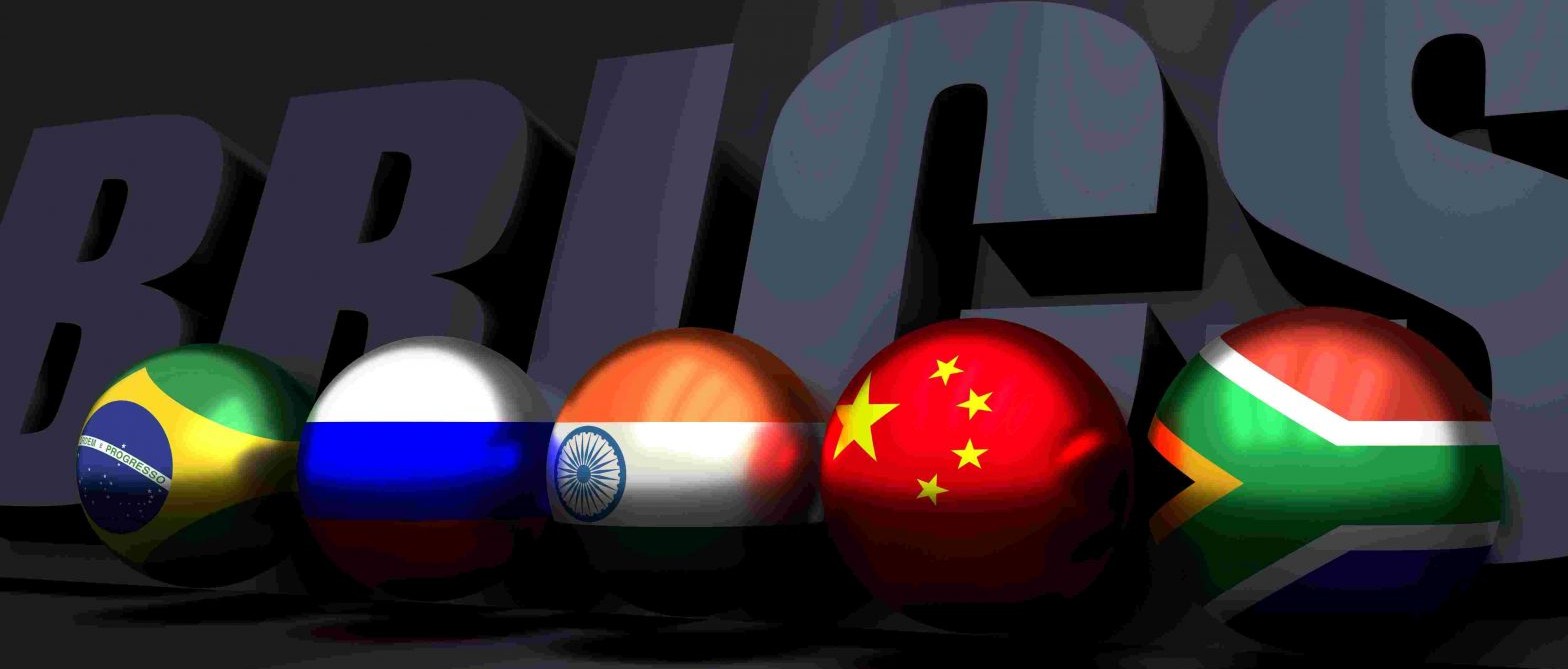
The expansion of BRICS has added another layer to an already changing global economy. What began as a grouping of Brazil, Russia, India and China, later joined by South Africa, has evolved into a much broader platform. By 2025, BRICS consisted of 11 members, including Egypt, Ethiopia, Iran, Indonesia, Saudi Arabia and the United Arab Emirates alongside the original members. The group has also created a partner-country category, widening its economic and diplomatic network further.
The significance of this expansion is not simply about how many countries sit around the table. It is about what those countries collectively represent: major populations, large energy markets, manufacturing capacity, natural resources, technology capabilities and some of the world’s fastest-changing consumer economies.
BRICS is therefore becoming less a story about a new economic bloc and more a story about how global economic power is becoming increasingly distributed.
From Emerging-Market Club to Global Economic Platform
When BRIC was first introduced as an economic concept in the early 2000s, the idea was relatively simple. Brazil, Russia, India and China were identified as economies with the potential to become increasingly important to global growth.
The world has changed considerably since then.
China has become a central manufacturing and trading power. India has emerged as one of the world’s largest and fastest-growing major economies. Brazil remains a major agricultural and commodity producer, while Russia is a significant energy and resource economy. The newer members add further weight in areas ranging from oil and gas to logistics, minerals, manufacturing and consumer markets.
That diversity is one of BRICS’ defining characteristics. It also makes the group’s economic story more complicated. BRICS countries do not have identical economic systems, currencies, development levels or policy priorities. Their interests can sometimes overlap, but they can also diverge.
Yet cooperation does not require complete economic uniformity.
The group’s recent agenda shows an attempt to build practical connections in areas where members have shared interests. During Brazil’s 2025 presidency, trade and investment, financial cooperation, local currencies, payment systems, digital transformation, artificial intelligence, climate finance and industrial development were among the priorities.
That suggests a gradual approach: rather than attempting to create a single economic system overnight, BRICS is building a network of mechanisms that could make cooperation between member economies easier.
The Quiet Transformation of Global Trade
One of the most important changes taking place inside BRICS concerns international trade.
For decades, globalisation was built around highly integrated supply chains connecting producers, manufacturers, financial institutions and consumers across continents. That model remains powerful, but companies and governments are increasingly paying attention to resilience, diversification and strategic independence.
BRICS’ economic agenda fits into this wider transformation.
At the 2025 BRICS trade ministers’ meeting, members highlighted reform of the World Trade Organization, renewal of the BRICS 2030 Economic Partnership Strategy and cooperation around the digital economy.
These discussions matter because trade is no longer only about reducing tariffs and moving goods from one country to another. Digital services, payment infrastructure, logistics, technology standards, data and access to strategic resources are becoming equally important.
A more interconnected BRICS could therefore influence how businesses think about international markets.
A company looking at future growth may increasingly see opportunities not only in traditional Western markets but also across India, China, the Gulf, Southeast Asia, Africa and Latin America. That creates a broader commercial landscape in which emerging markets are not simply sources of raw materials or low-cost manufacturing. They are becoming major destinations for investment, technology and consumer spending.
The Push Toward Local-Currency Trade
Perhaps no part of the BRICS economic conversation receives more attention than the discussion around currencies.
The dollar remains deeply embedded in international finance, and BRICS has not created a common currency that replaces it. The more immediate focus has been on expanding the use of national currencies and developing payment mechanisms that can make cross-border transactions easier.
The 2025 Rio Declaration highlighted continued work on BRICS cross-border payments and cooperation through the group’s payment task force. It also encouraged financial practices involving local currencies.
The economic logic is straightforward.
If two countries can settle more trade directly in their own currencies, businesses may have fewer reasons to convert transactions through an additional currency. Depending on the transaction and market conditions, this could potentially reduce certain costs and currency risks.
But this is not the same thing as replacing the dollar.
Creating a genuinely global alternative to the dollar would require deep and liquid financial markets, strong institutional confidence, widespread convertibility and a large ecosystem of investors and businesses willing to use the alternative. Those are difficult conditions to replicate.
The more realistic development is diversification.
BRICS is exploring ways to give its members more options in international payments and finance. Over time, even incremental changes could influence the architecture of global trade.
Energy Is Becoming an Economic Power Lever
Energy gives BRICS another major source of influence.
The expanded group includes some of the world’s important oil and gas producers, alongside major energy consumers and industrial economies. This creates an unusual combination: countries that supply energy and countries whose factories, cities and transportation systems require enormous quantities of it.
BRICS energy cooperation has increasingly focused on security, investment, technology and the transition toward lower-carbon systems.
During 2025, BRICS energy ministers adopted a roadmap for energy cooperation covering the 2025–2030 period. The group also discussed the use of local currencies in energy trade and the need to balance energy security with decarbonisation.
The significance extends beyond oil.
The energy transition is creating enormous demand for critical minerals, renewable technologies, batteries, electric vehicles and new infrastructure. Countries that control resources or possess the industrial capacity to process them can gain greater importance within global supply chains.
That makes energy and minerals an increasingly strategic part of economic policy.
For BRICS members, the objective is not simply to export commodities. There is growing emphasis on developing processing capacity and participating further up the value chain. Earlier BRICS discussions have specifically highlighted the importance of countries with critical minerals having opportunities to participate in global value chains rather than remaining solely raw-material exporters.
That could have significant implications for industrial development across the Global South.
Technology Is Moving to the Centre of the BRICS Agenda
Another important shift is taking place in technology.
Economic power today is not determined only by factories, oil reserves or financial markets. Artificial intelligence, semiconductors, cloud infrastructure, robotics, digital payments and data are becoming fundamental economic assets.
BRICS has increasingly recognised this change.
During the 2025 Brazilian presidency, artificial intelligence governance became a major area of cooperation. The group’s leaders adopted a declaration focused on the responsible development and deployment of AI, with an emphasis on inclusive access and the developmental needs of countries outside the traditional technology centres.
The group has also discussed digital ecosystems, open-source participation, quantum technologies and support for startups and smaller businesses through digital infrastructure.
This is an important evolution in the BRICS story.
The bloc is not only talking about commodities and traditional industries. It is increasingly positioning itself around the technologies that will determine productivity and competitiveness over the next decade.
For emerging economies, access to these technologies could be especially significant. AI tools, digital financial systems and automation have the potential to allow businesses to scale faster without following exactly the same development path taken by industrial economies in the twentieth century.
A Different Model of Development Finance
Finance is another area where BRICS is attempting to strengthen its institutional footprint.
The New Development Bank, created by the BRICS countries, was designed to finance infrastructure and sustainable-development projects. Alongside the bank, BRICS has been working on additional financial mechanisms, including multilateral guarantees and payment-related initiatives.
The 2025 Rio Declaration welcomed progress on the BRICS Multilateral Guarantees initiative and continued work on financing mechanisms involving local currencies.
The importance of development finance goes beyond lending itself.
Infrastructure determines whether economies can trade efficiently, manufacture competitively and connect people to global markets. Ports, railways, renewable energy projects, digital networks and industrial facilities can reshape entire regions.
If BRICS institutions become more effective at directing capital toward these projects, they could provide developing economies with additional financing channels alongside existing international institutions.
That does not necessarily mean replacing institutions such as the World Bank or IMF. Instead, it could contribute to a more diversified international financial landscape.
The Global South Is Becoming More Economically Assertive
Perhaps the biggest story behind BRICS is the changing economic position of the Global South.
For decades, developing economies were often discussed primarily in terms of what they needed from the global economy: capital, technology, infrastructure or market access.
The conversation is becoming more complex.
Many emerging economies now possess significant consumer markets, natural resources, manufacturing capabilities, technology sectors and financial assets of their own. Their governments increasingly want a stronger role in determining the rules under which international commerce operates.
BRICS provides one platform for expressing that demand.
Its members have repeatedly called for greater representation of developing countries in international financial institutions and for reforms to global governance structures.
The economic consequences of this shift could be substantial.
As emerging economies become more influential, multinational companies may need to rethink where they manufacture products, where they invest capital, which markets they prioritise and how they manage geopolitical and supply-chain risks.
The global economy could become less centred around a handful of traditional financial hubs and more dependent on multiple interconnected economic centres.
The Biggest Challenge: Turning Scale into Integration
BRICS’ size gives it considerable economic weight, but size alone does not guarantee integration.
The members have different currencies, regulatory systems, political priorities, economic structures and strategic interests. Some are major commodity exporters, while others are manufacturing or services economies. Some have large financial markets; others are still developing their financial infrastructure.
That diversity can make collective decision-making difficult.
Even the development of alternative payment systems requires technical compatibility, regulatory coordination, cybersecurity and trust between financial institutions.
The same challenge applies to trade.
A larger BRICS marketplace can create opportunities, but businesses still need reliable logistics, predictable regulations, compatible standards and efficient payment systems before those opportunities can become large-scale commercial relationships.
In other words, BRICS has built considerable economic potential. The next question is how much of that potential can be converted into practical integration.
What BRICS Could Mean for Businesses
For companies, the BRICS story is ultimately about market strategy.
Businesses operating internationally will increasingly need to look beyond the traditional North American and European markets. The growth of large consumer populations, expanding digital economies, industrial investment and infrastructure development across BRICS countries creates new commercial possibilities.
Manufacturing companies may look at new supply-chain locations. Financial firms may explore cross-border payment technologies. Technology companies may find demand for AI and digital infrastructure. Energy businesses may face changing patterns of investment and trade.
Even consumer brands are likely to feel the effect.
As emerging-market middle classes expand, demand for luxury goods, electronics, automobiles, travel, entertainment, financial services and digital products can create entirely new growth markets.
The BRICS story is therefore not limited to governments and central banks. It increasingly affects boardrooms, investors and entrepreneurs.
A More Multipolar Economic Future
BRICS is not creating a replacement for the existing global economic system overnight. There is no single BRICS currency dominating international finance, and the member economies remain too diverse for a completely unified economic model.
What is changing is more subtle and potentially more important.
The global economy is becoming more multipolar.
Capital is moving through more channels. Supply chains are being reconsidered. Emerging markets are becoming more influential consumers and producers. Energy relationships are evolving. Digital infrastructure is becoming a strategic asset. And countries across the Global South are seeking a greater voice in the institutions that shape international economic policy.
BRICS sits directly inside this transformation.
Its future influence will depend on whether its members can move from shared declarations to practical cooperation — whether payment systems can become more connected, whether trade can expand efficiently, whether development finance can scale, and whether cooperation in technology, energy and industry can produce measurable economic results.
That process will take time.
But the direction is already visible. BRICS has grown from a small group of emerging economies into a broader platform connecting some of the world’s most important markets and resource centres. Its expansion reflects a wider change in the global economy: economic influence is no longer concentrated in the same places it was a generation ago.
The next phase of globalisation may therefore look very different from the last.
Instead of one dominant economic centre setting the rhythm for everyone else, the world may increasingly operate through several powerful and interconnected centres with BRICS becoming one of the most important networks within that emerging landscape.