International trade is often discussed in terms of ships, ports, factories, commodities and supply chains. Yet behind every shipment is something less visible but equally important: the payment. A company can manufacture a product in one country, sell it in another and deliver it across several borders, but the transaction is not truly complete until money moves safely and efficiently between the businesses involved.
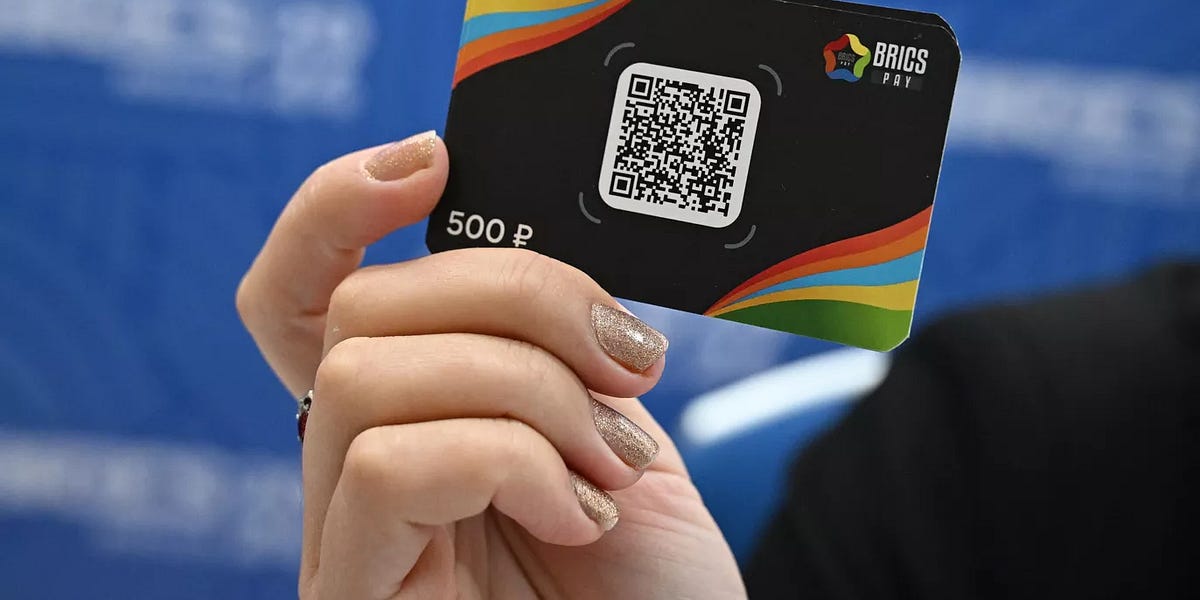
For BRICS economies, this makes digital payments more than a financial technology story. They could become part of the infrastructure supporting a more connected trading environment. In its 2025 Rio de Janeiro Declaration, BRICS leaders said they were continuing discussions around the BRICS Cross-Border Payments Initiative and noted progress by the BRICS Payment Task Force toward greater interoperability among payment systems. The declaration specifically linked the effort with the objective of supporting trade and investment flows.
The opportunity is significant, but the transformation will not happen simply because payments become digital. The real change would come from making different national payment systems work together while maintaining regulatory oversight, financial security, transparency and confidence.
The Hidden Cost of Cross-Border Trade
For a domestic transaction, payment can feel almost invisible. A customer taps a phone, scans a QR code or transfers money through a banking application, and the transaction may be completed within seconds. International trade is different. A cross-border payment can involve banks, payment service providers, foreign-exchange conversion, compliance checks and multiple financial intermediaries.
The Bank for International Settlements has repeatedly identified cross-border payments as generally slower, more expensive and less transparent than domestic payments. Its 2026 research also highlighted limited interoperability as one of the major constraints holding back improvements in international payments.
For large corporations, these frictions can be absorbed into sophisticated treasury operations. For smaller exporters, importers and online businesses, however, payment costs and delays can have a more direct effect on cash flow.
Imagine a small manufacturer selling components to a buyer overseas. The product may leave the warehouse quickly, but the seller could still wait for the payment to pass through several financial institutions and currency-conversion processes. The longer the settlement takes, the longer working capital remains tied up.
Digital payment infrastructure could begin to change that equation.
From Domestic Convenience to International Connectivity
The most interesting development is not simply the rise of digital wallets or mobile banking. It is the possibility of connecting national payment systems so that a transaction initiated in one country can interact smoothly with the financial infrastructure of another.
This concept is already being explored internationally. The BIS has studied the interlinking of fast payment systems as a way of making cross-border transfers faster and potentially less expensive. Its Nexus blueprint, for example, examines how domestic instant-payment systems can be connected through a common framework.
For BRICS economies, a similar principle could have important implications. Rather than requiring every country to abandon its existing payment infrastructure and adopt one common system, interoperability could allow national systems to communicate with each other.
That distinction matters.
India can maintain its own domestic payment infrastructure. China can maintain its own. Brazil, the United Arab Emirates, South Africa and other BRICS economies can do the same. The challenge is creating the technical, regulatory and operational bridges that allow these systems to interact.
In other words, the future may be less about building one giant payment network and more about creating a network of connected systems.
Local Currencies Could Become More Practical
Digital payments also intersect with another major theme in BRICS financial cooperation: the use of local currencies.
The 2025 BRICS Finance Ministers and Central Bank Governors statement recognized the importance of increasing the use of local currencies in trade and financial settlements and continued consideration of payment instruments and platforms, including the feasibility of the BRICS Cross-Border Payments Initiative.
The potential attraction is straightforward. If two businesses can settle more efficiently using their respective domestic currencies, they may reduce some of the friction associated with traditional payment routes and currency conversion.
But this should not be interpreted as an automatic replacement for established international currencies. Currency settlement involves exchange rates, liquidity, market depth, hedging and financial risk. A digital payment system can make the movement of money more efficient, but it cannot eliminate the economic realities of foreign-exchange markets.
That is why the more realistic transformation may be greater flexibility rather than a single alternative currency system.
Businesses could potentially gain more options for how they invoice, receive and settle international transactions.
What It Could Mean for Small Businesses
The biggest impact of improved cross-border payments may not necessarily be felt first by multinational corporations. Smaller businesses could have more to gain from reducing payment friction.
A large multinational already has access to international banking relationships, treasury teams and specialized payment providers. A small exporter may not have those resources.
If cross-border payments become faster, more transparent and easier to access, a small business could potentially sell to customers in more markets without facing the same level of financial complexity.
This is particularly relevant as e-commerce continues to blur the traditional boundaries of international trade. A business no longer needs a physical store in another country to reach its consumers. A designer can sell internationally. A software company can serve customers globally. A specialist manufacturer can find buyers thousands of kilometres away.
The payment layer therefore becomes part of the digital commerce experience.
The BRICS 2030 Economic Partnership Strategy also identifies digital economy cooperation, international trade and investment, and financial cooperation among its priorities. BRICS trade ministers have connected efforts to reduce transaction costs with facilitating investment and trade flows.
Faster Payments Could Reshape Cash Flow
Speed is not simply about convenience. In business, time has a financial value.
When an exporter receives payment more quickly, working capital can potentially return to the business sooner. Suppliers can be paid earlier, inventory can be replenished faster and new orders can be financed with less dependence on additional short-term funding.
For importers, faster and more predictable settlement could improve supplier relationships and make international procurement easier to manage.
The effect could become even more important when trade involves smaller margins. A reduction in payment delays or transaction costs can matter considerably when businesses operate across multiple markets.
The BIS notes that improved cross-border payments can support international trade, e-commerce and financial inclusion. Its work on payment-system interoperability similarly points to greater speed, transparency and efficiency when different systems can interact effectively.
The transformation, therefore, is not really about making a payment app faster. It is about making international commerce itself more fluid.
Transparency Could Become a Competitive Advantage
Another overlooked benefit is visibility.
International payments can become difficult to track when transactions move through several intermediaries. Businesses may want to know where a payment is, what fees have been applied and when the recipient will actually receive the funds.
Better digital infrastructure can create clearer transaction information and more structured payment data.
Standards matter here. The BIS’s Committee on Payments and Market Infrastructures has been working on harmonised ISO 20022 data requirements for cross-border payments. The standard is designed to provide more consistent and structured information, supporting the broader objectives of faster, cheaper and more transparent payments.
For businesses, better data can mean more than a cleaner payment receipt. It can improve reconciliation, accounting, fraud monitoring and financial planning.
The payment could become an integrated part of the company’s digital financial system rather than a separate administrative task.
The Technology Is Only Half the Story
There is a tendency to describe digital payments as a purely technological challenge. In reality, technology is only one part of the equation.
Every country has its own financial regulations, consumer-protection rules, anti-money-laundering requirements, data frameworks and banking structures. Connecting payment systems therefore requires agreement on much more than APIs and software.
The BIS’s 2026 work emphasizes that cross-border payment improvements require greater harmonisation of standards, effective compliance frameworks and stronger competition.
Security is equally important.
A faster payment that increases exposure to fraud or weakens financial controls would not represent meaningful progress. Cross-border systems must continue to address money laundering, sanctions compliance, fraud prevention, cybersecurity and customer protection.
Speed and security cannot be treated as competing goals. The real objective is to build infrastructure capable of delivering both.
Interoperability Is the Real Turning Point
The word that may ultimately define the next phase of BRICS payments is interoperability.
A digital payment system can be highly advanced inside one country and still provide limited value internationally if it cannot communicate with systems elsewhere.
Interoperability means that different payment infrastructures can exchange information and settle transactions without forcing users or financial institutions to participate in every individual system.
BRICS has already identified this issue. The 2025 Rio Declaration welcomed progress by the BRICS Payment Task Force in exploring possible pathways toward greater interoperability and highlighted a technical report on a BRICS cross-border payments system.
That makes the discussion more concrete than simply talking about “digital currencies” or “cashless trade.” The fundamental question is how different financial systems can work together.
If that problem can be addressed, digital payments could become a genuine layer of trade infrastructure.
A New Digital Layer for Global Trade
The broader significance extends beyond BRICS itself.
If payment systems become more interconnected, businesses outside the group could also benefit when trading with BRICS economies. Faster settlement, improved transparency and wider access could make international transactions easier for exporters, importers, investors and digital businesses.
This could be especially relevant for emerging markets, where payment infrastructure and access to international financial services can vary significantly.
BRICS communications ministers have also emphasized cooperation around digital ecosystems, innovation and digital access, reflecting a wider interest in the infrastructure underpinning the digital economy.
The long-term picture is therefore bigger than a new payment mechanism. It is about building an environment in which trade, finance and digital technology become more closely connected.
The Road Ahead Will Be Gradual
There is no single switch that will transform BRICS trade overnight.
Payment systems need technical compatibility. Banks need liquidity arrangements. Regulators need common frameworks. Businesses need incentives to adopt new channels. Consumers need trust. Governments need to balance innovation with financial stability.
Even internationally, successful cross-border payment interlinking remains technically and institutionally complex. The BIS has noted that differences in legal systems, data standards, governance and compliance can make cross-border connections considerably harder than domestic payment infrastructure.
For BRICS, the practical path is therefore likely to be incremental: deeper cooperation, technical testing, bilateral and regional connections, common standards and gradual expansion.
The significance of the current discussions lies precisely in this transition from concept to infrastructure.
The Payment Behind the Product
Trade is ultimately about exchange. A product moves from one market to another, a service crosses a border, an investment enters a new economy and money moves in the opposite direction.
For decades, the physical side of trade has received enormous attention. Ports became larger, logistics became faster and supply chains became increasingly sophisticated. The financial movement supporting those transactions has not always evolved at the same pace.
Digital payments could begin closing that gap.
For BRICS, the opportunity is to create payment infrastructure that reflects the realities of a more digital and interconnected trading environment. If national payment systems can become interoperable, local-currency settlement can become more practical, transaction data can become more transparent and cross-border payments can become faster without compromising security, the effects could extend well beyond banking.
They could reach the factory floor, the online marketplace, the exporter’s cash flow and the consumer’s checkout screen.
The real transformation will not be measured by how futuristic the payment technology looks. It will be measured by whether a business can trade across borders with less friction, greater certainty and more choice.
As global commerce becomes increasingly digital, the infrastructure moving money may become just as important as the infrastructure moving goods.
“The future of trade will not only be defined by what crosses borders, but by how seamlessly value can move with it.”